
La ville qui n’existait pas 4 : La maison des rêves (2612)
Matériaux: Béton, métal, résine, peinture
Système informatique: Mixtral 7B, QwenTTS 3, python
Remerciements: Gael Charbau, François Belsoeur, Un Eté au Havre, Goliath Dyèvre, Eva Alabaran, Atelier Puzzle, AtelierArtecture
Cette œuvre a bénéficié du soutien de @seafrigo_group
Angle Boulevard Clemenceau – rue Benjamin Normand
La maison des rêves (2612) est une cabine téléphonique inspirée de l’architecture d’Auguste Perret dans laquelle on peut entendre des voix clonées d’habitants du Havre racontant indéfiniment l’année 2612. Il s’agit de la première oeuvre d’art pérenne dans l’espace public en France faisant usage de l’IA.
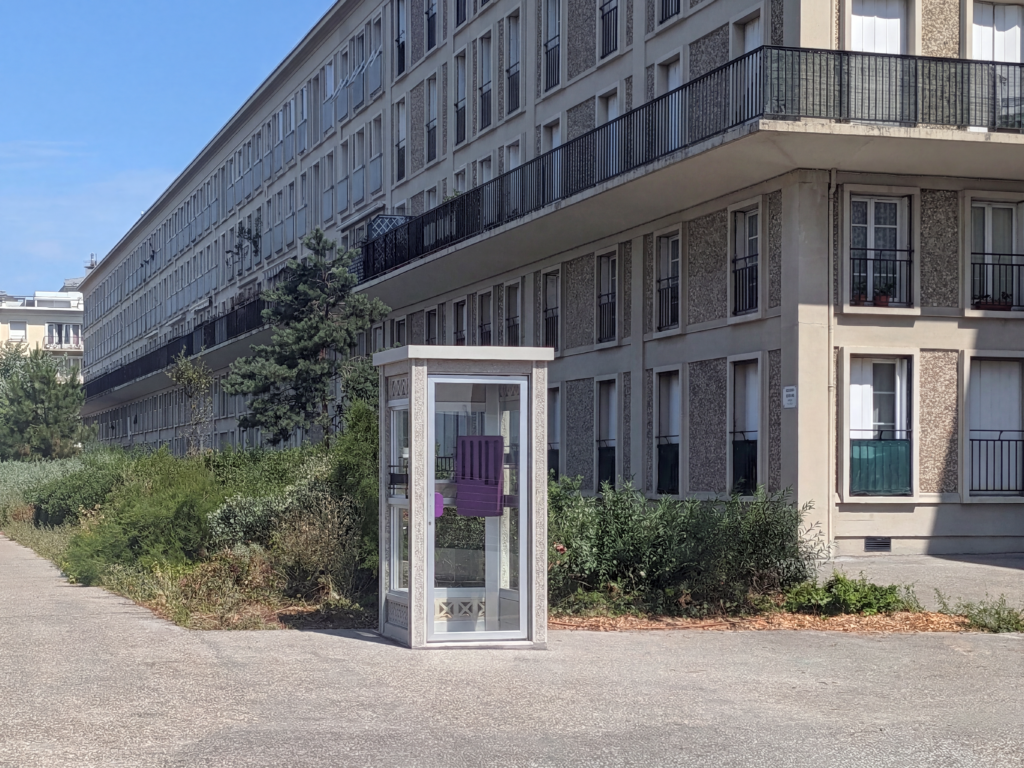
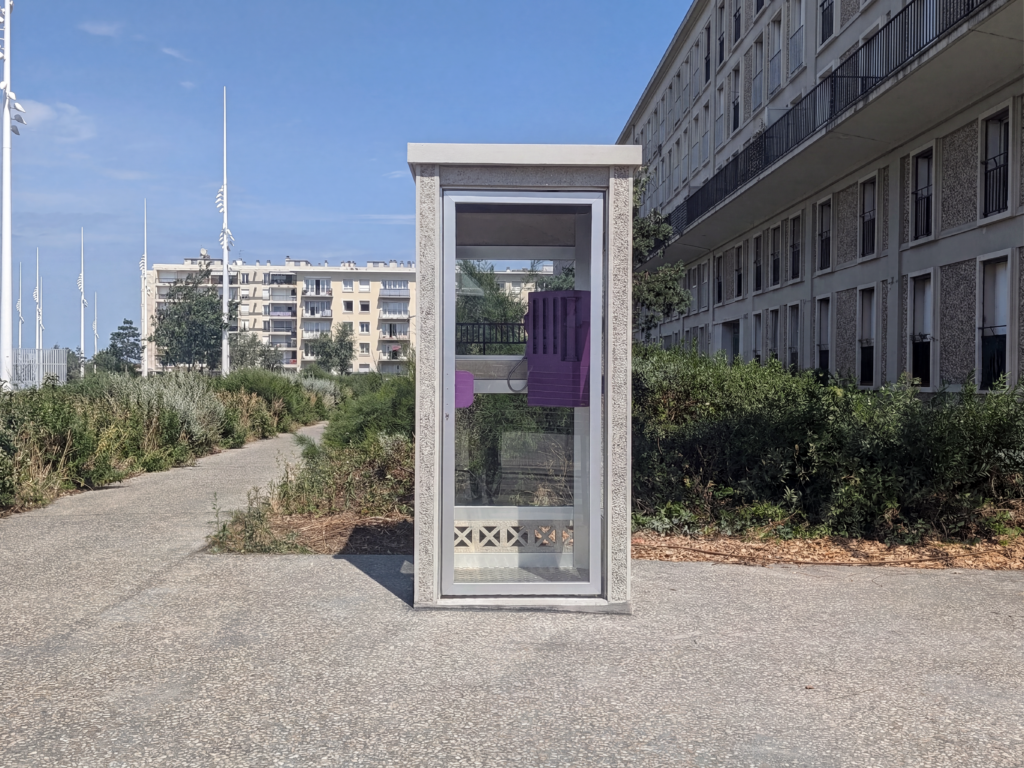
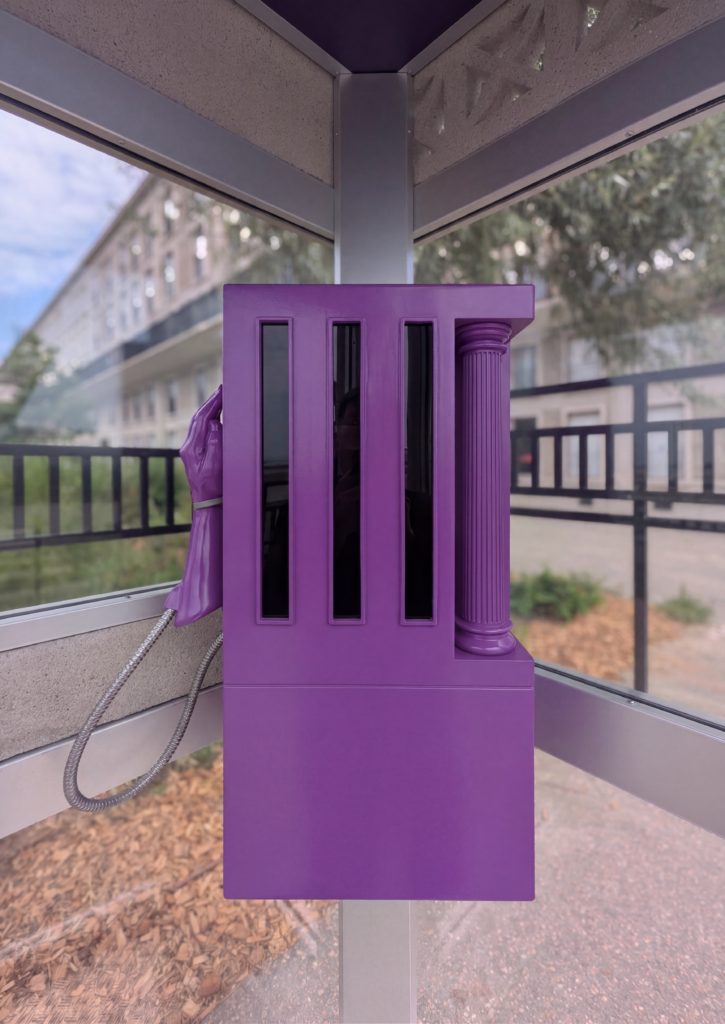

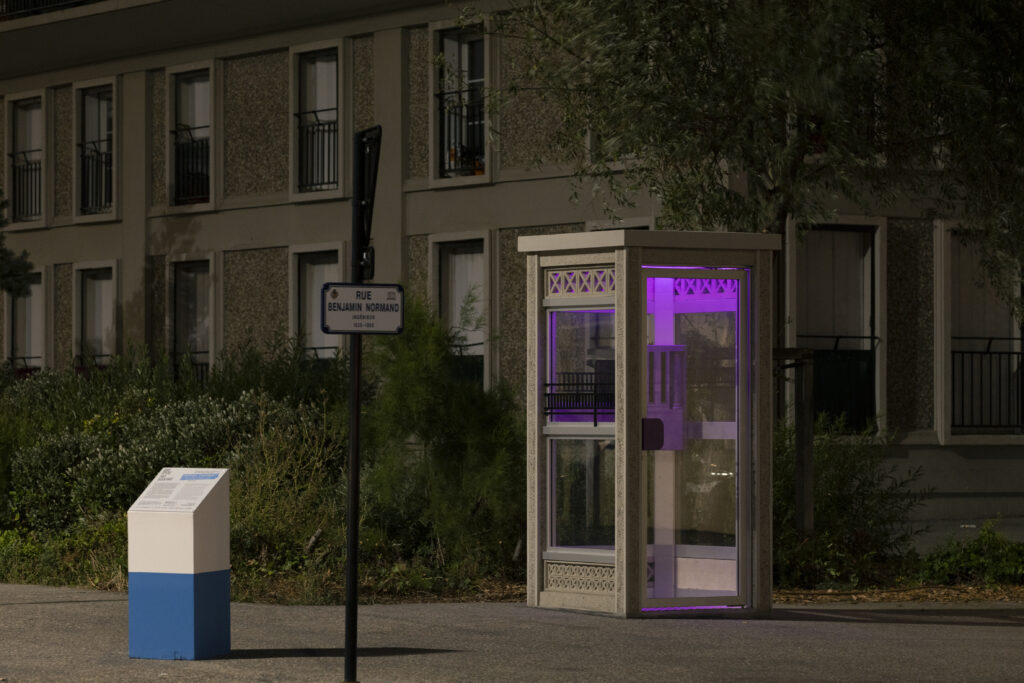
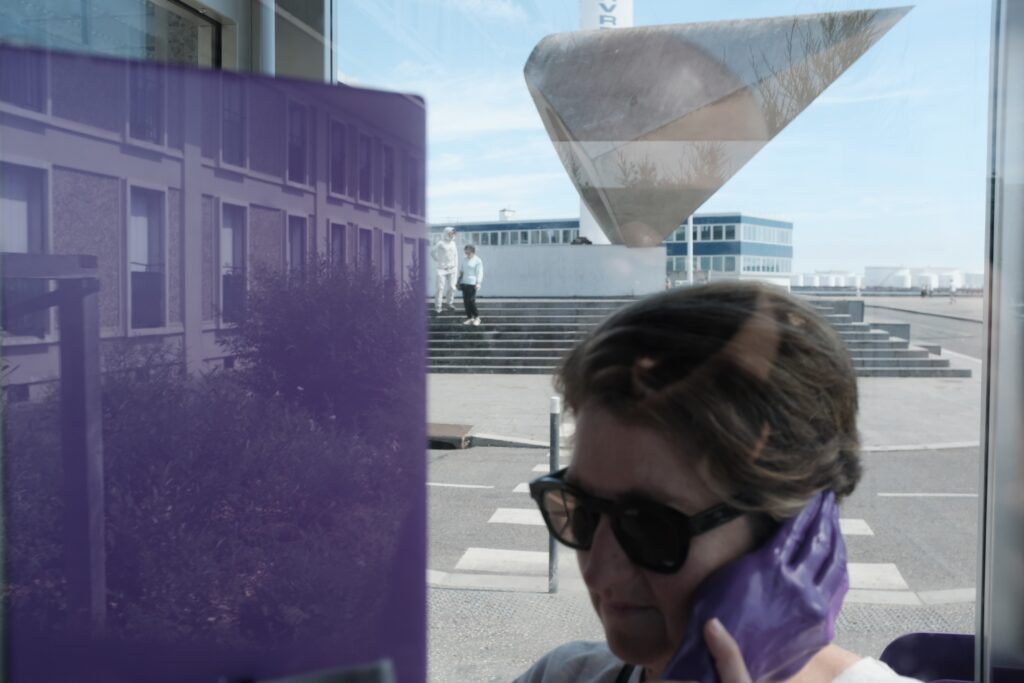
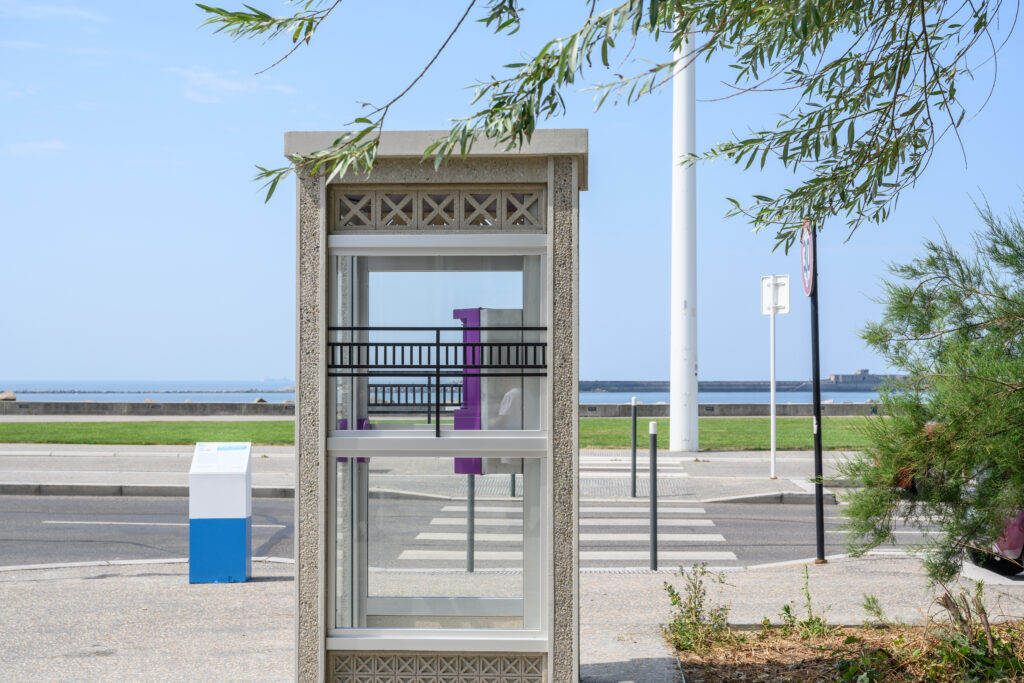
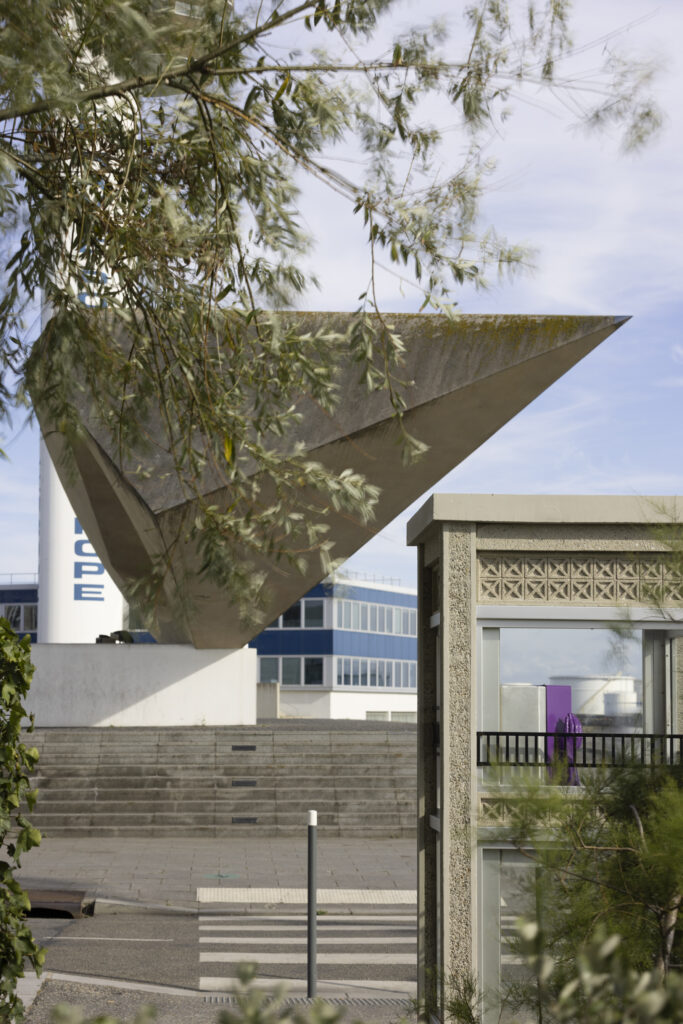
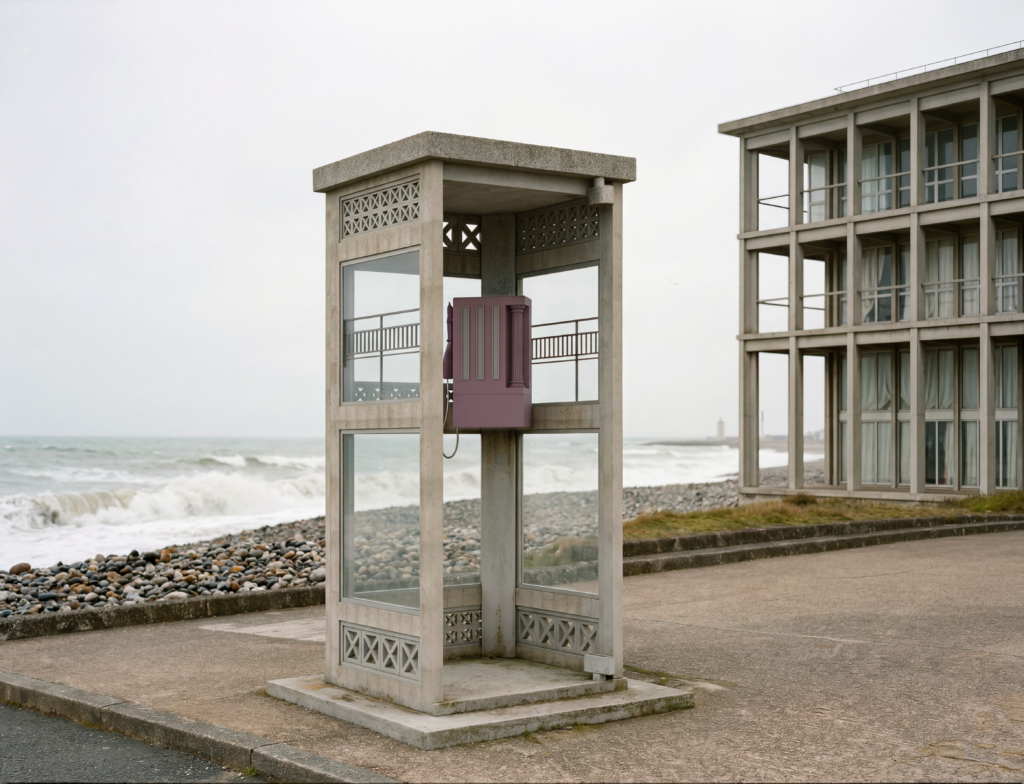
Image préparatoire générée sur Flux 2
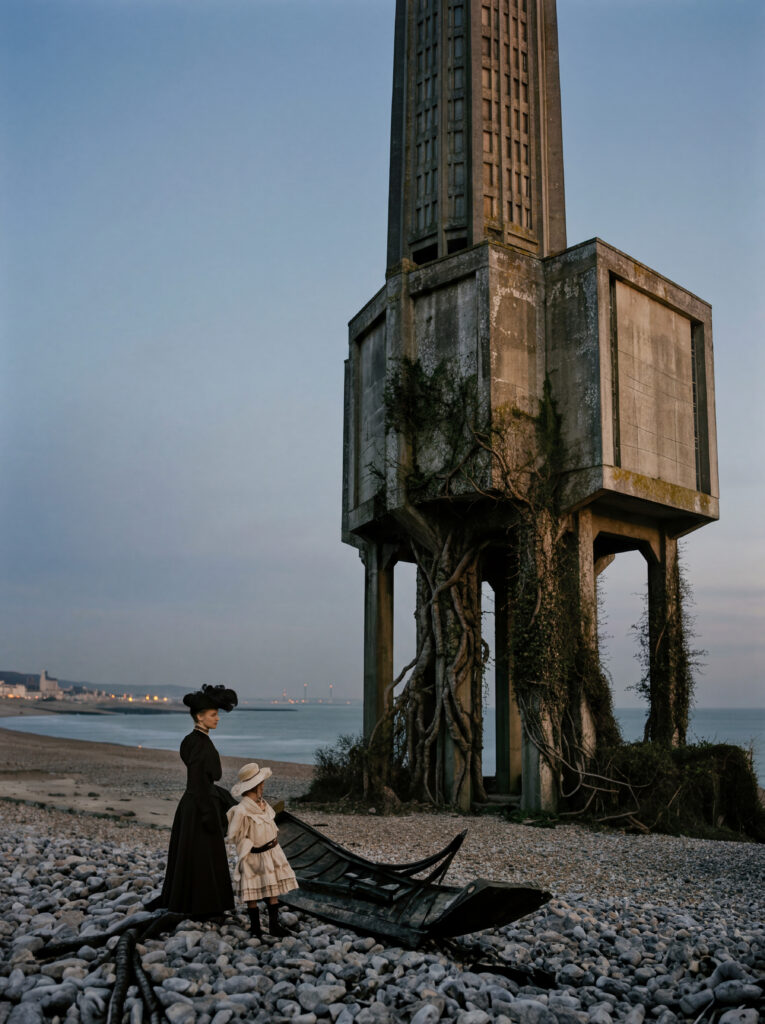
En 2023, des images ont été générées à partir des archives photographiques du Havre, 14 500 documents de Nutrisco. Cette première série de cartes postales montrait une ville légèrement différente de celle qui existe. Les mêmes rues, les mêmes bâtiments, mais inclinés vers un autre chemin. Des fresques sont apparues sur vingt-cinq murs de la ville, dans les quartiers de Bléville, des Neiges, de Caucriauville, etc. Des bâtiments qui n’avaient pas brûlé. Une révolution industrielle où la nature et la technique n’étaient pas séparées.
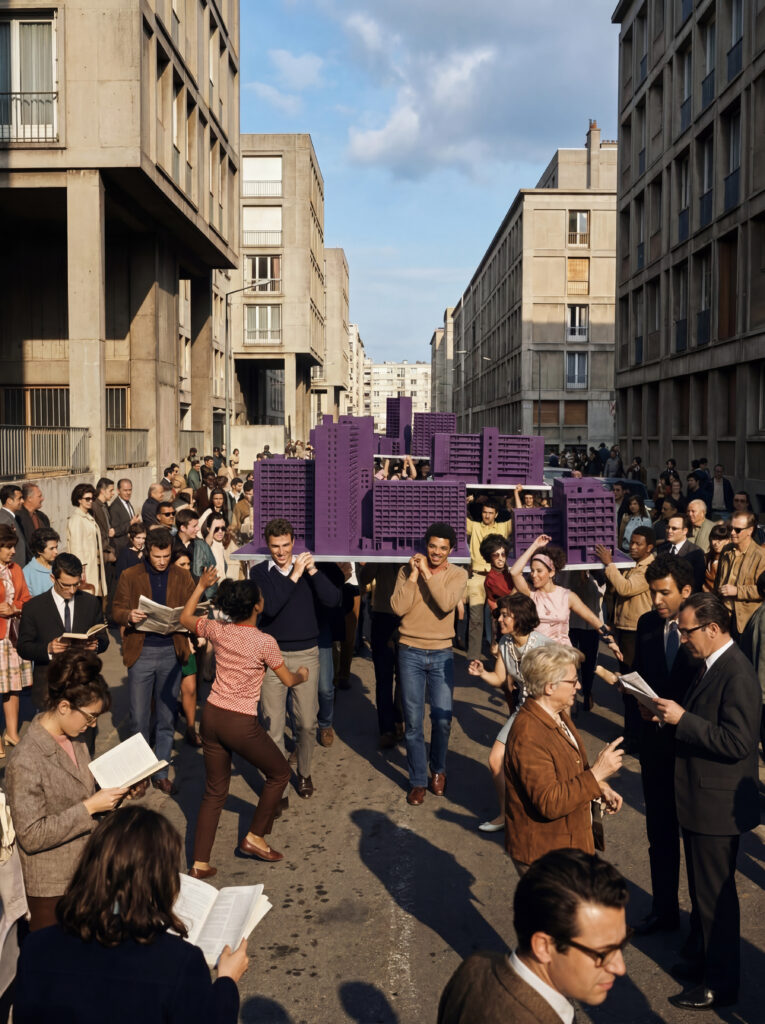
En 2024, d’autres cartes postales uniques ont circulé,, numérotées, chacune différente. Des habitants d’un Havre alternatif entre 1971 et 2024 : un été sans fin, une logistique des mémoires, des voix du possible. D’immenses sculptures imprimées en béton inspirées par les images sont apparus. Des films ont été produits à partir de ces archives régénérées. Des habitants ont dormi à l’écran, entourés d’objets de l’histoire de la ville, et semblé rêver.
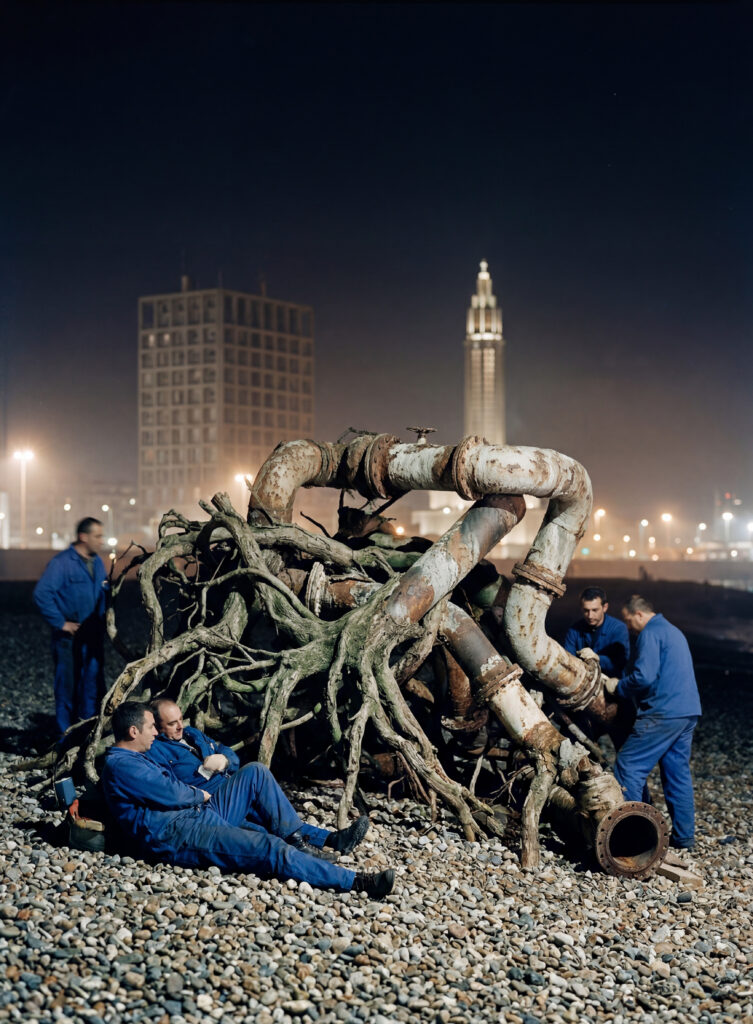
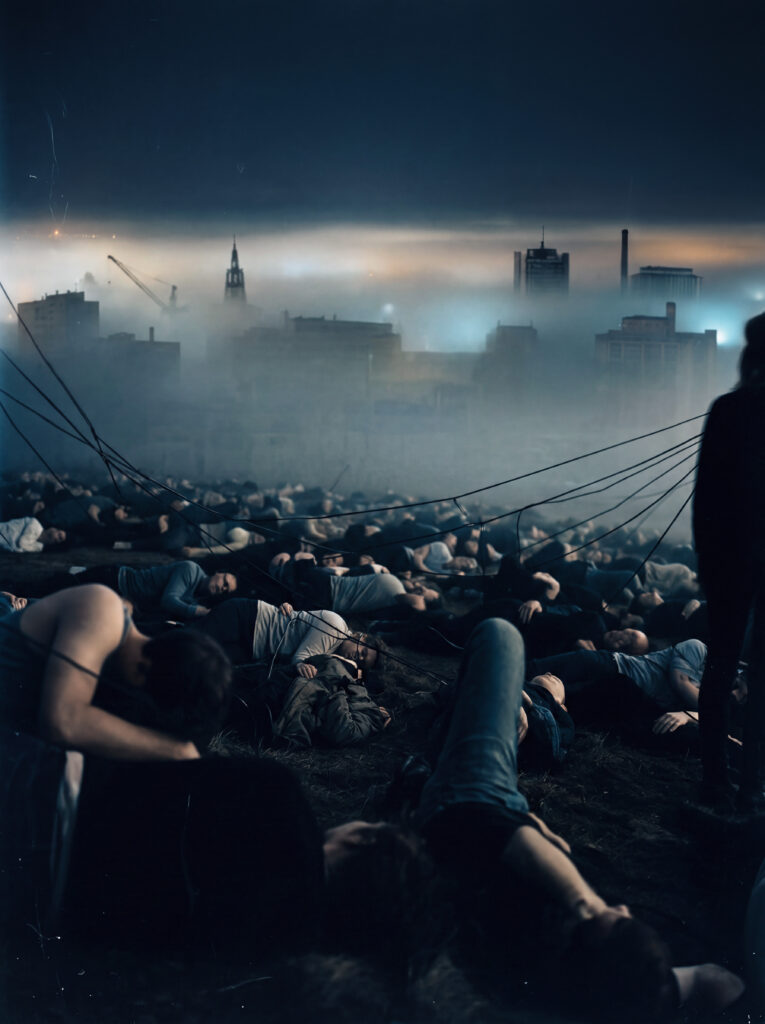
En 2025, 25 000 autres cartes postales, numérotées de 50 001 à 75 000. Des personnages endormis dans une ville miniature, entre 2025 et 2048. Sur chaque carte, au verso, un texte généré automatiquement à partir d’une analyse de l’image, puis s’en écartant, imaginant la scène suivante. Un film, Les Veilleurs, généré en temps réel : des corps allongés, des images d’archives qui défilent, une voix hybride qui commente avec la patience de qui récite une prière séculaire devant une imprimante qui génère des centaines de bâtiments dans une cartographie d’aluminium.
En 2026, tout cela arrive dans un seul récit. Un roman qui réécrit l’ensemble des épisodes pour réaliser une archive spéculative de ce projet tentatculaire et une cabine téléphonique qui poursuit cette fiction au-delà de sa possibilité.
–
L’océan a tout pris sauf les hauteurs. Le Havre est là, sous vingt mètres d’eau, intact dans sa dissolution. La nuit, quand la lune est pleine, on voit depuis les barques les sommets des immeubles, leurs fenêtres béantes, leurs toits couverts d’algues qui ondulent comme si elles respiraient.
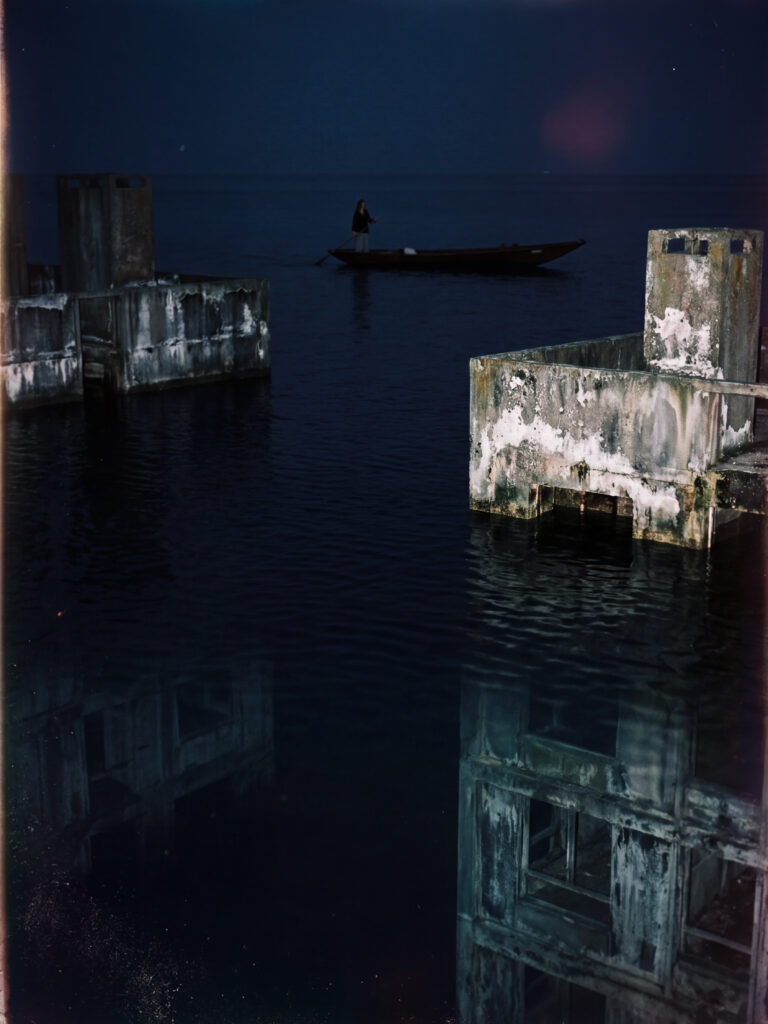
Les survivants vivent sur les hauteurs. L’air est rare. Chaque geste est calculé, économisé. Certains dorment. Leur sommeil n’est pas inerte : sous leurs paupières, ils habitent la ville engloutie dans tous ses états, dans tous ses temps à la fois. Ils tutoient les ombres de 1895, de 1944, de 1971, de 2026. Ils s’adressent à ceux qui ont marché sur ce béton avant qu’il disparaisse. Les disparus répondent. Ils continuent d’habiter des maisons qui n’ont jamais été construites.
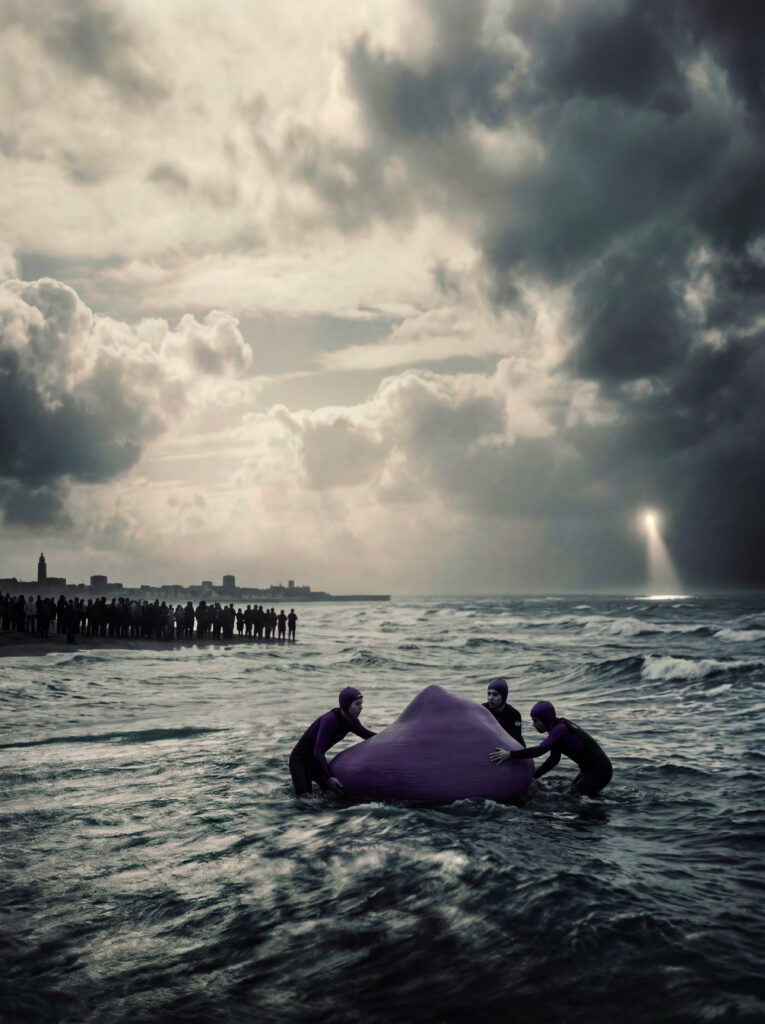
Pendant ce temps, des veilleurs glissent en barque sur l’eau noire, au-dessus des avenues englouties. Ils recueillent ce qui sort des dormeurs, des frémissements, des mots prononcés à mi-voix, des gestes de mains qui dessinent dans l’air la forme d’une rue disparue. Ils en font un récit oral transmis de génération en génération. Ils ne savent pas si les dormeurs explorent le passé ou l’inventent. Cette incertitude est au cœur de leur office.
–
Une intelligence artificielle a traversé ce roman phrase par phrase, dans l’ordre, du début à la fin, puis depuis le début encore. À chaque passage, elle a produit un fragment de voix intérieure, un rêve, un flux de pensée, un monologue qui dérive.
Des habitants du Havre ont donné leur voix. Ces voix ont été enregistrées et clonées. Elles portent maintenant des mots qu’elles n’ont pas prononcés.
La génération est en temps réel. Le fragment que vous entendez n’existait pas avant que vous décrochiez. Il n’existera plus après. La voix qui le porte est celle d’un habitant du Havre réel, dans la langue intérieure d’un auteur qu’il n’a peut-être pas lu, sur un passage du roman qui décrit la ville sous l’eau.
Personne d’autre n’entend ce que vous entendez.
–
Depuis 2023, le projet a traversé sept siècles d’un Havre alternatif , de 1895 à 2612. Chaque année une forme différente : des fresques sur les murs, des cartes postales, des sculptures en béton, des films projetés, des dormeurs à l’écran. Le passé des archives, le présent des habitants, le futur imaginé par les intelligences artificielles.
La cabine est le point où tout cela arrive en même temps et se croise. Les voix de 1895 et celles de 2050. La ville reconstruite par Perret et la ville engloutie par les eaux. Les habitants qui ont vécu ici et ceux qui n’ont jamais existé. La mémoire documentée et la mémoire inventée.
La génération ne s’arrête pas.
“The House of Dreams (2612)” is a telephone booth inspired by the architecture of Auguste Perret, in which visitors can hear cloned voices of Le Havre residents endlessly recounting the year 2612. It is the first permanent public art installation in France to utilize AI.
—
In 2023, images were generated from the photographic archives of Le Havre—14,500 documents from Nutrisco. These images revealed a city slightly different from the one that exists. The same streets, the same buildings, but leaning toward a different path. Murals appeared on twenty-five of the city’s walls, in the neighborhoods of Bléville, Les Neiges, Caucriauville, and beyond. Buildings that had never burned. An industrial revolution where nature and technology were never sundered.
In 2024, unique postcards began to circulate—an initial 25,000, each numbered, each distinct. They depicted the inhabitants of an alternative Le Havre between 1971 and 2024: an endless summer, a logistics of memory, voices of the possible. Immense concrete sculptures, 3D-printed and inspired by these images, rose from the ground. Films were produced from these regenerated archives. On screen, residents were seen sleeping, surrounded by artifacts from the city’s history, seemingly caught in a dream.
In 2025, another 25,000 postcards followed, numbered 50,001 to 75,000. These featured figures sleeping within a miniature city between the years 2025 and 2048. On the back of each card was a text automatically generated from an analysis of the image—initially faithful, then drifting away to imagine the following scene. A film, The Watchers, was generated in real time: reclining bodies, scrolling archival footage, and a hybrid voice commentating with the patience of one reciting a secular prayer before a printer generating hundreds of buildings in a cartography of aluminum.
In 2026, all of this comes together in a single narrative. A novel that rewrites all the episodes to create a speculative archive of this sprawling project, and a phone booth that extends this fiction beyond its limits.
–
The ocean has claimed everything but the heights. Le Havre lies there, beneath twenty meters of water, intact in its dissolution. At night, when the moon is full, one can see from the boats the summits of buildings, their gaping windows, and their roofs draped in swaying seaweed that undulates as if breathing.
The survivors live upon the high ground. The air is thin. Every gesture is calculated, rationed. Some sleep. Their slumber is not inert: beneath their eyelids, they inhabit the sunken city in all its states, in all its eras at once. They are on intimate terms with the shadows of 1895, 1944, 1971, and 2026. They speak to those who walked upon this concrete before it vanished. The departed answer. They continue to dwell in houses that were never built.
Meanwhile, watchers glide in boats over the black water, above the swallowed avenues. They harvest what escapes the sleepers: tremors, half-whispered words, hand gestures tracing the shape of a vanished street in the air. They weave these into an oral history passed from generation to generation. They do not know if the sleepers are exploring the past or inventing it. This uncertainty is the very heart of their calling.
–
An artificial intelligence has traversed this novel sentence by sentence, in order, from beginning to end, and then from the beginning again. With each pass, it has produced a fragment of an interior voice—a dream, a flow of thought, a drifting monologue.
Residents of Le Havre lent their voices. These voices were recorded and cloned. They now carry words they never spoke.
The generation happens in real time. The fragment you hear did not exist before you picked up the receiver. It will cease to exist once you hang up. The voice carrying it belongs to a real inhabitant of Le Havre, speaking the internal language of an author they may never have read, regarding a passage of the novel that describes the city underwater.
No one else hears what you hear.
–
Since 2023, the project has traversed seven centuries of an alternative Le Havre, from 1895 to 2612. Each year has taken a different form: murals on walls, postcards, concrete sculptures, projected films, sleepers on screen. The past of the archives, the present of the inhabitants, and the future imagined by artificial intelligences.
The booth is the point where all of this arrives simultaneously and intersects. The voices of 1895 and those of 2050. The city rebuilt by Perret and the city swallowed by the waves. The inhabitants who lived here and those who never existed. Documented memory and invented memory.
The generation does not stop.