
Double Glove VII
Série d’images générées par intelligence artificielle
Impression pigmentaire sur papier baryté
100 × 70 cm (chaque)
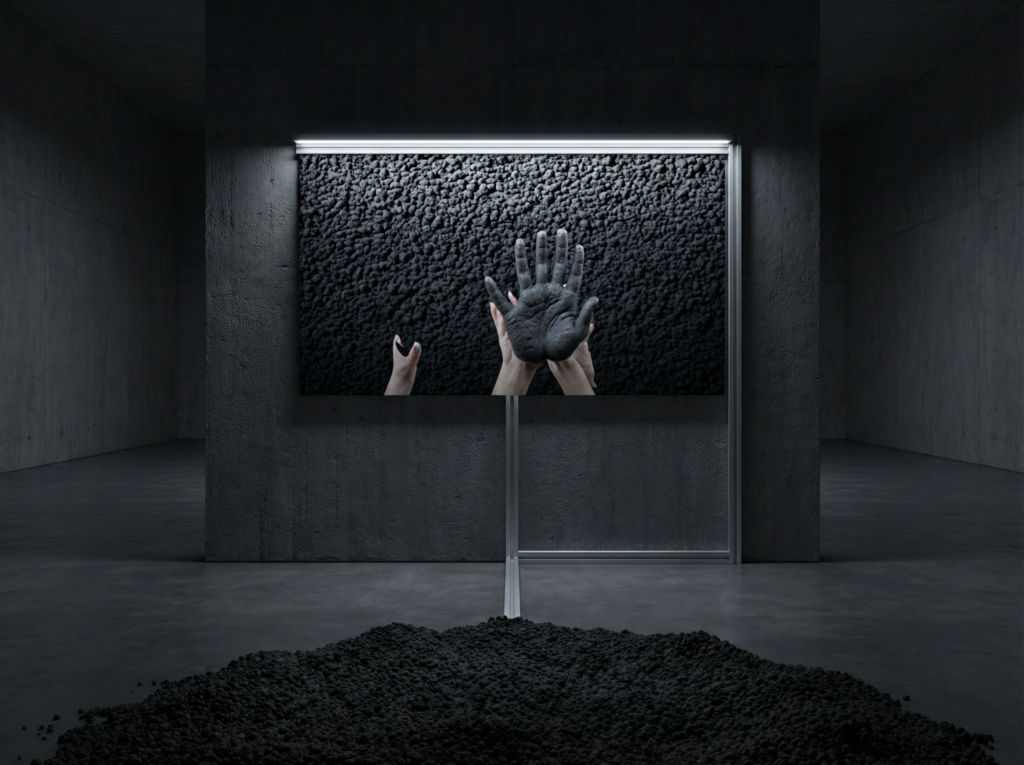
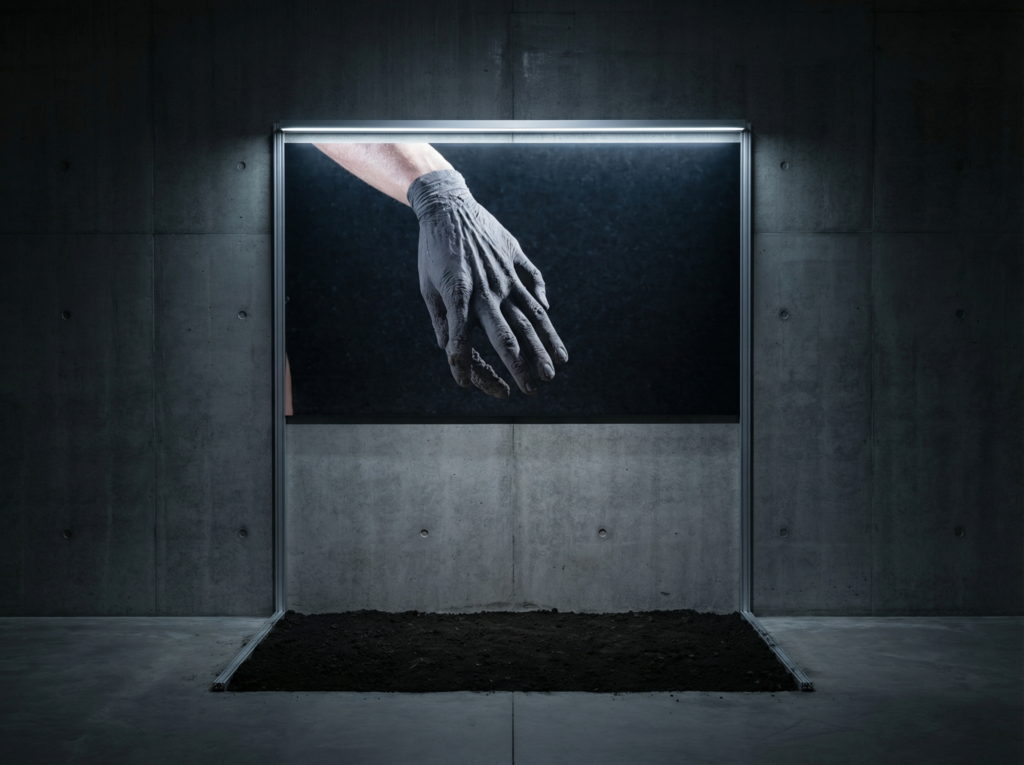
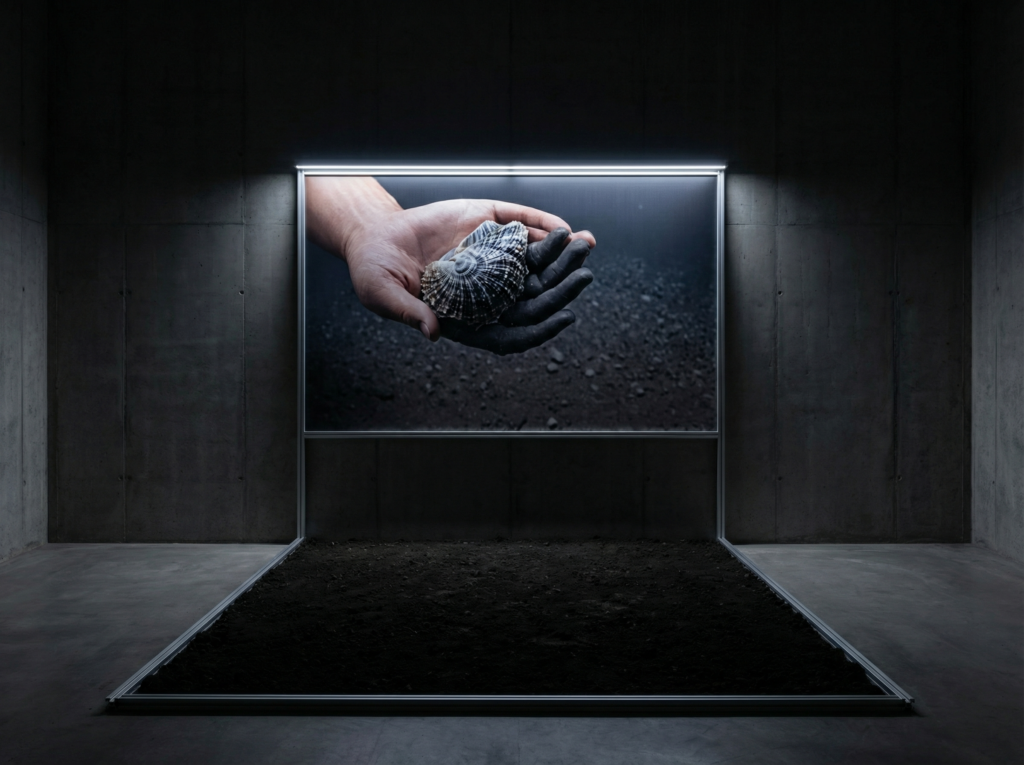
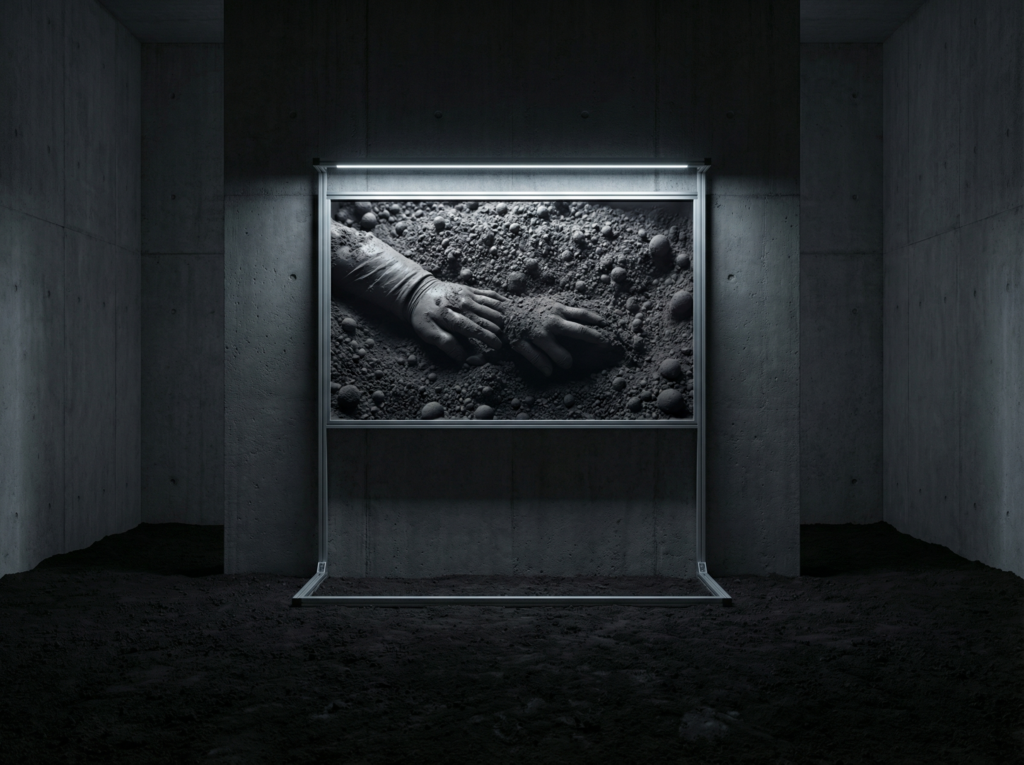
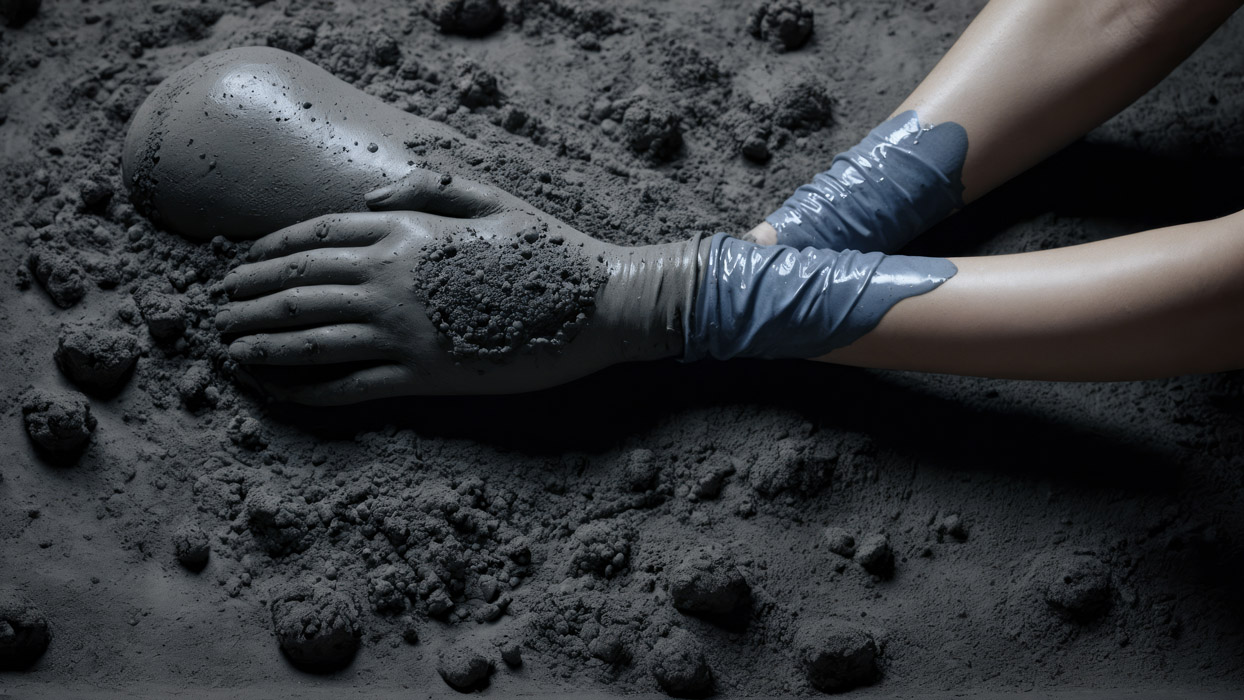
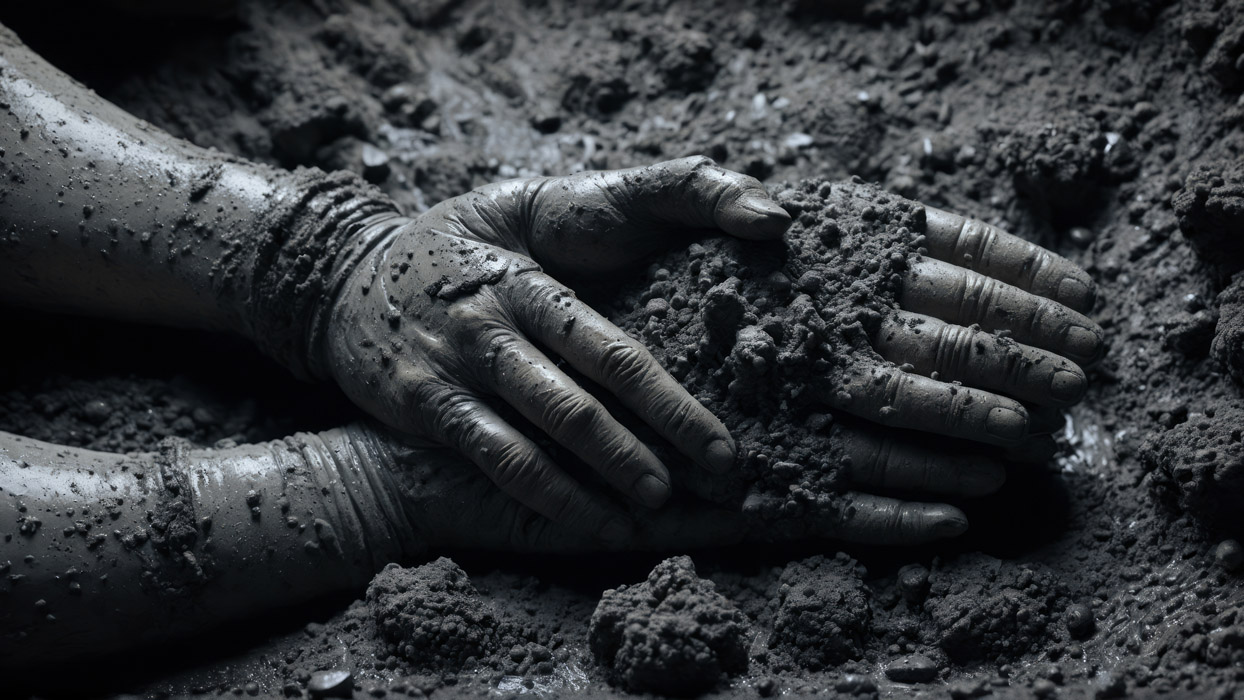
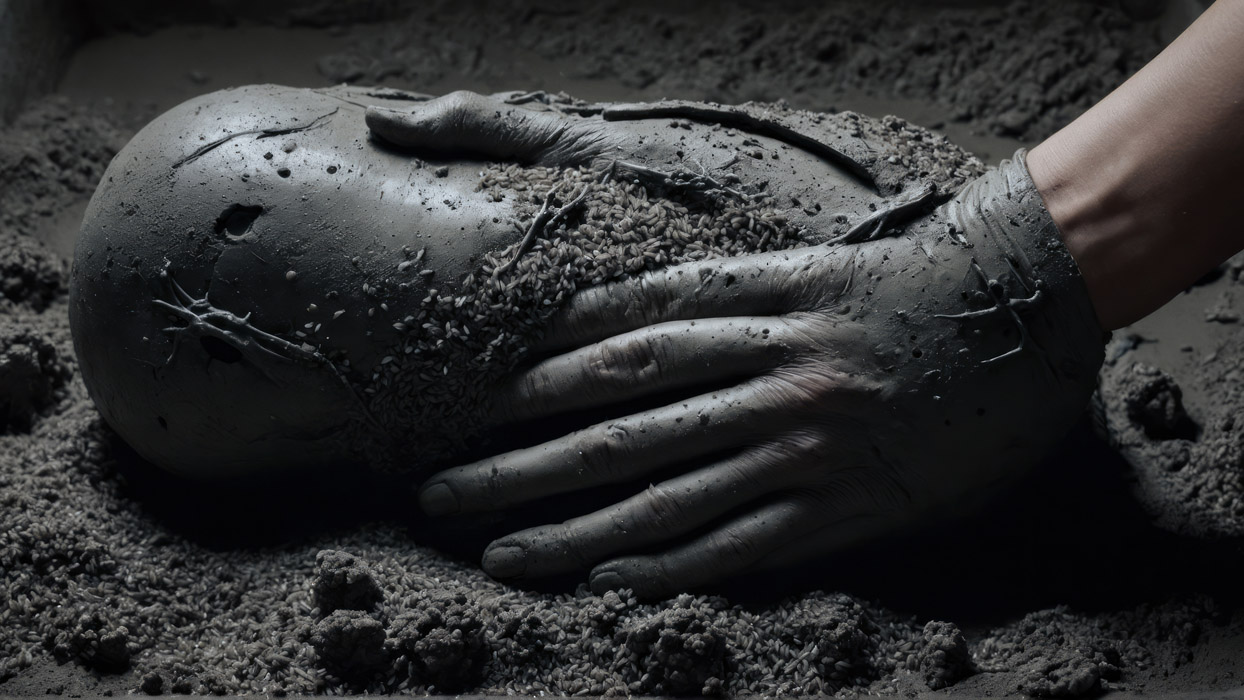
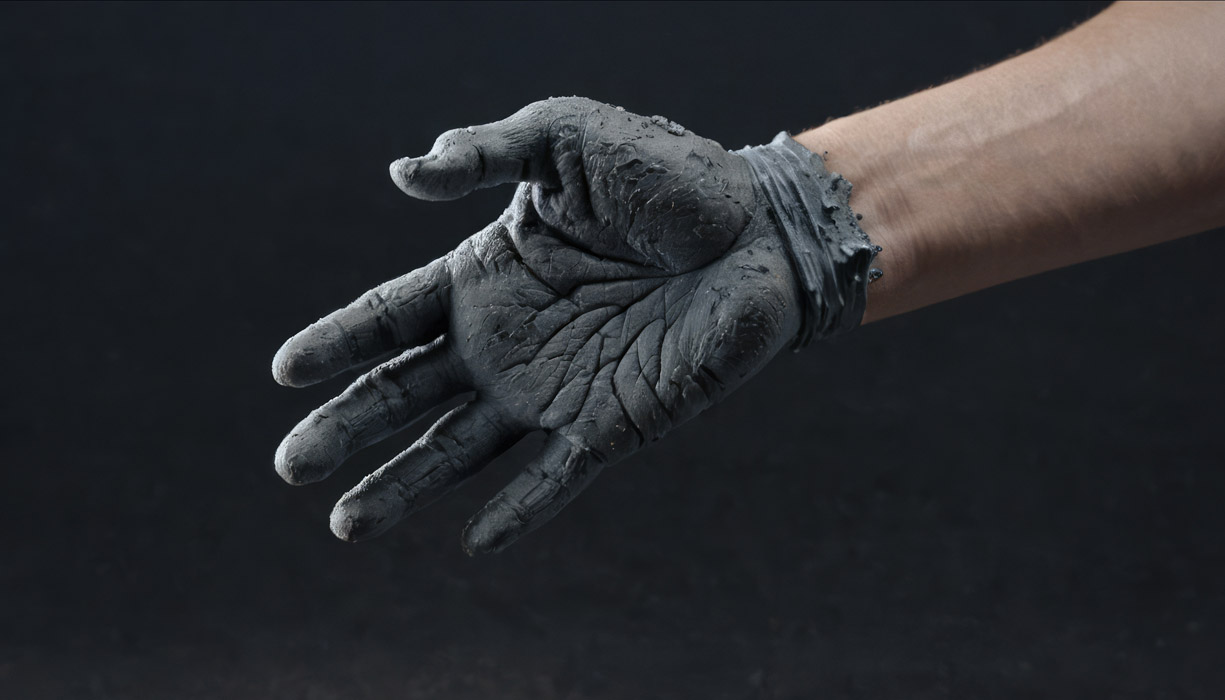
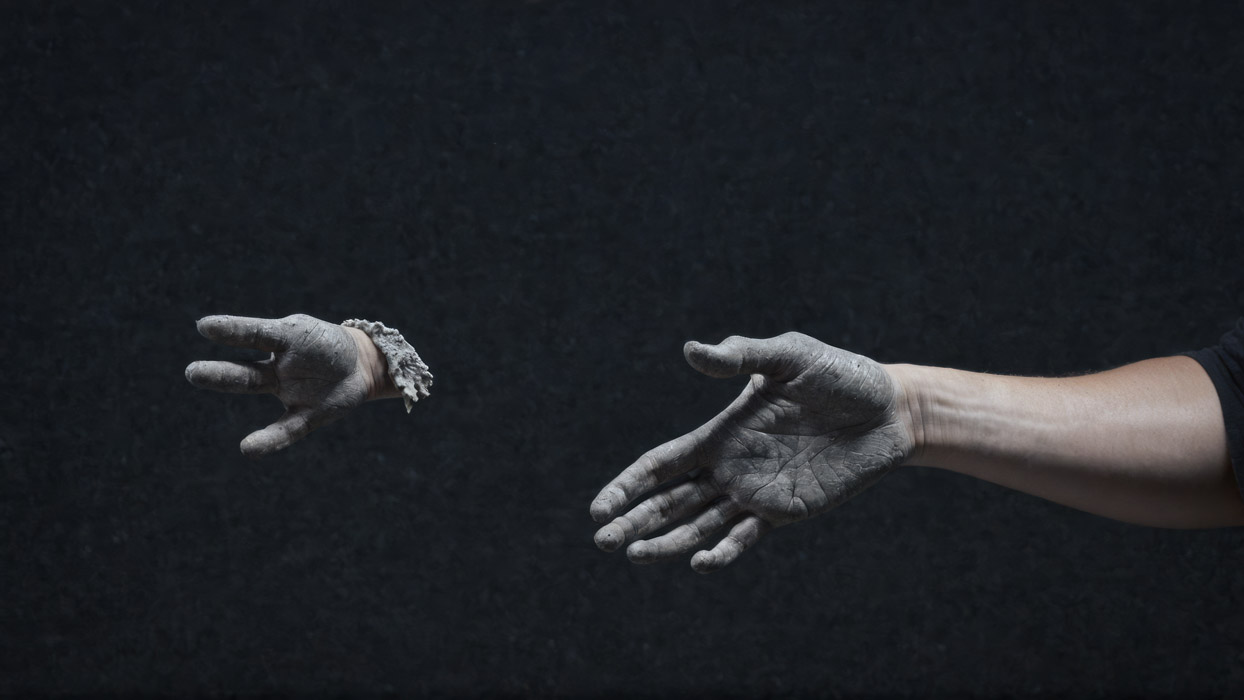
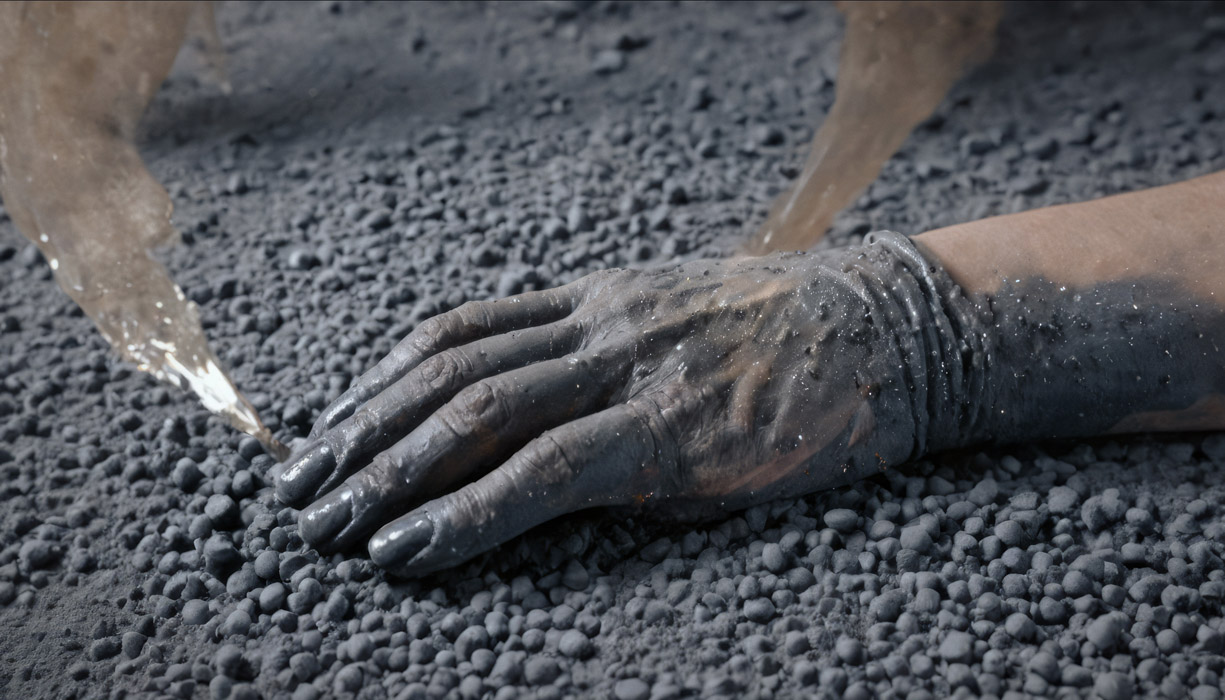
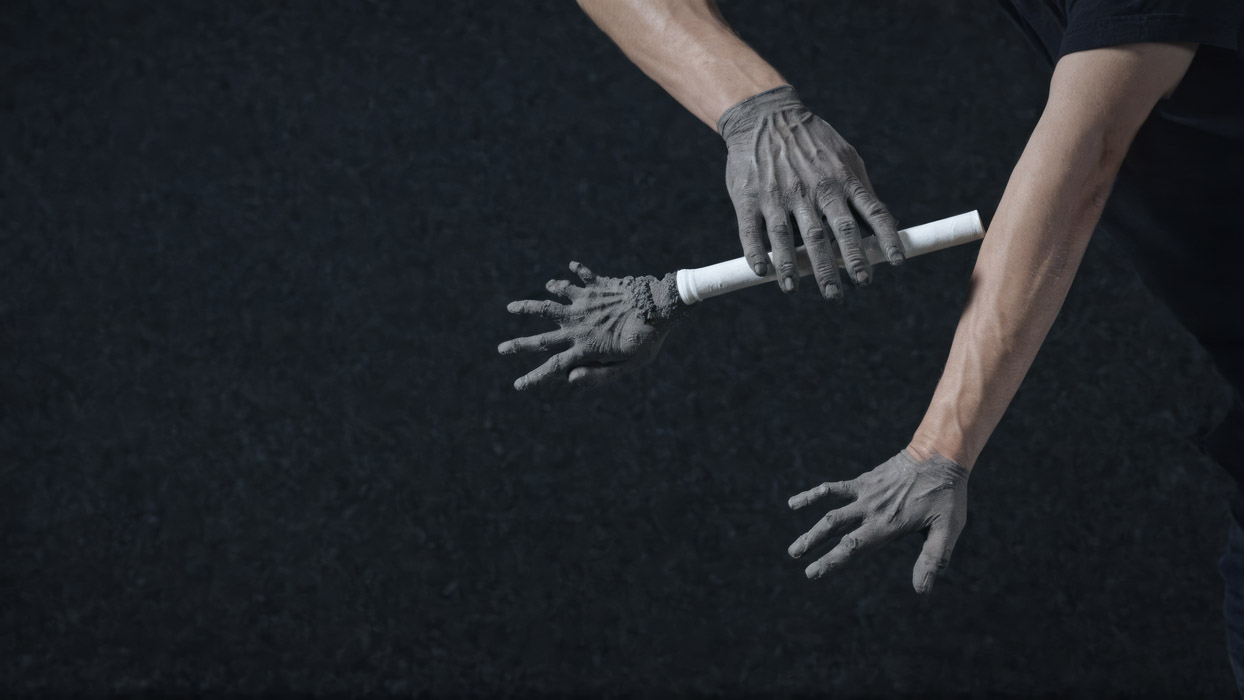
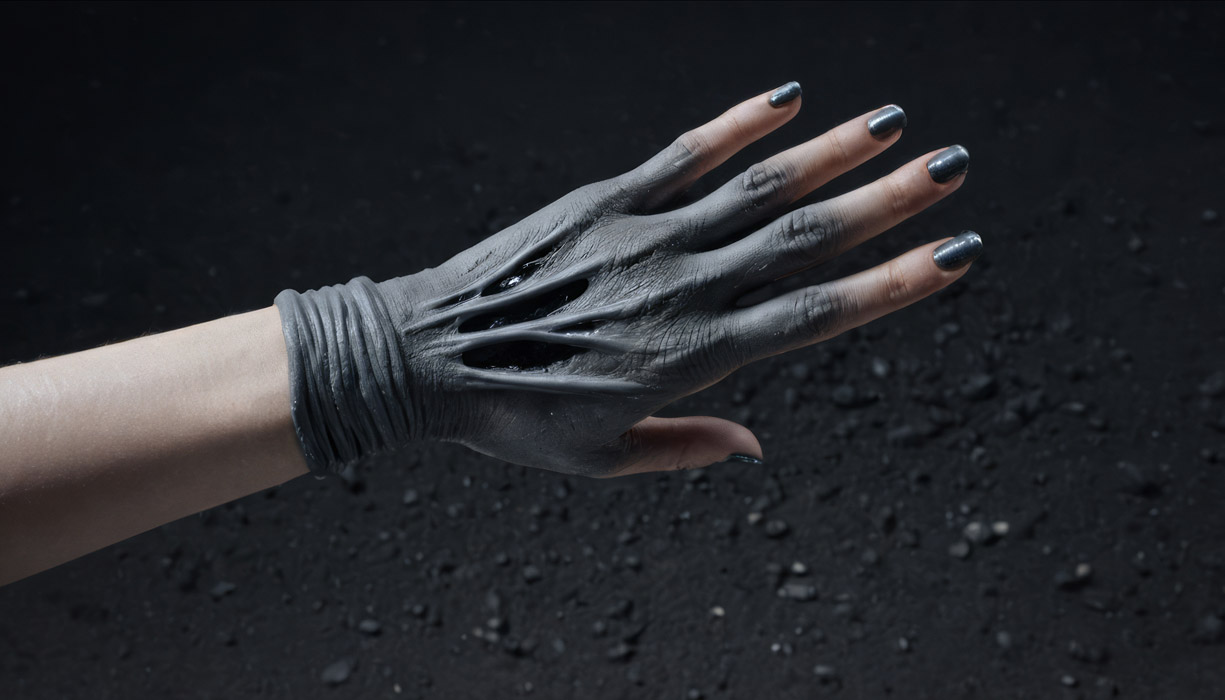
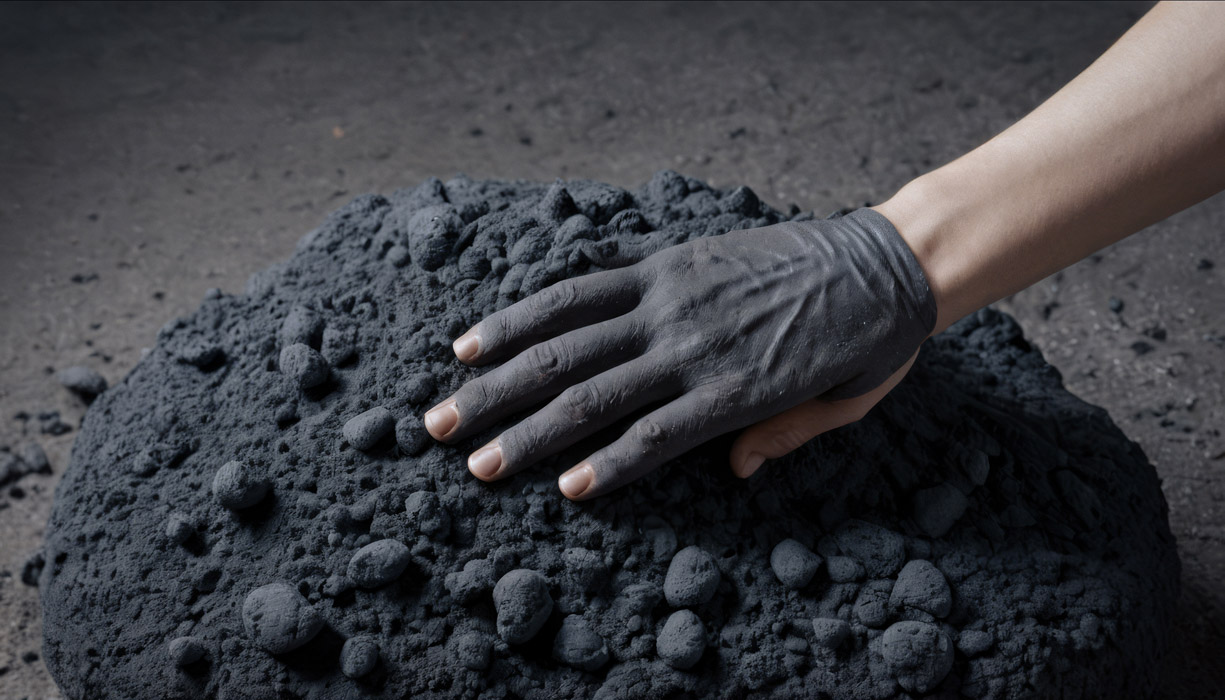
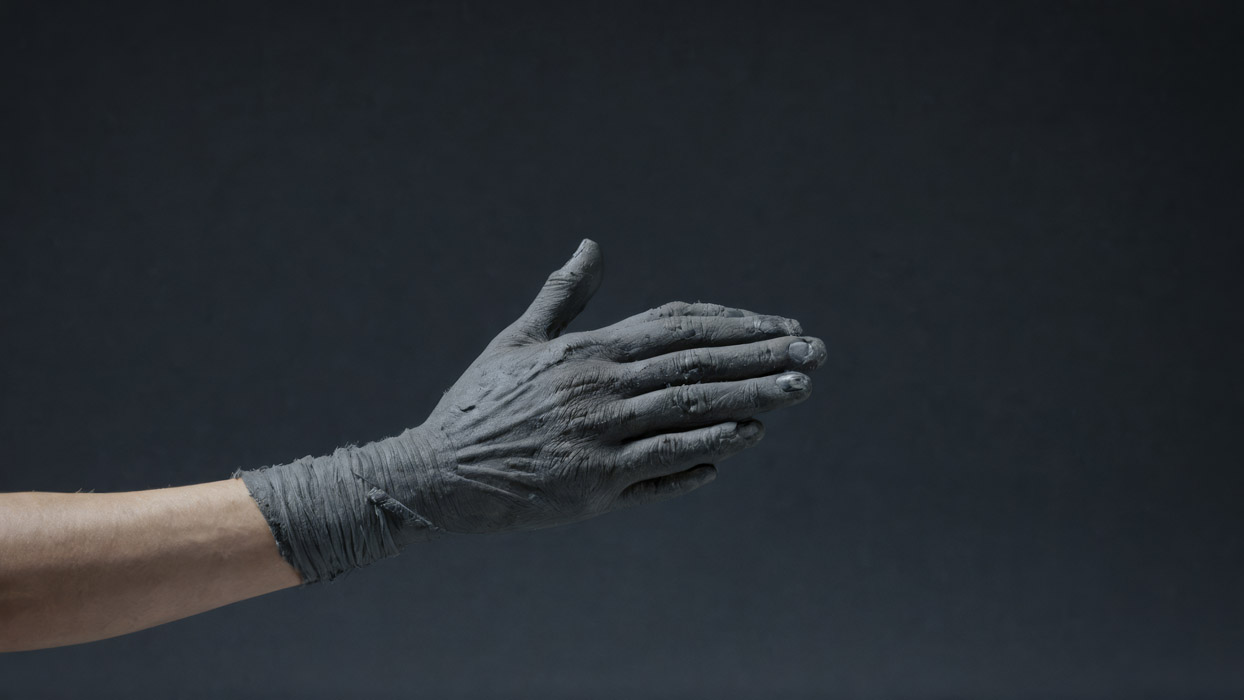
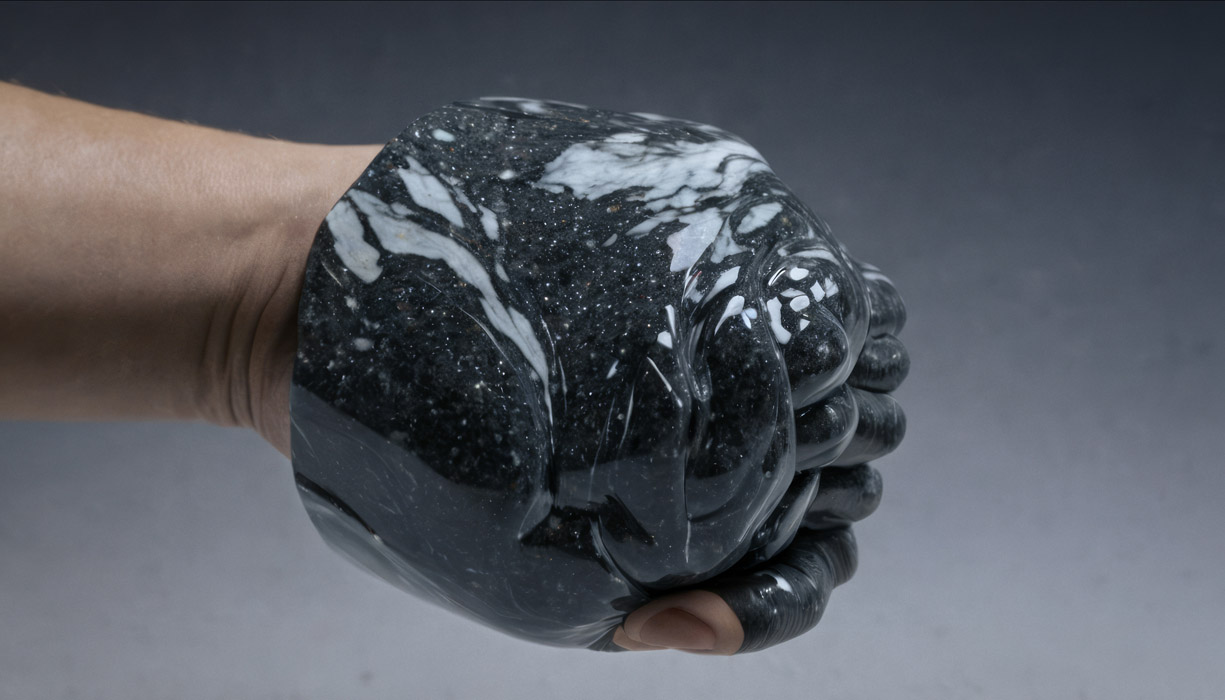
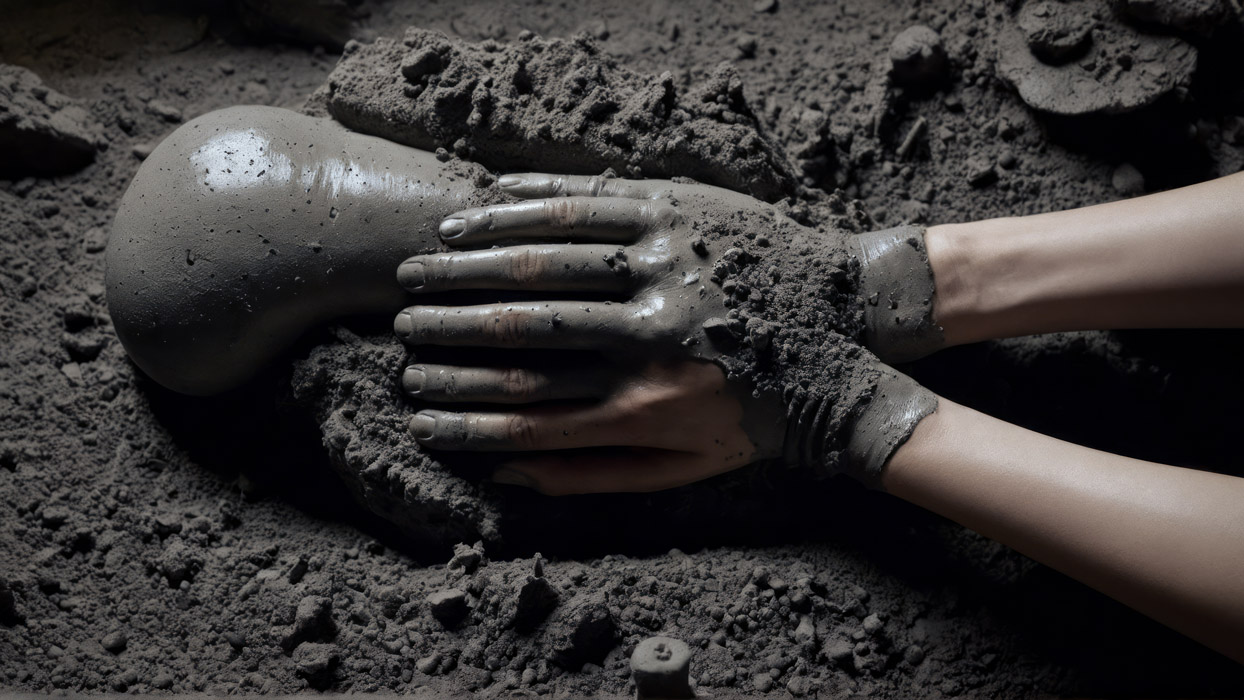
Cette série d’images générées par intelligence artificielle explore la relation entre le corps humain et la matière minérale à travers le motif de la main recouverte ou transformée par l’argile. La main, instrument premier de la création artistique et symbole d’humanité, subit ici une métamorphose qui l’assimile à la terre. L’utilisation de l’IA pour représenter la main – paradoxalement organe du faire manuel – instaure une tension conceptuelle au cœur du dispositif.
Le processus documenté évoque simultanément plusieurs temporalités : celle, immédiate, du geste créateur qui façonne la matière; celle, plus lente, de la fossilisation qui transforme l’organique en minéral. Cette temporalité multiple fait écho aux préoccupations récurrentes de l’artiste concernant l’extinction et la trace.
L’œuvre s’inscrit dans une réflexion sur l’Anthropocène, ère géologique où l’empreinte humaine modifie irréversiblement la planète. La main recouverte de matière évoque tant les débuts de l’humanité et ses premières traces créatrices que sa possible disparition et son retour à la terre.
Ces images, dans leur sobriété formelle et leur tension dramatique, s’inscrivent dans un dialogue avec la tradition philosophique qui interroge le statut de la main et du travail manuel. De la critique d’Horkheimer sur l’instrumentalisation technique à l’approche phénoménologique de Heidegger sur la main comme lieu du dévoilement de l’être, jusqu’à la déconstruction derridienne de la métaphysique de la présence à travers le toucher, l’œuvre réactive ces questionnements à l’ère de l’automatisation algorithmique. Elle suggère une continuité matérielle paradoxale entre l’humain et le non-humain, le vivant et le minéral, le manuel et le computationnel.
This series of AI-generated images explores the relationship between the human body and mineral matter through the motif of the hand covered or transformed by clay. The hand, the primary instrument of artistic creation and a symbol of humanity, undergoes a metamorphosis here that assimilates it into the earth. The use of AI to represent the hand—paradoxically the organ of manual labor—establishes a conceptual tension at the heart of the project.
The documented process simultaneously evokes several temporalities: the immediate temporality of the creative gesture shaping matter, and the slower pace of fossilization that transforms the organic into mineral. This multiple temporality echoes the artist’s recurring concerns regarding extinction and the trace.
The work is part of a reflection on the Anthropocene, a geological era in which the human footprint irreversibly alters the planet. The hand covered in matter evokes both the beginnings of humanity and its first creative traces, as well as its possible disappearance and return to the earth.
These images, in their formal sobriety and dramatic tension, engage in a dialogue with the philosophical tradition that questions the status of the hand and manual labor. From Horkheimer’s critique of technical instrumentalization to Heidegger’s phenomenological approach to the hand as a site of the unveiling of being, and Derrida’s deconstruction of the metaphysics of presence through touch, the work reactivates these questions in the age of algorithmic automation. It suggests a paradoxical material continuity between the human and the non-human, the living and the mineral, the manual and the computational.