
Disuffocation
Série d’images générées par intelligence artificielle
Impression sur papier photo contrecollé sur aluminium 100 × 100 cm (chaque)
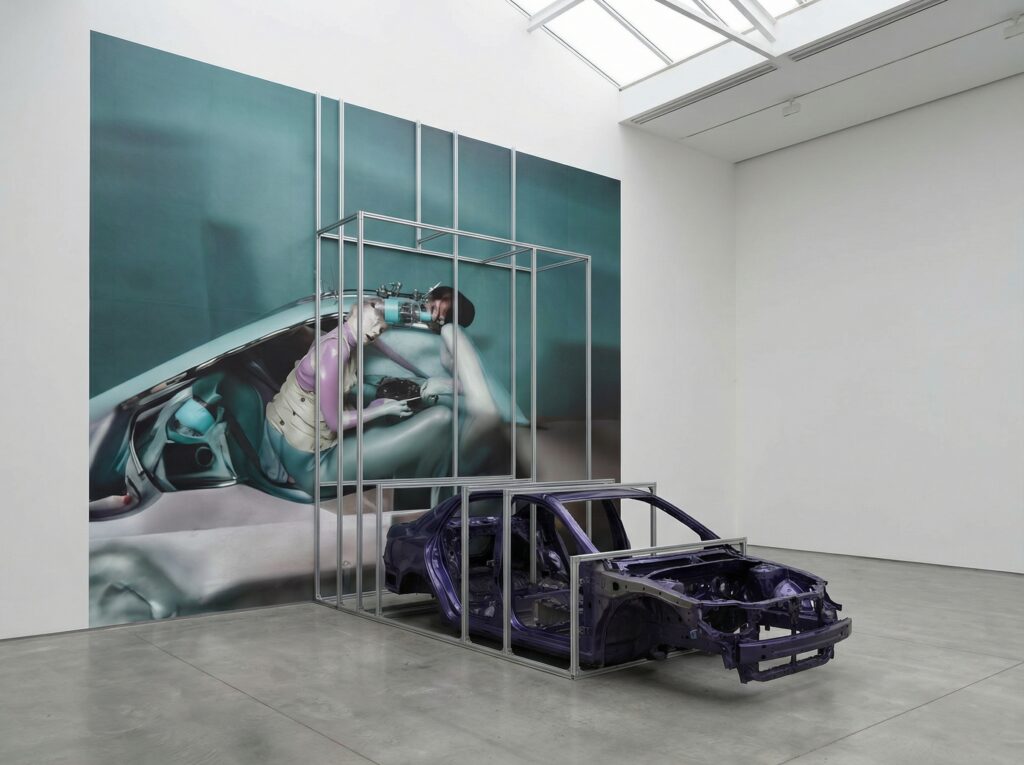
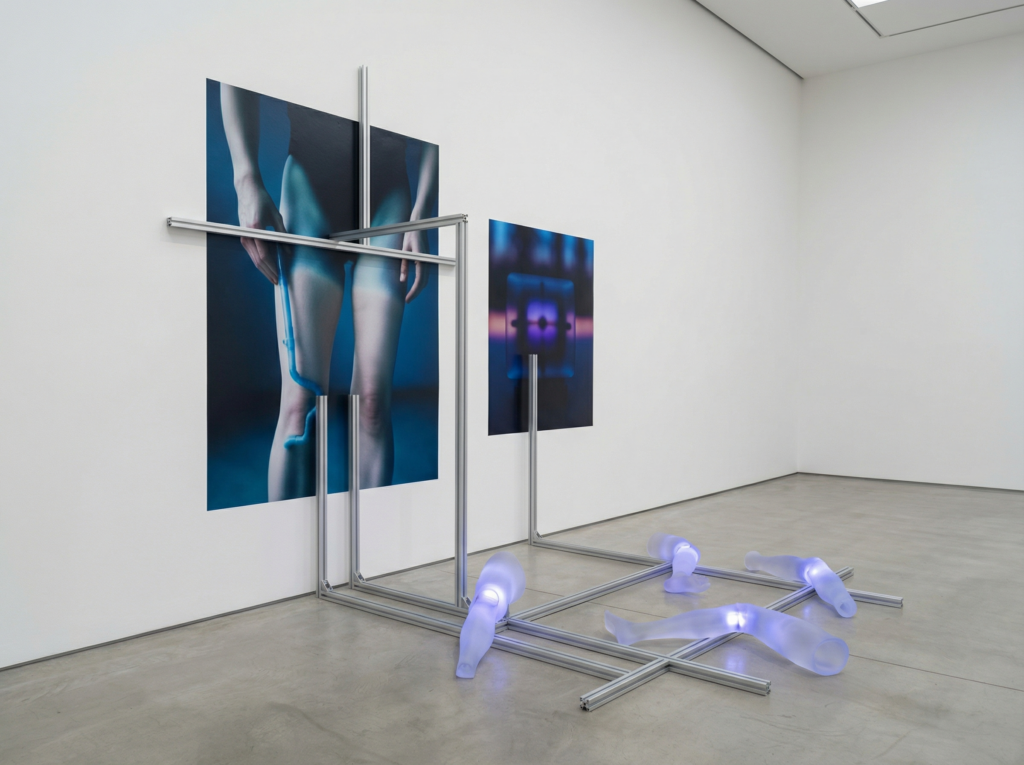
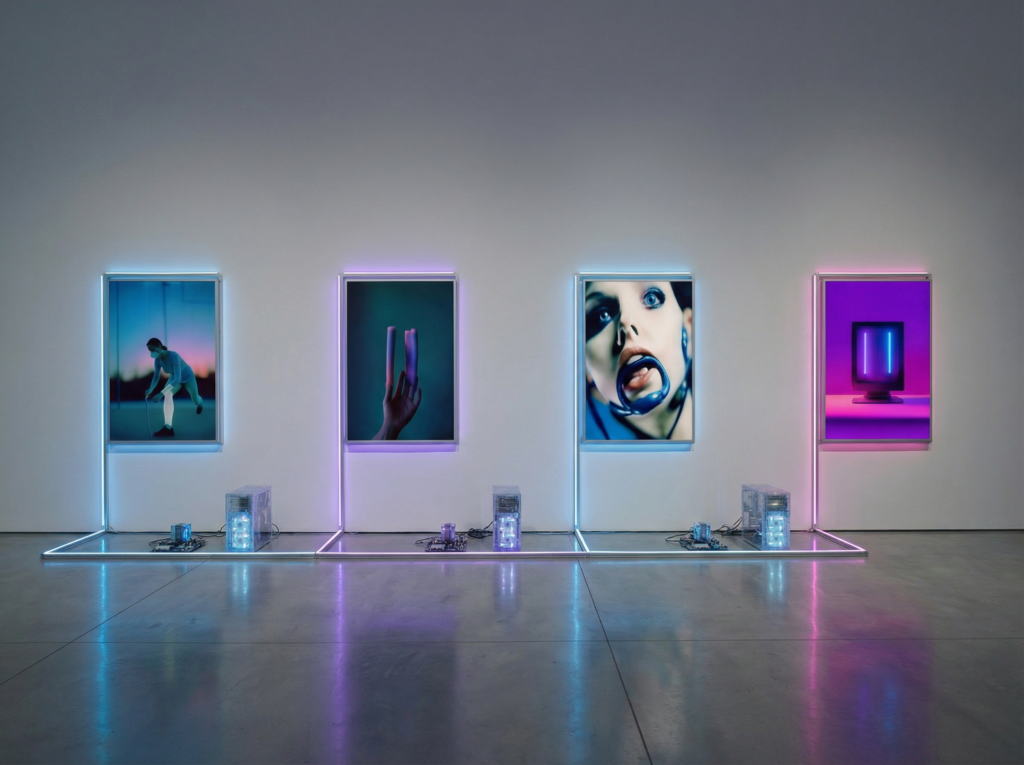
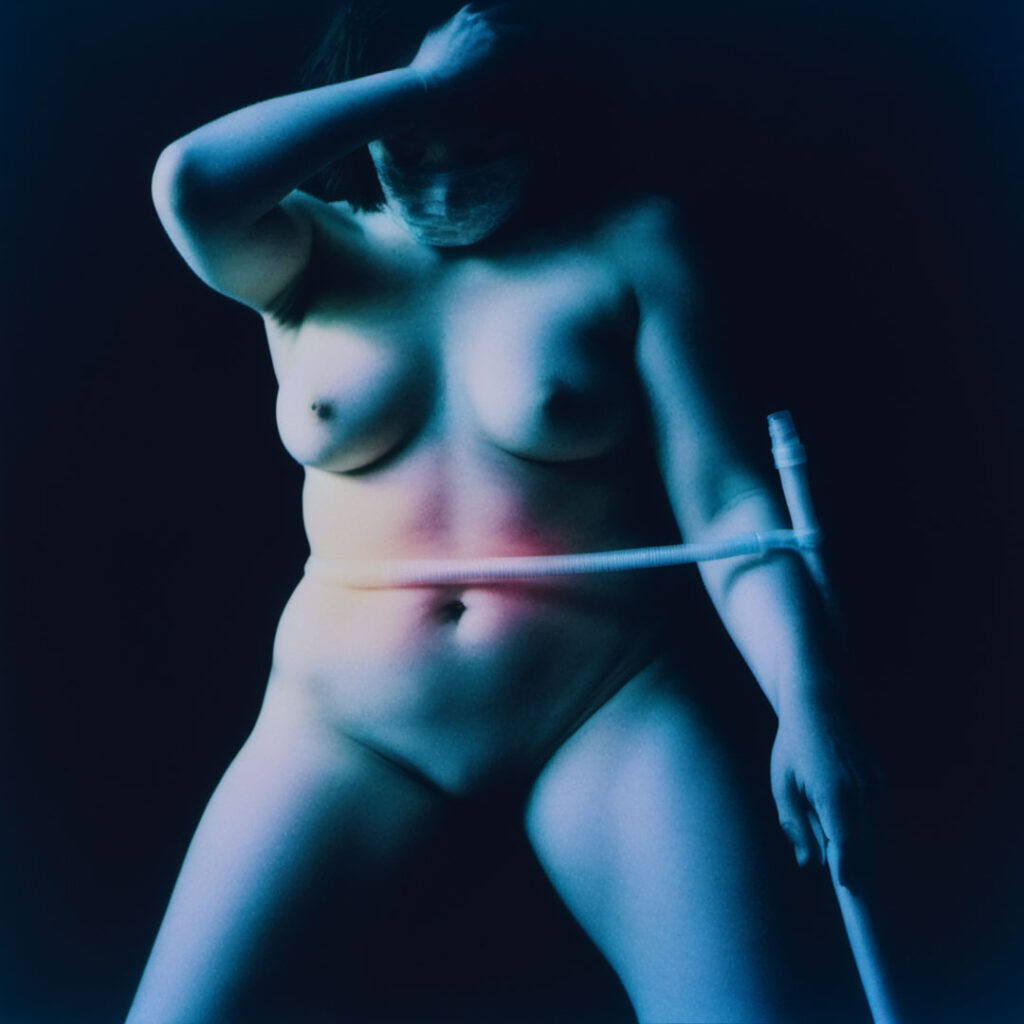
Cette série explore les frontières entre l’humain et le non-humain à travers des images générées par intelligence artificielle. Les figures présentées évoquent des corps fragmentés et incomplets, complétés par des éléments prothétiques qui ne sont ni simplement fonctionnels ni purement décoratifs. Cette fusion crée une esthétique post-humaine où les limites entre chair déficiente et technologie compensatoire s’estompent.
Dans ces compositions aux teintes froides et cliniques, des entités hybrides fusionnent avec des éléments mécaniques et des surfaces lisses évoquant tant l’automobile que l’architecture médico-industrielle. Ces créatures semblent exister dans un entre-deux, ni pleinement artificielles ni véritablement humaines.
L’œuvre interroge le corps incomplet et ses extensions prothétiques à l’ère des biotechnologies. Les membres absents, remplacés ou augmentés par des appendices mécaniques, évoquent tant la vulnérabilité humaine que les possibilités de réparation et d’amélioration technologiques. En générant algorithmiquement ces images, l’artiste questionne comment ces mêmes technologies redéfinissent notre conception de l’intégrité corporelle et des frontières du soi.
Les corps présentés, à la fois déficients et augmentés, questionnent le statut ambigu de la prothèse – extension nécessaire qui comble un manque tout en marquant une absence. Ces figures renvoient tant aux imaginaires de la science-fiction qu’aux réalités cliniques de la médecine réparatrice, invitant à reconsidérer les notions d’handicap et de normalité corporelle dans un futur où la frontière entre réparation et amélioration devient de plus en plus poreuse.
This series explores the boundaries between the human and the non-human through AI-generated imagery. The figures presented evoke fragmented and incomplete bodies, supplemented by prosthetic elements that are neither merely functional nor purely decorative. This fusion creates a post-human aesthetic where the lines between deficient flesh and compensatory technology blur.
In these compositions with cold, clinical tones, hybrid entities merge with mechanical elements and smooth surfaces reminiscent of both automotive design and medico-industrial architecture. These creatures seem to exist in an in-between state—neither fully artificial nor truly human.
The work examines the incomplete body and its prosthetic extensions in the age of biotechnology. Absent limbs, replaced or augmented by mechanical appendages, evoke both human vulnerability and the possibilities for technological repair and enhancement. By algorithmically generating these images, the artist questions how these same technologies redefine our conception of bodily integrity and the boundaries of the self.
The bodies presented, simultaneously deficient and augmented, challenge the ambiguous status of the prosthesis—a necessary extension that fills a void while simultaneously marking an absence. These figures reference both science-fiction imaginaries and the clinical realities of restorative medicine, inviting us to reconsider notions of disability and physical normality in a future where the boundary between repair and enhancement becomes increasingly porous.