
Dislocation IV
Dessins, traceur modifié, programme informatique
Dimensions variables
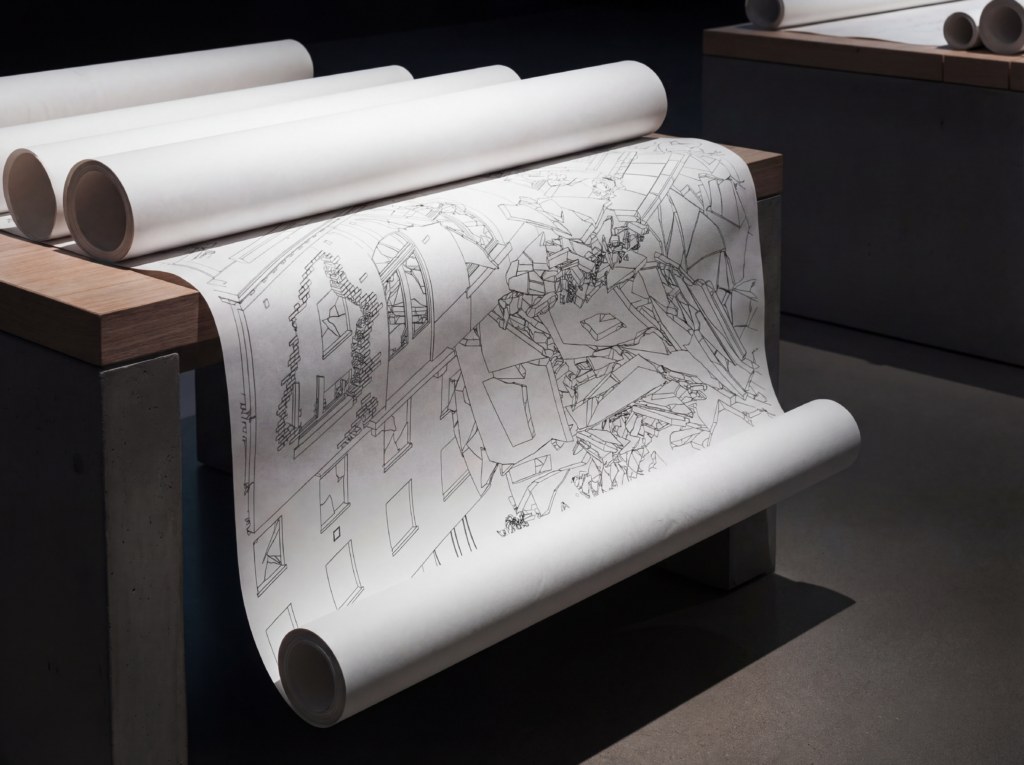
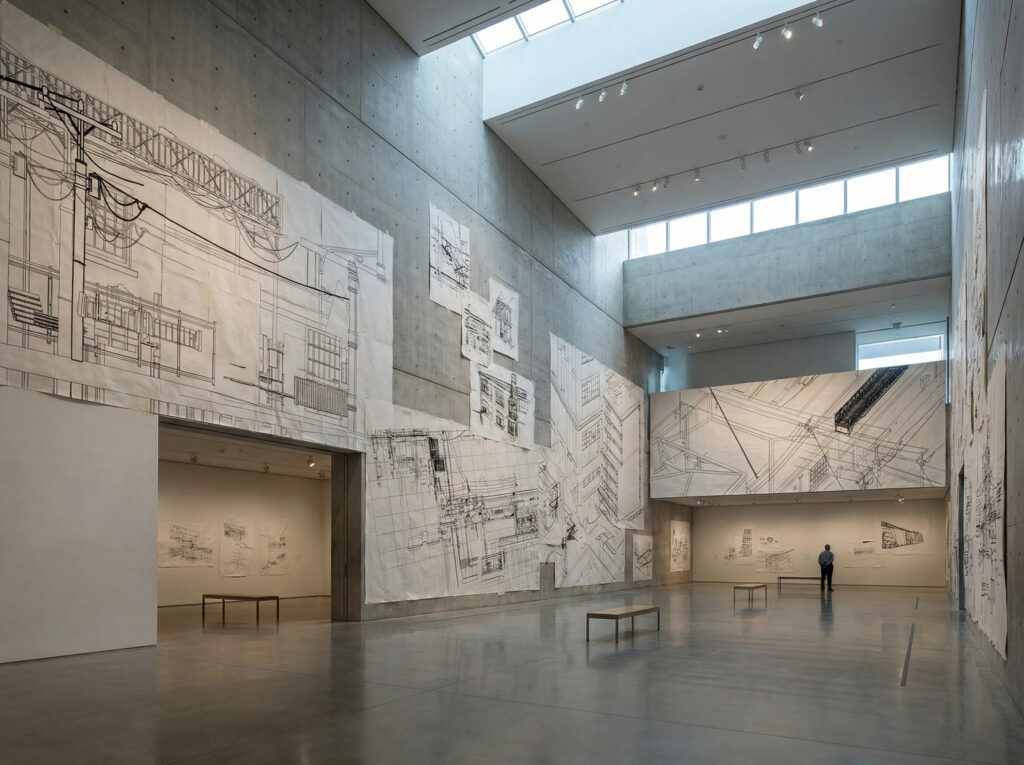
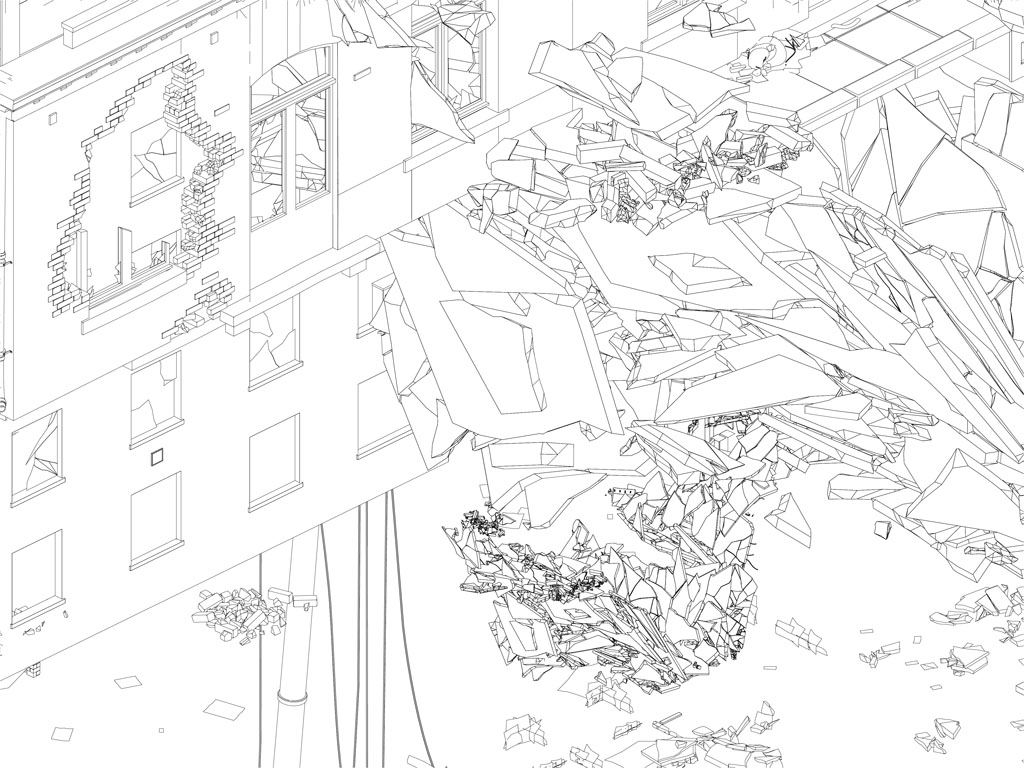
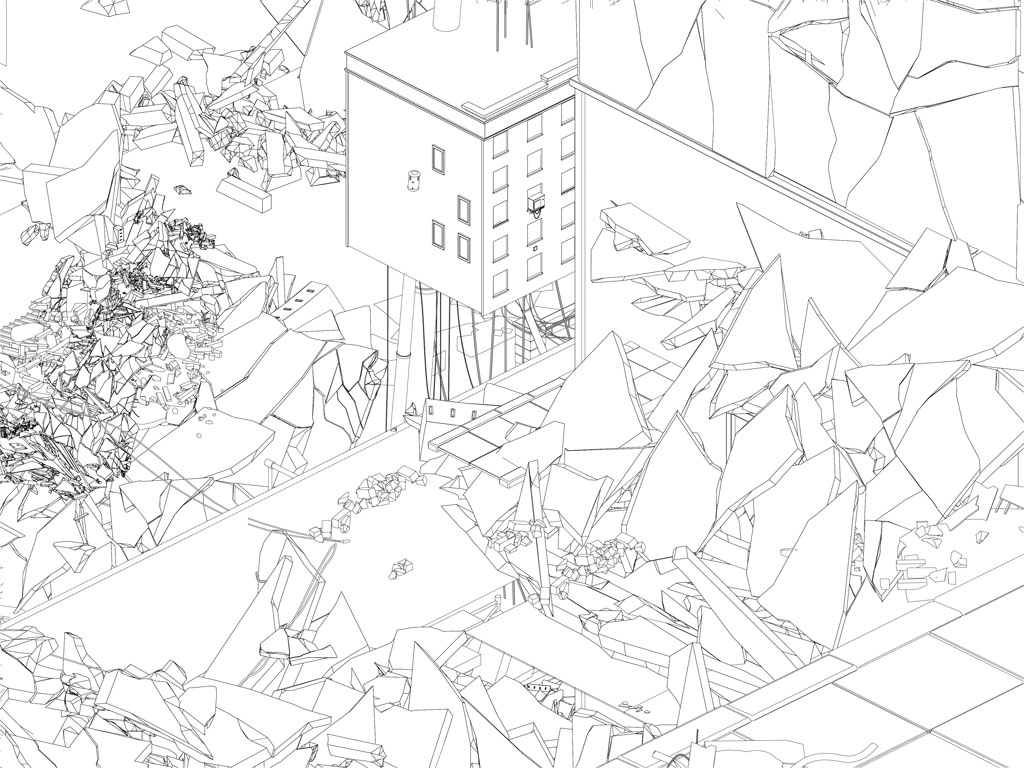
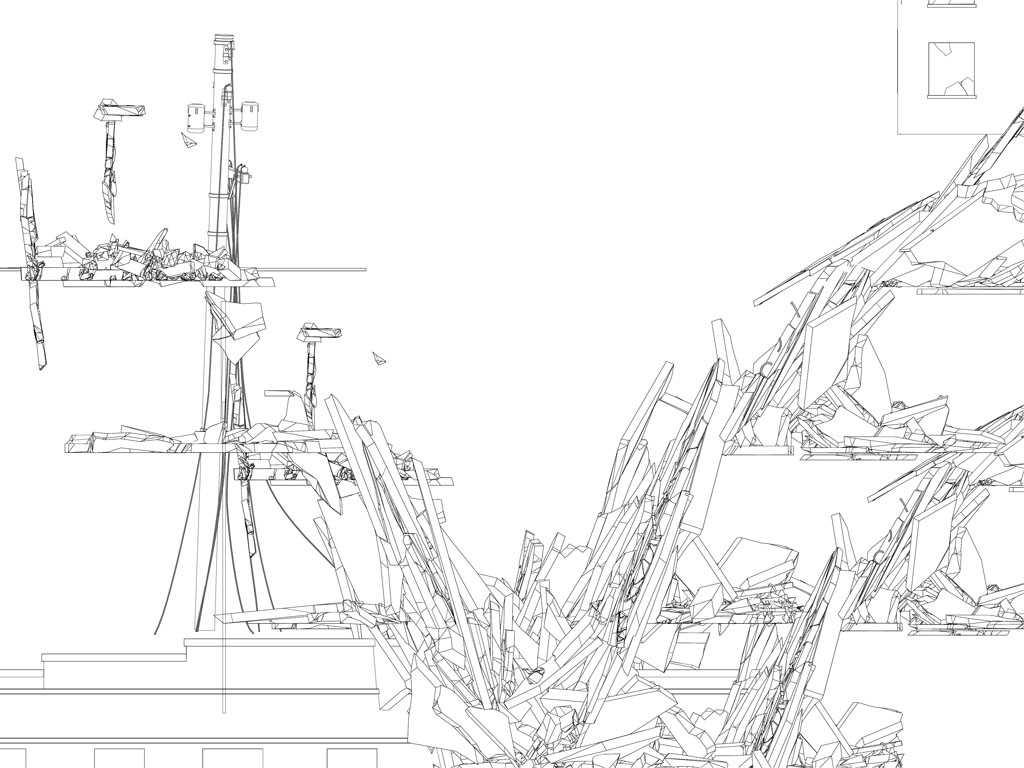
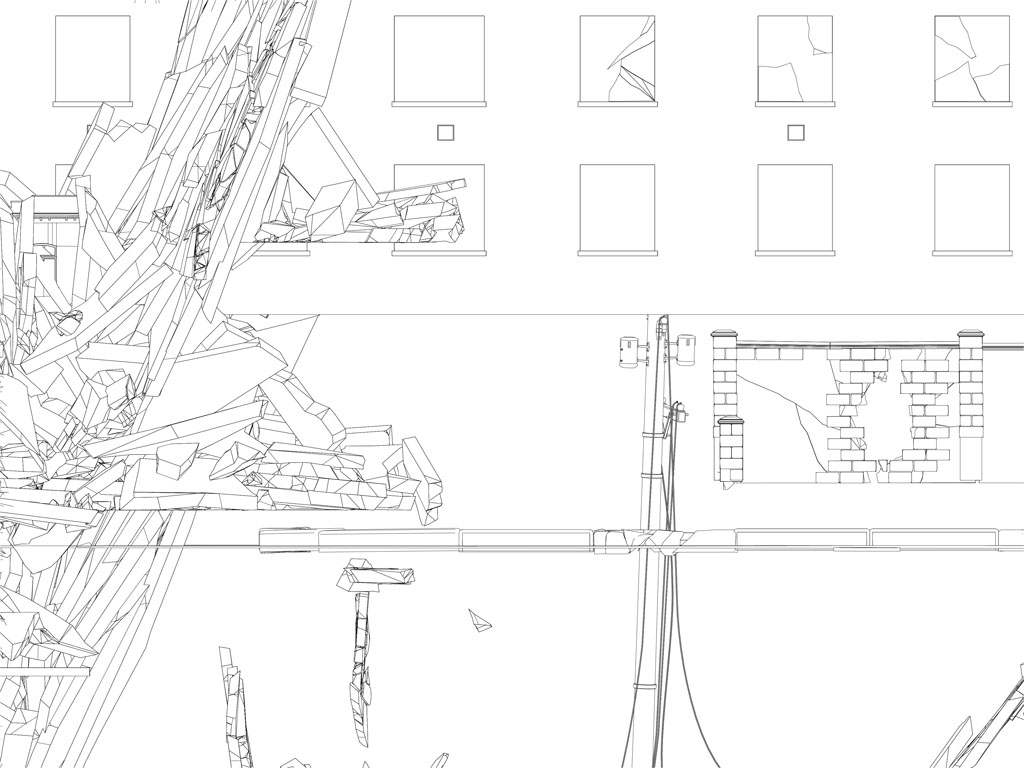
Cette série présente des plans architecturaux isométriques qui, paradoxalement, figurent non pas des projets de construction mais des structures en ruine. Ces représentations techniques de bâtiments détruits, fragmentés et effondrés adoptent le langage visuel de l’architecture prévisionnelle tout en documentant sa négation.
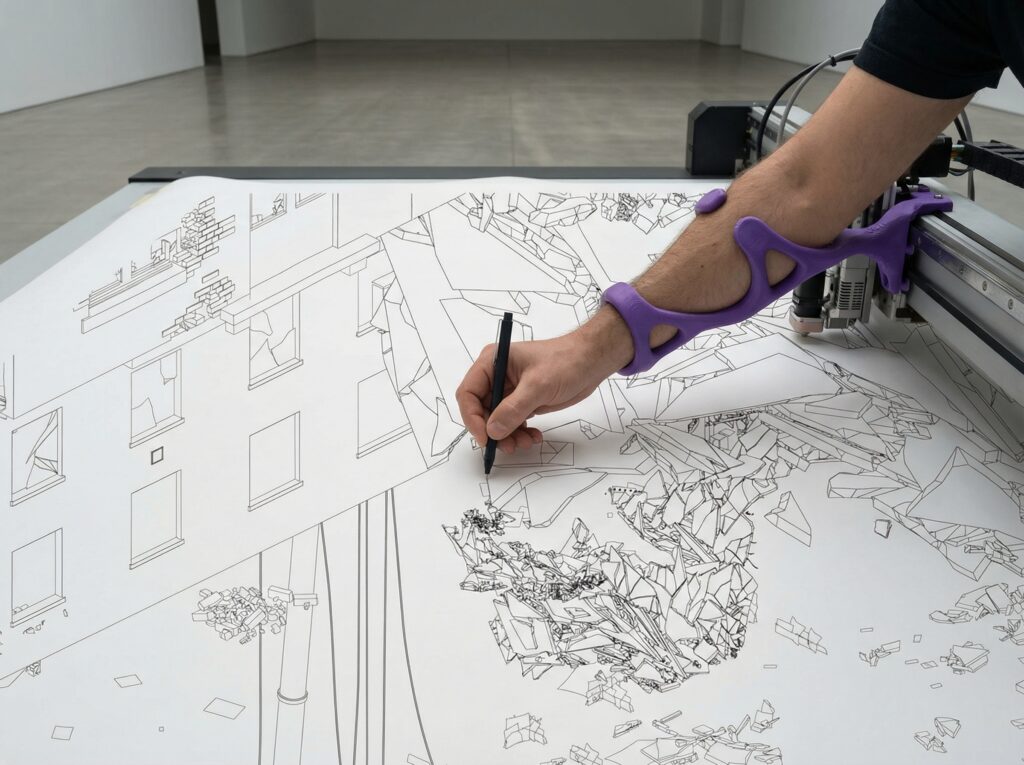
Le processus de création comporte deux phases distinctes : d’abord, un algorithme génère des modèles de destruction urbaine ; ensuite, ces modèles sont transposés sur papier par la main de l’artiste, elle-même guidée par un traceur modifié qui contrôle mécaniquement ses mouvements. Cette méthode hybride associe la précision computationnelle à l’irrégularité du geste humain contraint.
Les dessins conservent les traces physiques de cette tension : la fatigue musculaire et les micro-variations du trait témoignent d’une corporéité soumise à la machine, créant un parallèle entre le corps instrumentalisé de l’artiste et les structures architecturales désintégrées.
L’œuvre interroge la possibilité même de planifier la destruction, de la soumettre à une rationalité graphique. Elle questionne également les rapports ambigus entre création et destruction, entre autonomie et automatisme. En représentant des ruines à travers le formalisme du projet architectural, l’installation propose une méditation sur l’entropie programmée et sur les illusions de maîtrise qui président à nos entreprises édificatrices.
This series presents isometric architectural plans that, paradoxically, depict not construction projects but ruined structures. These technical representations of destroyed, fragmented, and collapsed buildings adopt the visual language of speculative architecture while documenting its negation.
The creative process involves two distinct phases: first, an algorithm generates models of urban destruction; then, these models are transposed onto paper by the artist’s hand, guided by a modified plotter that mechanically controls her movements. This hybrid method combines computational precision with the irregularity of constrained human gesture.
The drawings retain the physical traces of this tension: muscle fatigue and micro-variations in the lines bear witness to a physicality subjected to the machine, creating a parallel between the artist’s instrumentalized body and the disintegrated architectural structures.
The work questions the very possibility of planning destruction, of subjecting it to graphic rationality. It also questions the ambiguous relationship between creation and destruction, between autonomy and automatism. By representing ruins through the formalism of architectural design, the installation offers a meditation on programmed entropy and on the illusions of control that preside over our building projects.