
Perfect Skin XVIII
Série d’images générées par intelligence artificielle
Impression sur papier fine art monté sur dibond 100 × 100 cm (chaque)
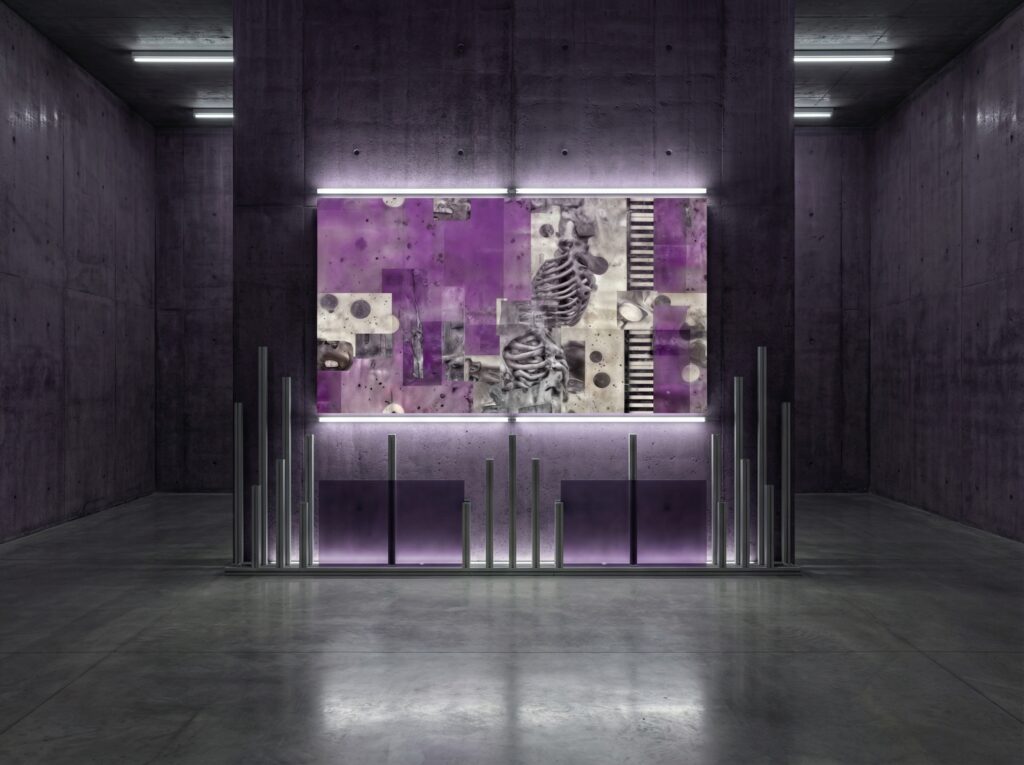
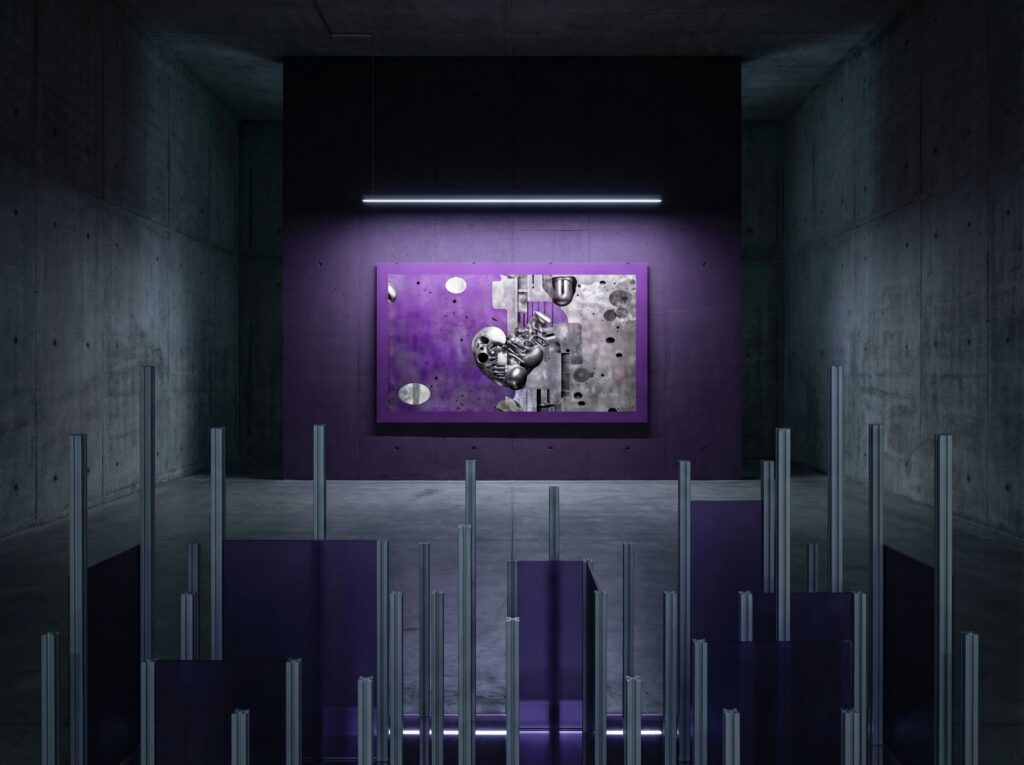
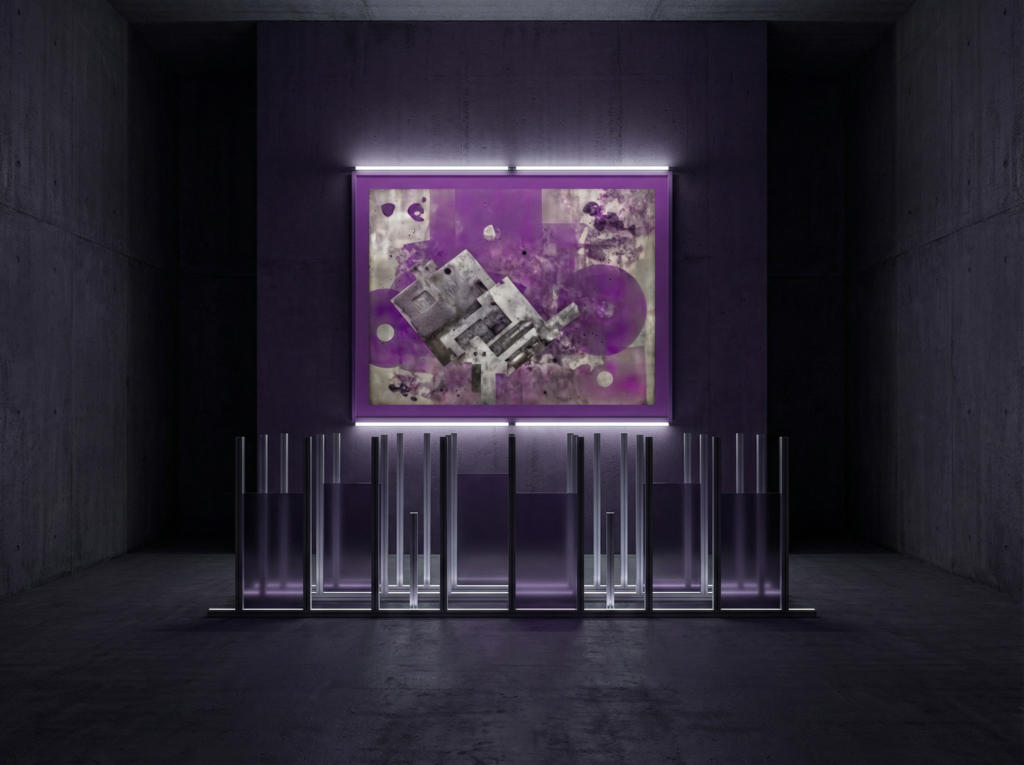
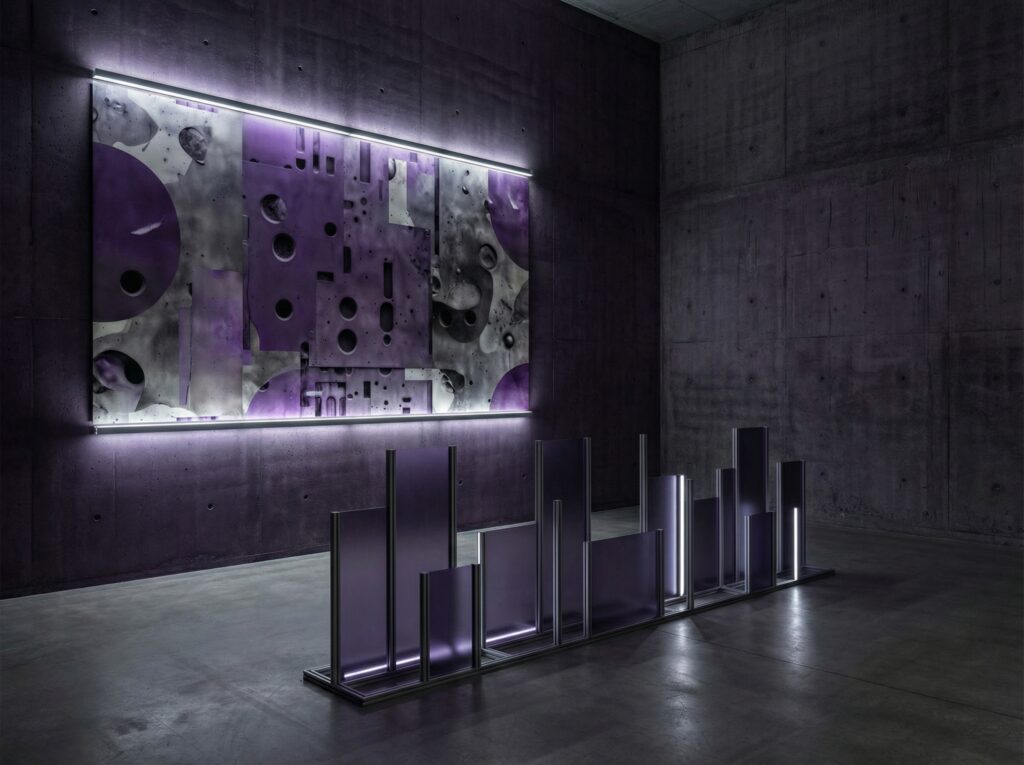
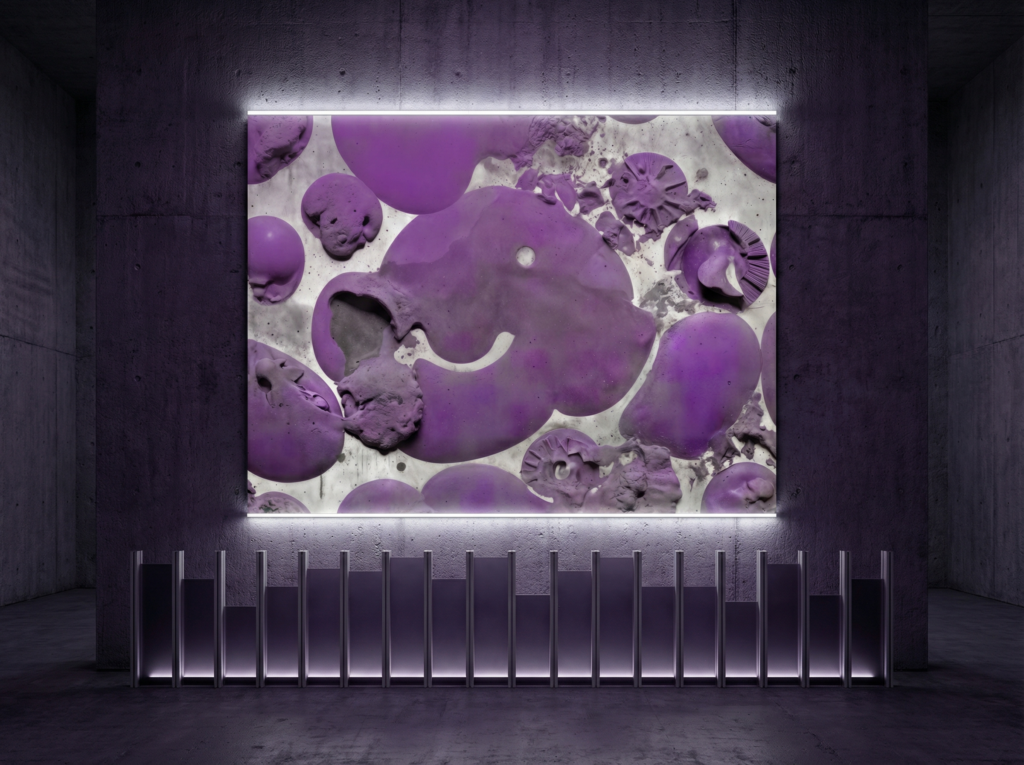
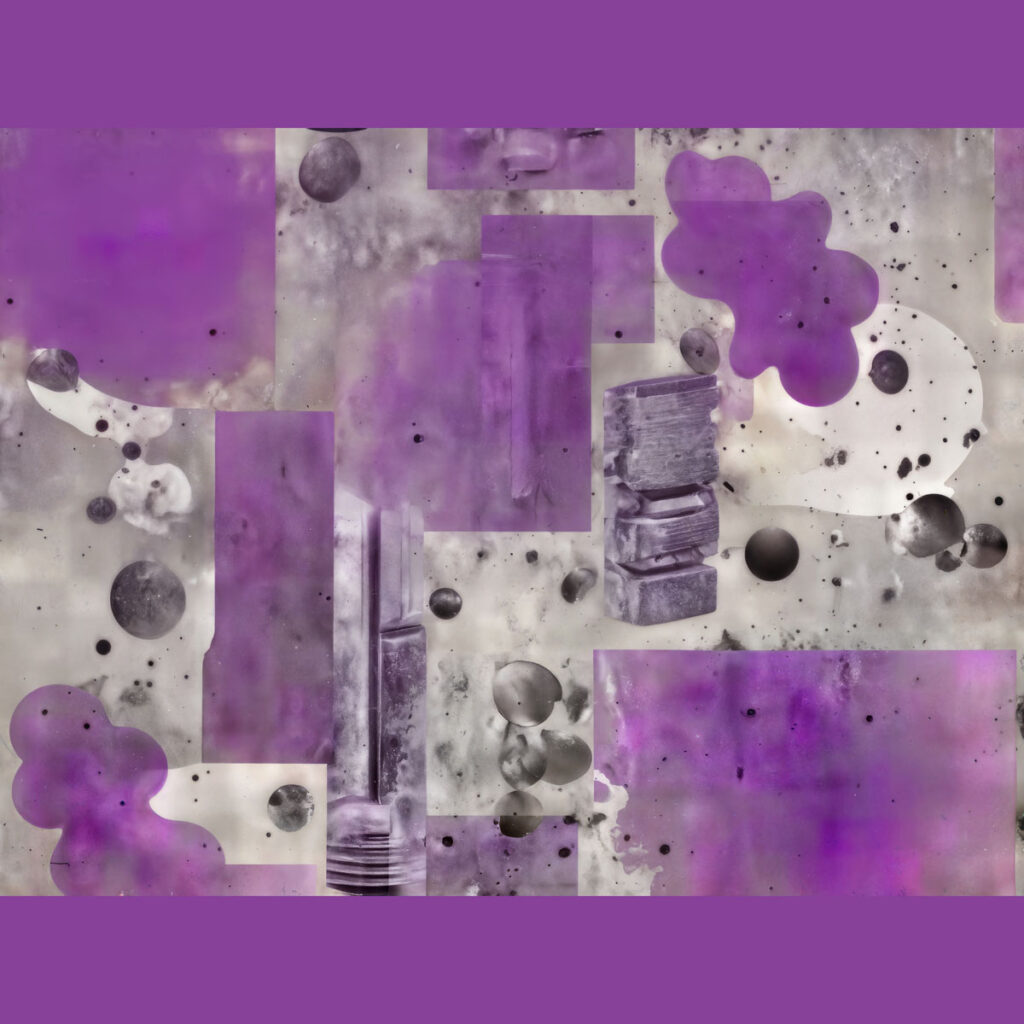
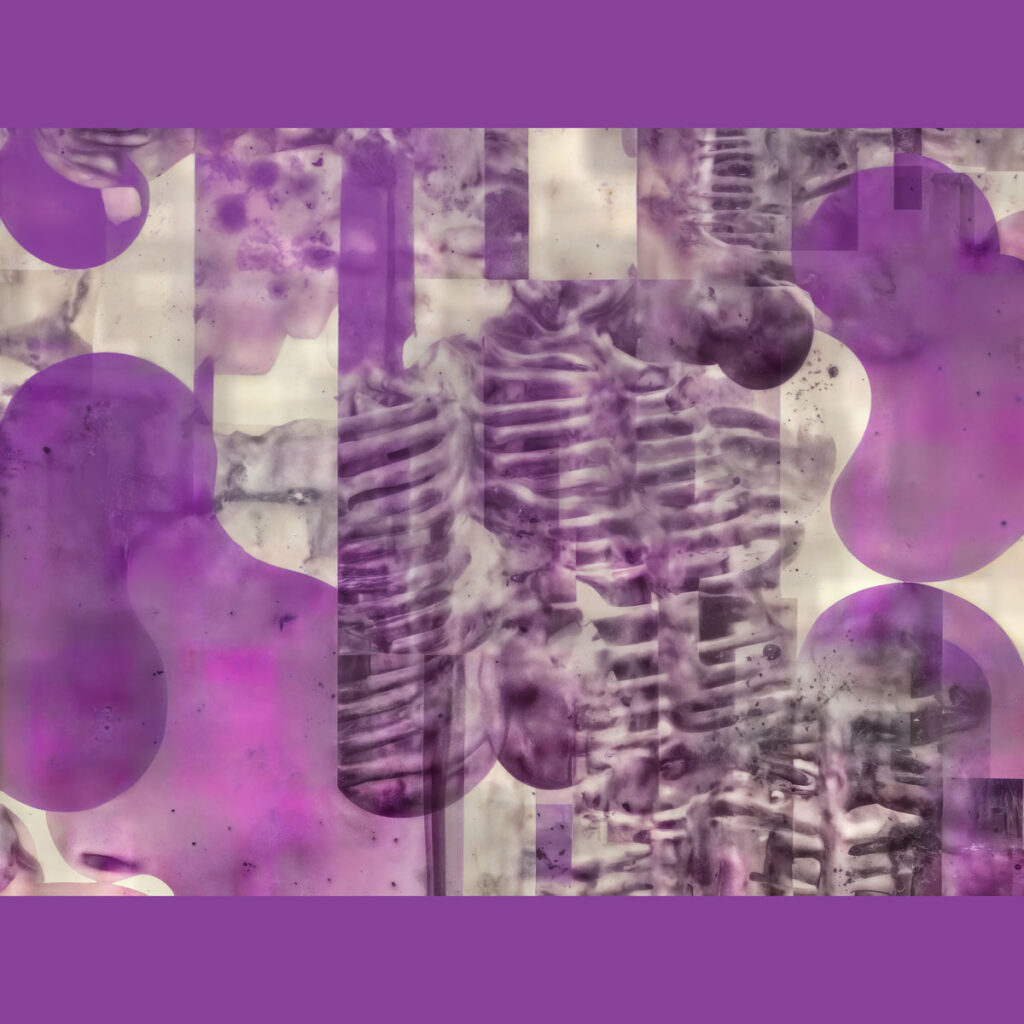
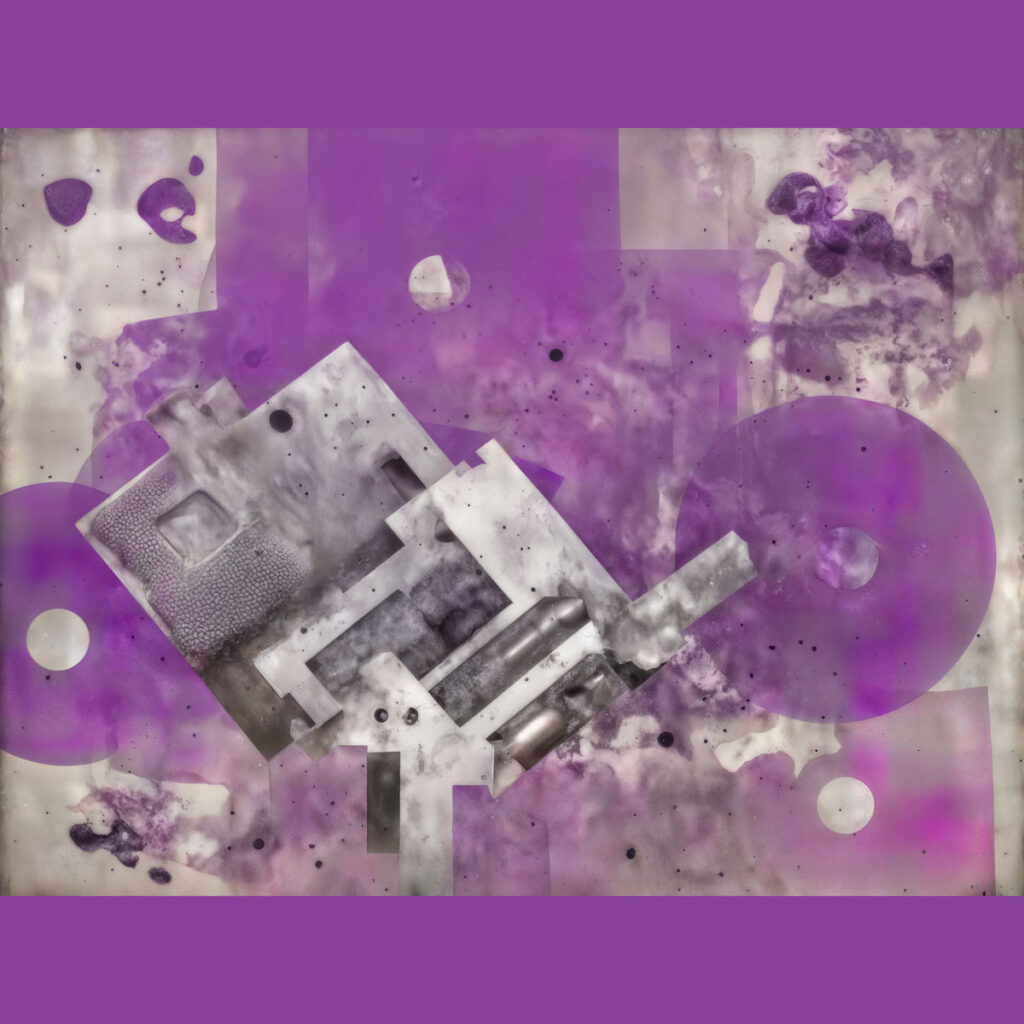
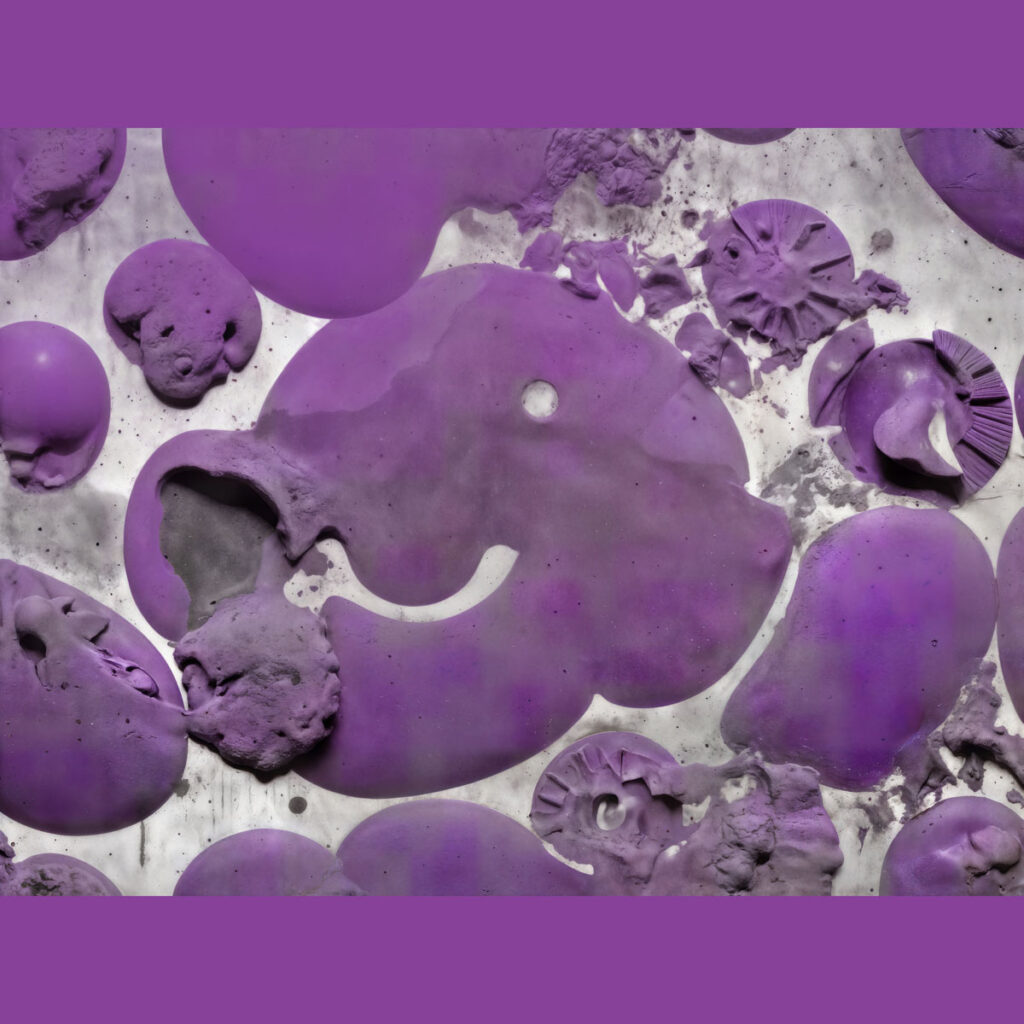
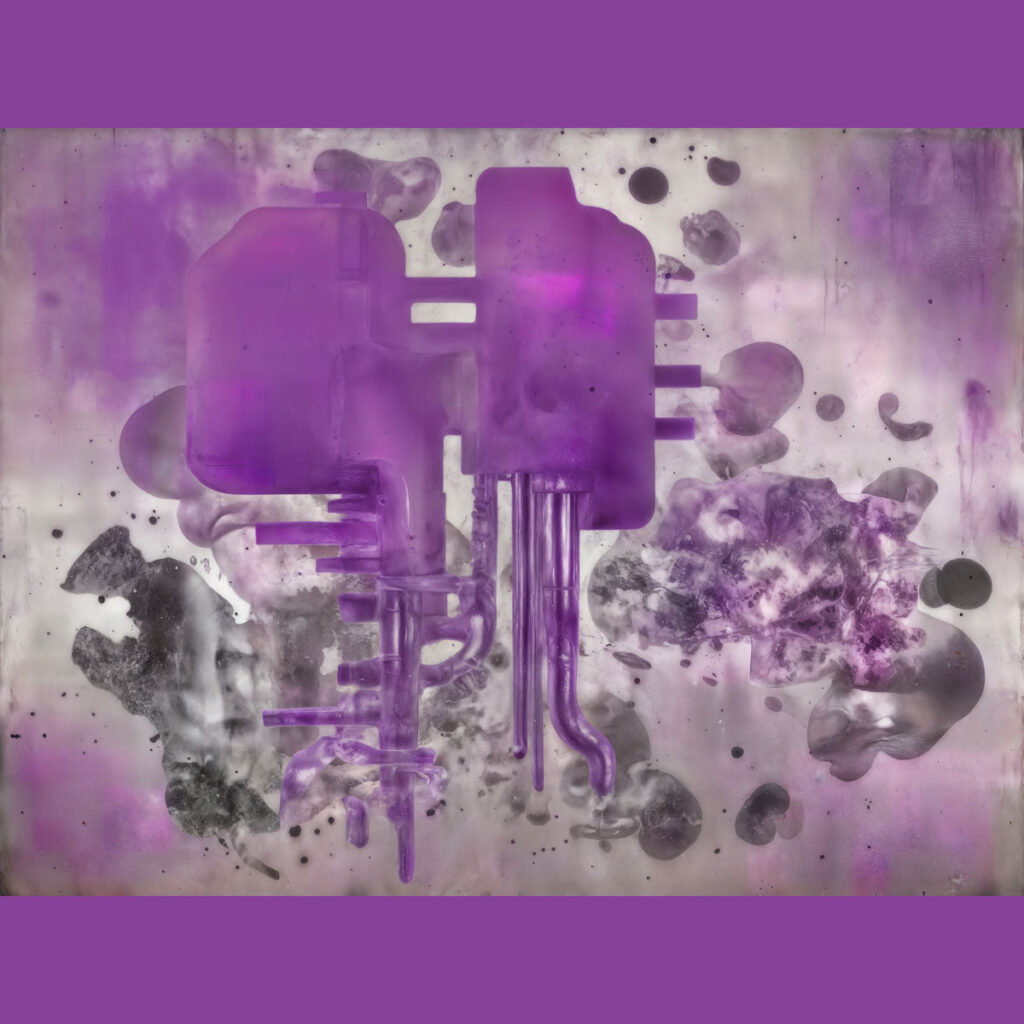
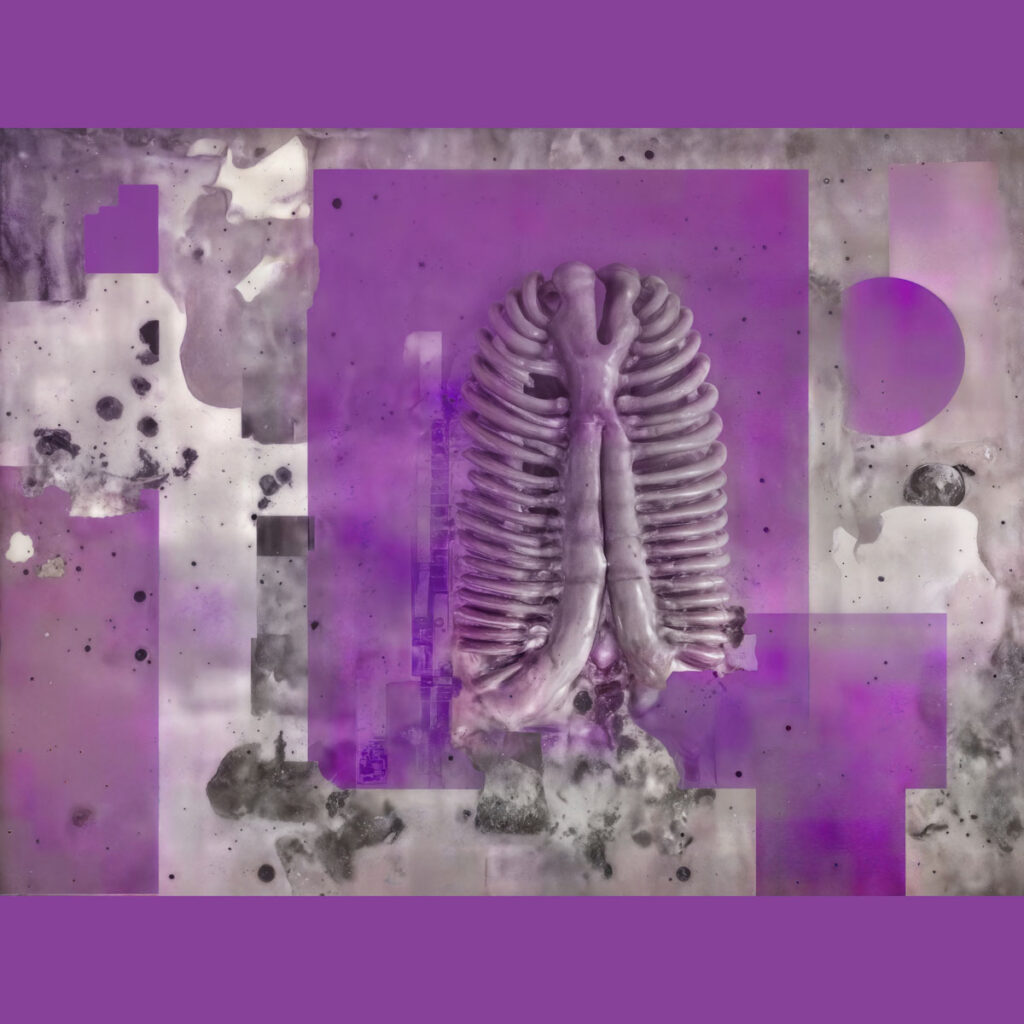
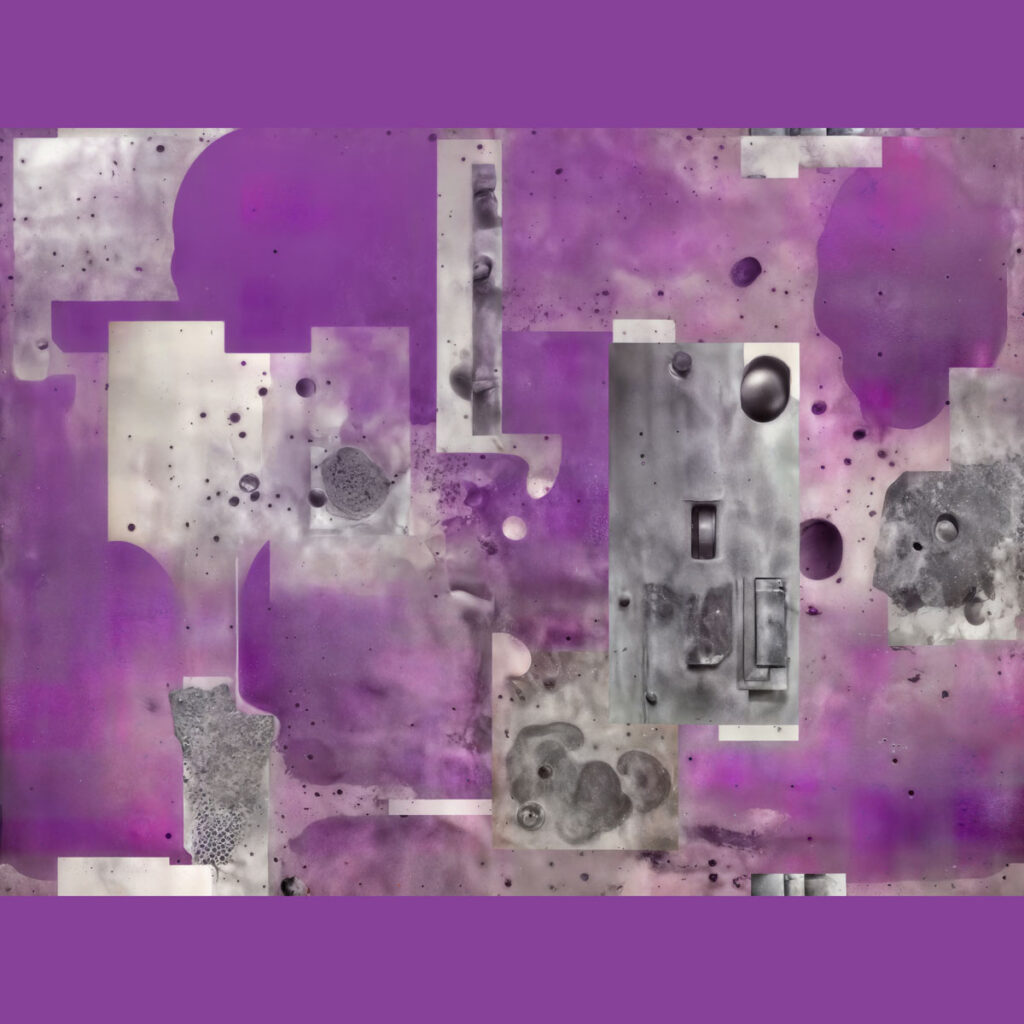
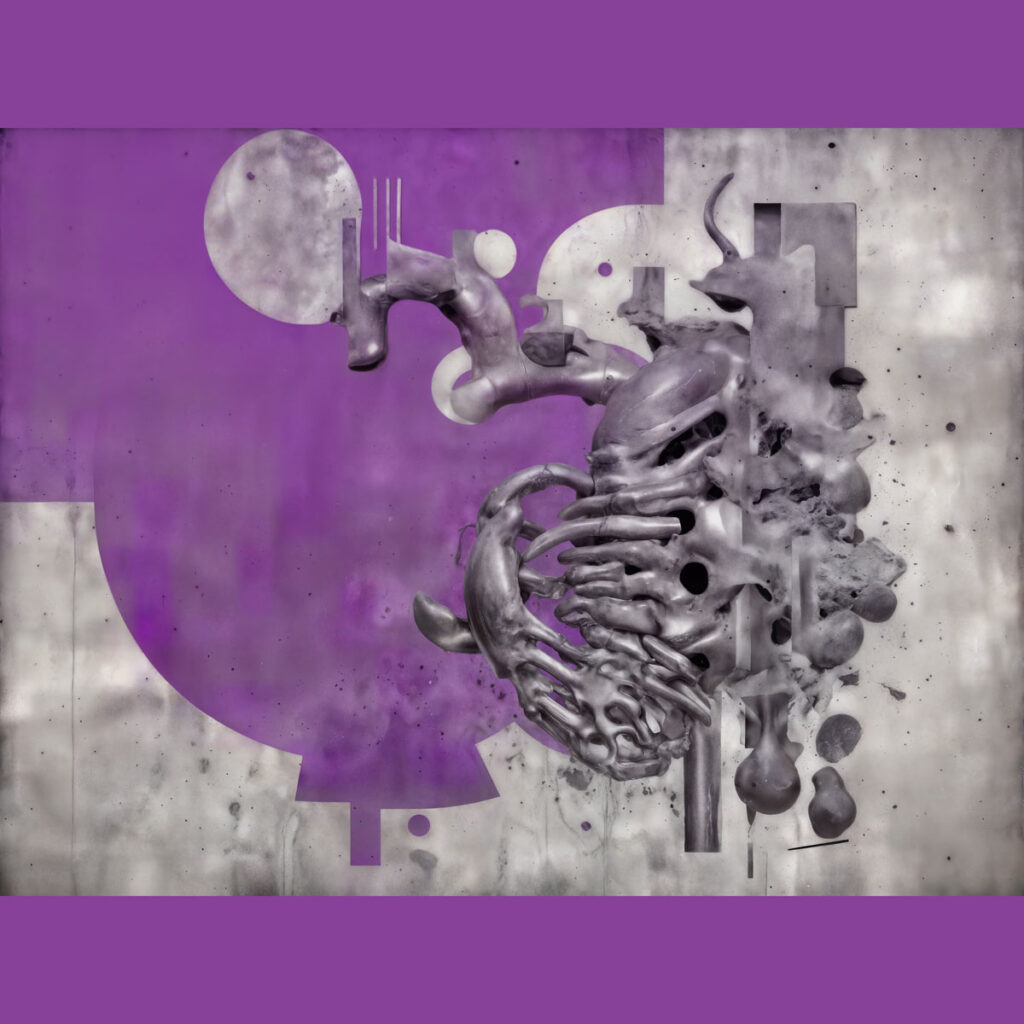
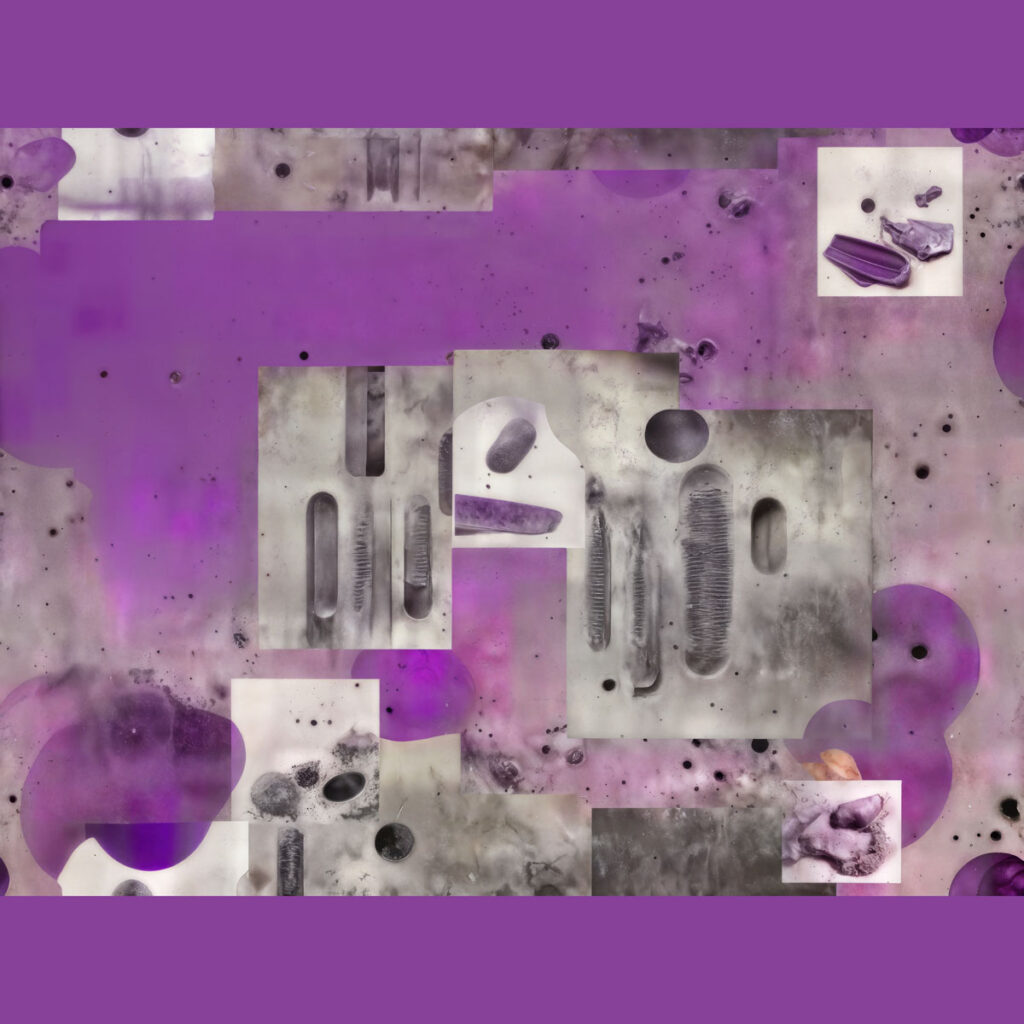
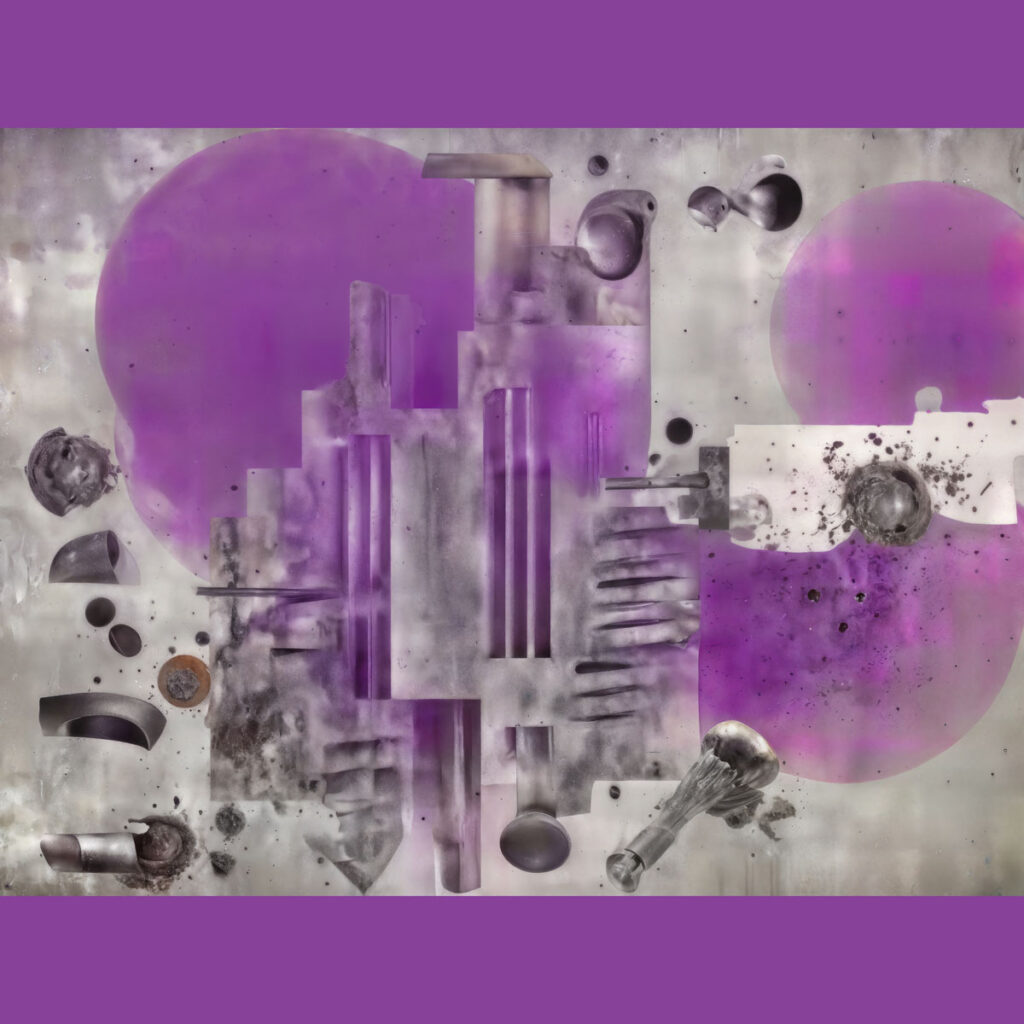
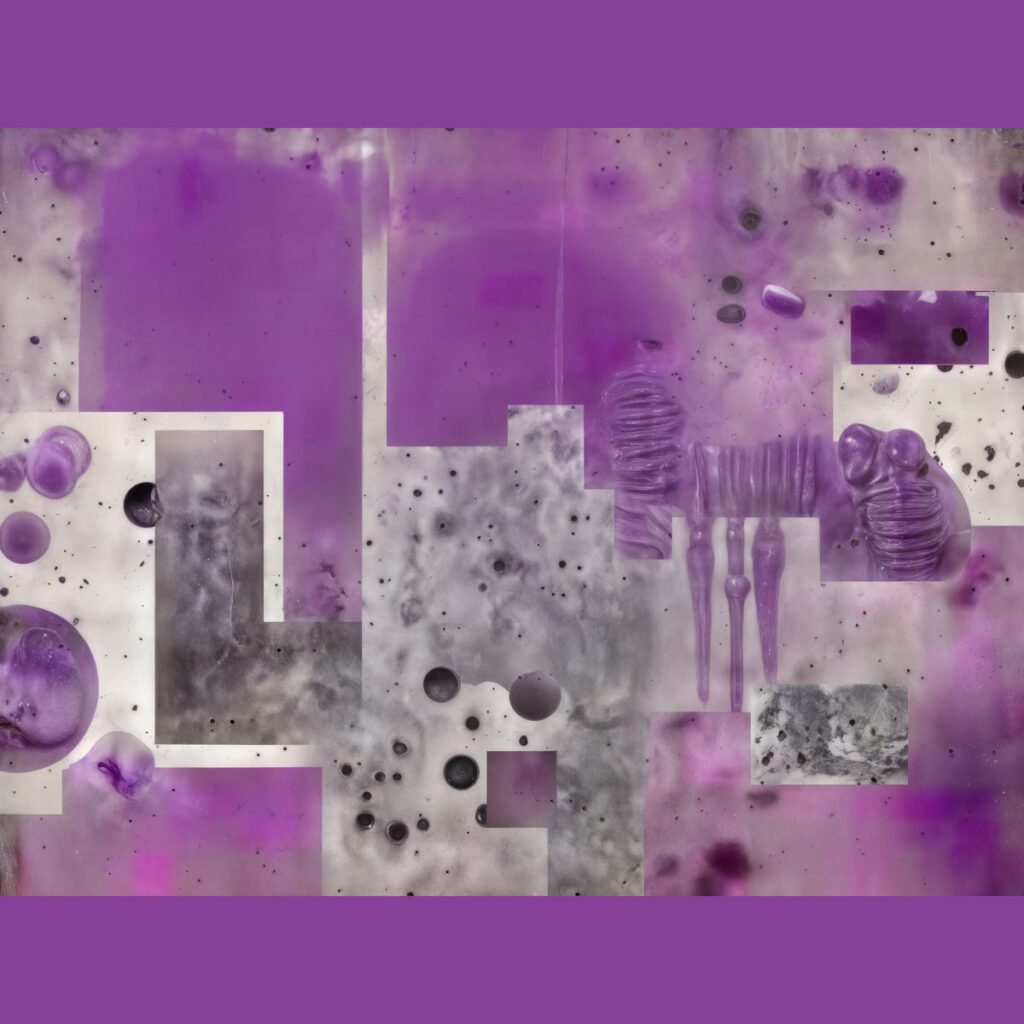
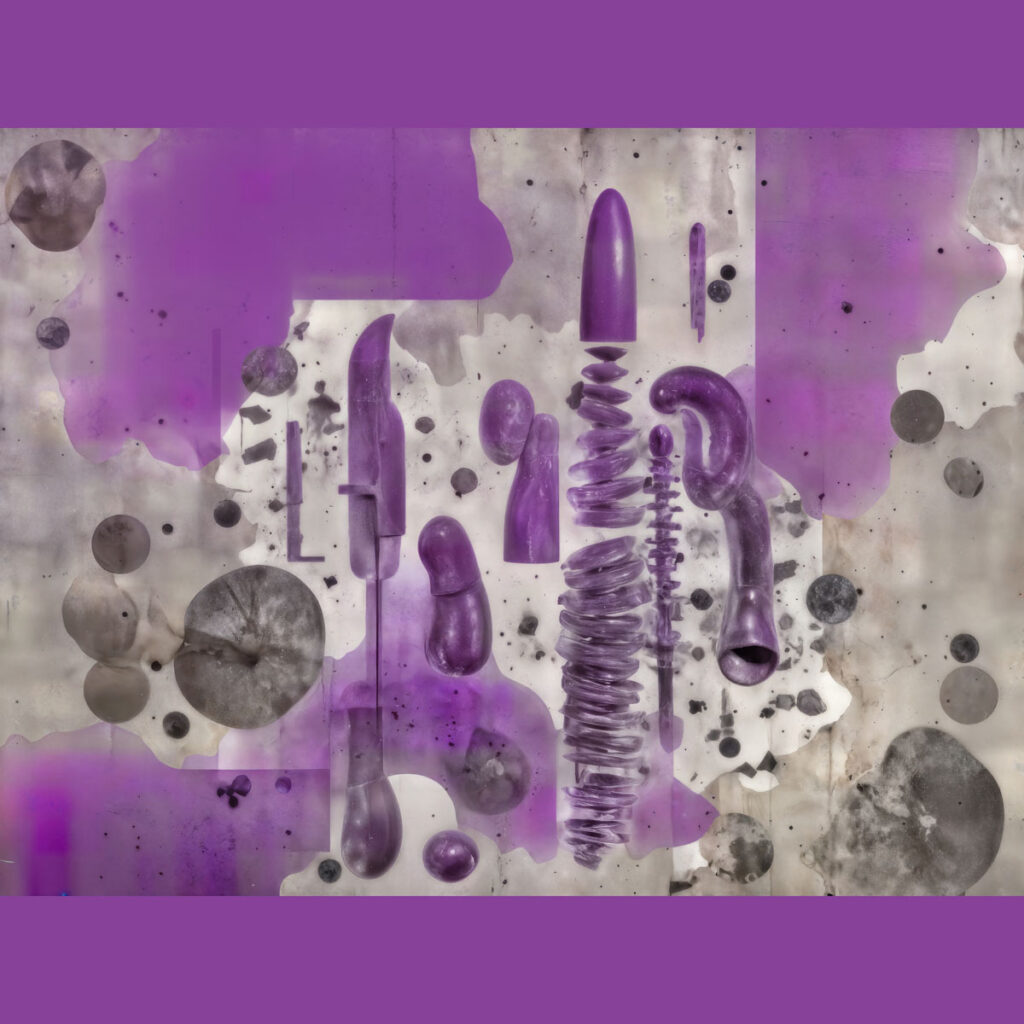
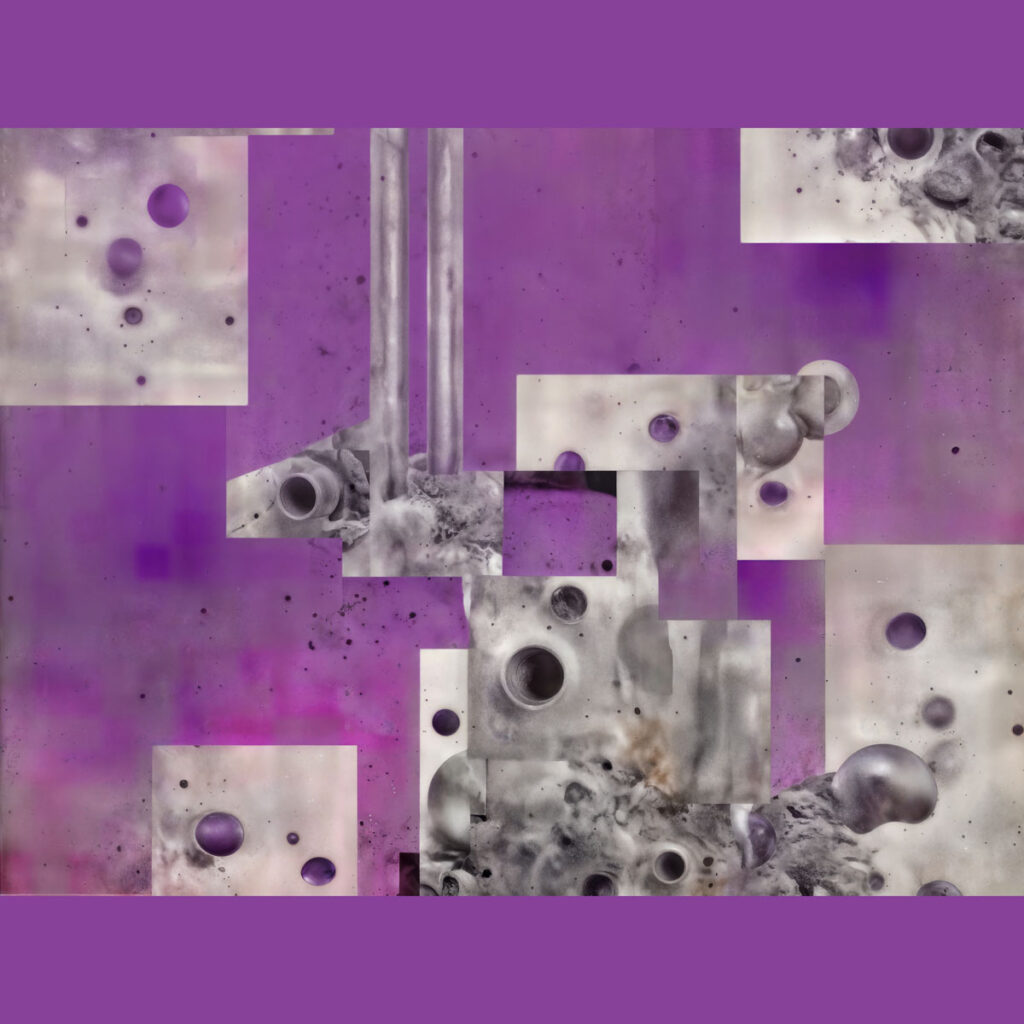
Cette série d’images générées par intelligence artificielle explore les frontières poreuses entre architecture brutaliste, matérialité du béton et organicité du corps humain. Sur un fond violet caractéristique, des compositions abstraites émergent où structures architecturales et formes biologiques fusionnent dans un assemblage hybride.
L’artiste a entraîné un algorithme à partir d’un corpus d’images mêlant architecture moderne, surfaces en béton et fragments anatomiques, créant ainsi un langage visuel qui échappe aux catégorisations traditionnelles. Les perforations, protubérances et cavités évoquent simultanément des éléments architecturaux fonctionnels et des orifices corporels, brouillant délibérément les distinctions entre construit et organique.
La dimension prothétique de ces compositions suggère un questionnement sur l’architecture comme extension du corps et, réciproquement, sur le corps comme structure habitable. Les surfaces présentent une qualité tactile paradoxale, à la fois dures comme le béton et vulnérables comme la chair.
Cette œuvre s’inscrit dans la réflexion de Chatonsky sur les potentialités de l’intelligence artificielle à générer des imaginaires post-humains où les distinctions conventionnelles entre nature et culture, entre biologique et technologique, s’estompent au profit d’une continuité matérielle troublante.
This series of AI-generated images explores the porous boundaries between Brutalist architecture, the materiality of concrete, and the organicity of the human body. Against a signature violet background, abstract compositions emerge where architectural structures and biological forms fuse into a hybrid assemblage.
The artist trained an algorithm on a corpus of images blending modern architecture, concrete surfaces, and anatomical fragments, creating a visual language that defies traditional categorizations. The perforations, protuberances, and cavities simultaneously evoke functional architectural elements and bodily orifices, deliberately blurring the distinctions between the constructed and the organic.
The prosthetic dimension of these compositions suggests an inquiry into architecture as an extension of the body and, conversely, the body as a habitable structure. The surfaces possess a paradoxical tactile quality—simultaneously hard like concrete and vulnerable like flesh.
This work is part of Chatonsky’s reflection on the potential of artificial intelligence to generate post-human imaginaries, where conventional distinctions between nature and culture, the biological and the technological, fade in favor of a disturbing material continuity.