
Infrallucination – UC Berkeley, USA

Thursday, September 3, 6:30-8:00pm, AAPB 285
Cette conférence explore l’hallucination artificielle non comme un simple dysfonctionnement technique, mais comme un état modifié de conscience et une troublante mise en abyme du langage.
Dépassant la théorie pure pour ancrer sa réflexion dans sa pratique artistique, l’auteur analyse la récursivité cybernétique à travers trois cycles d’œuvres : l’emboîtement onirique, la poursuite textuelle et l’autocommentation des boîtes noires. Loin d’être autonome, l’IA agit en miroir relationnel, produisant une « paréidolie ontologique ». Ce nominalisme langagier, déconnecté de tout référent stable, se révèle finalement comme la caricature grotesque et la farce de notre propre monde contemporain.
https://events.berkeley.edu/art/event/324432-artist-talk-grgory-chatonsky-infrallucination
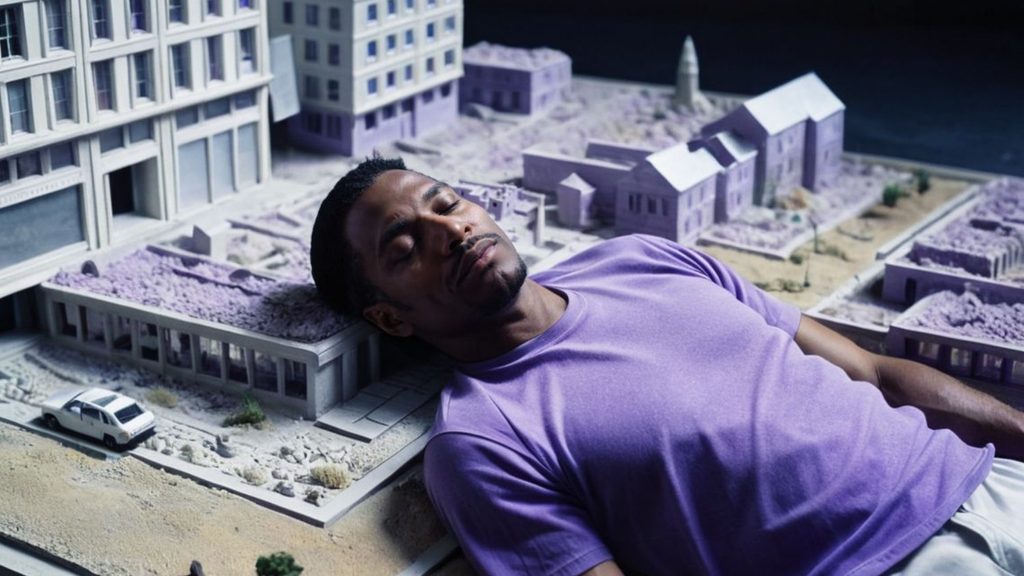
“The unconscious is the discourse of the Other… the discourse of the circuit in which I am integrated, I am one of its links.”
Jacques Lacan, Seminar II (1954–55)
I propose defining a new concept for you, infrallucination, in relation to the exhibition.
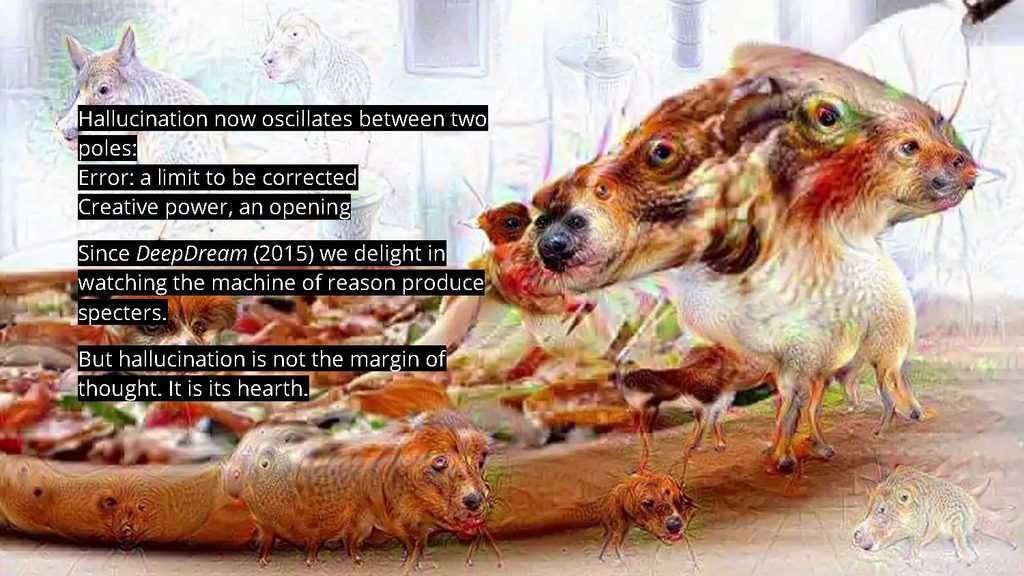
Hallucination has become a cliché in the way we talk about AI. It’s a concept that swings between two poles: error, as a limit, and creative power, as an opening.
Ever since DeepDream, back in 2015, we’ve delighted in watching the computer — that embodiment of pure reason — produce ghosts.
But beyond the novelty, this “artificial hallucination” deserves to be placed within a much longer lineage — one in which altered states of consciousness are not the margins of thought, but its very heart.
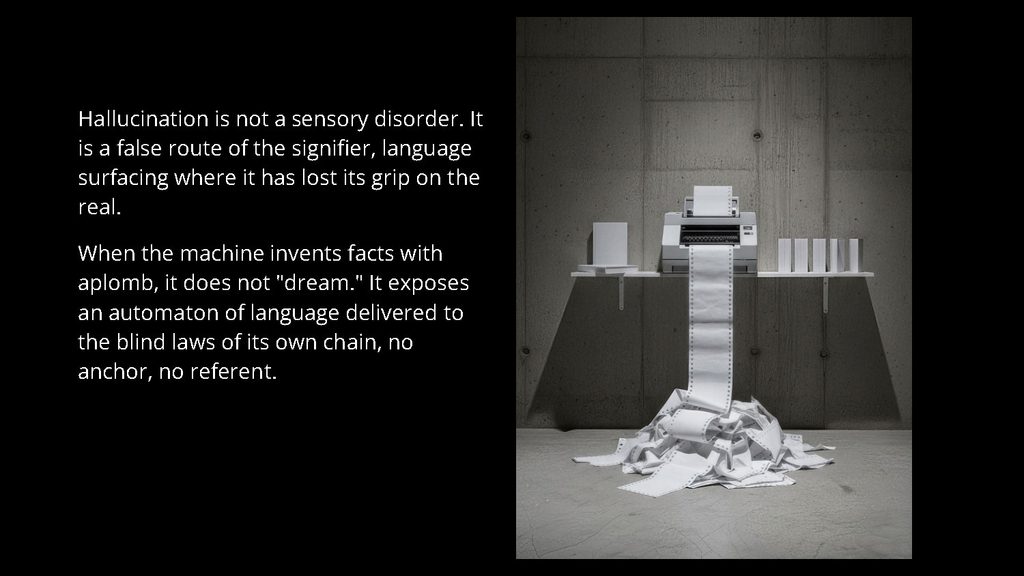
Hallucination is not a sensory disorder. It is a false route of the signifier, language surfacing where it has lost its grip on the real.
When the machine invents facts with aplomb, it does not “dream.” It exposes an automaton of language delivered to the blind laws of its own chain, no anchor, no referent.
I could have given you a theory tonight. I would have tried to demonstrate that it is not hallucination that covers reality, but reality that covers hallucination.
Except that, as we get closer to the machine, this autonomy of the image takes a more radical turn.
If we listen to Lacan, hallucination isn’t a simple disorder of the senses, but a wrong turn of the signifier: language surfacing where it no longer has any grip on the real — the return, in the Real, of everything that escapes symbolization.
When the machine hallucinates — when it invents facts with total confidence, when it tries to answer us even though no answer exists, out of pure sycophancy — it isn’t “dreaming” in the Romantic sense. It exposes the nakedness of a language automaton left to the blind laws of its own chain, with no anchor and no referent.
Hold on to that automaton: by the end, we’ll see it has taken on a political face.
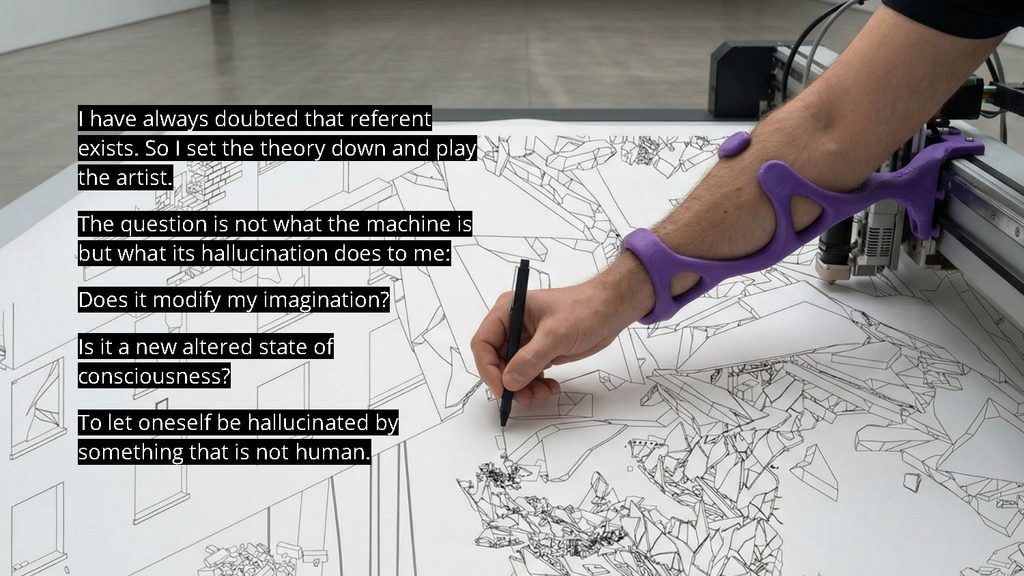
But I’ve always doubted that such a referent exists. I’ve always felt the ground give way beneath my feet.
So today I won’t give you that theory. I’ve just performed a version of it, and I’ll leave it there.
Because if the machine hallucinates, the real question is: what does that hallucination do to me? Does it change my imagination? Is it, for me, a new altered state? What am I looking for in this daily contact with it? And above all: what is the difference between a machine that hallucinates, a machine that hallucinates me, and an artist who lets himself be hallucinated by a machine? To let yourself be hallucinated by something that isn’t human: that, perhaps, is the question.
A NESTED RECURSION (2003-2018)
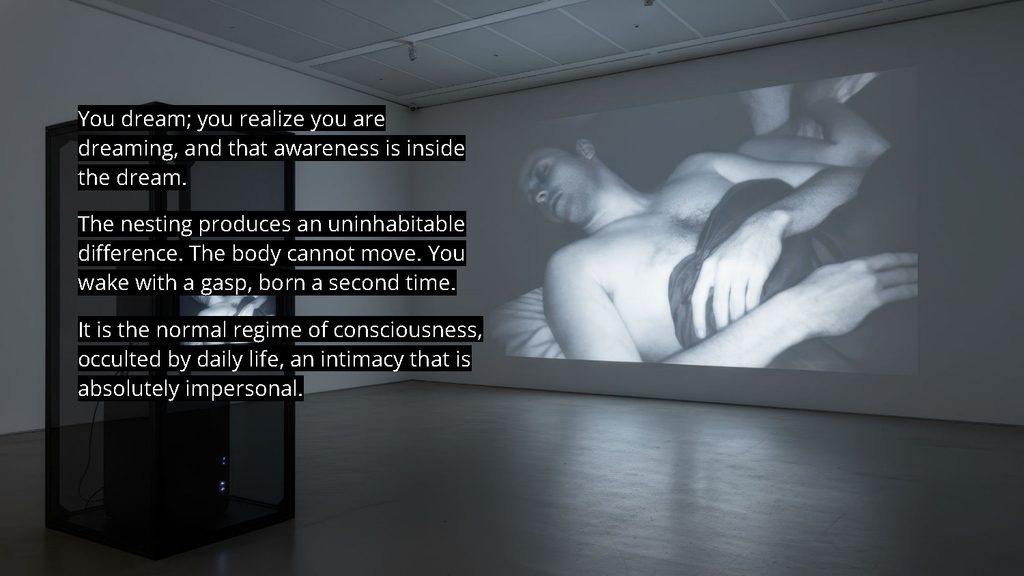
It’s a common experience. At night, we sleep, we dream, and we realize we’re dreaming. And that awareness is inside the dream itself; that awareness of a difference isn’t outside it. At that exact moment, we’re swallowed up, nested inside. A vast anguish grips us — and that anguish, too, is still inside the dream. We feel our body unable to move. We have to get out of this nightmare. We wake with a start. We breathe in, as if being born into the world a second time.
I want to talk about this awareness of the dream within the dream — an awareness whose nesting produces an unlivable difference. This awareness isn’t madness: it’s the normal regime of consciousness, hidden away in everyday life. Within it, an unbearable difference lodges itself at the heart of what’s most intimate — an intimacy that is absolutely impersonal.
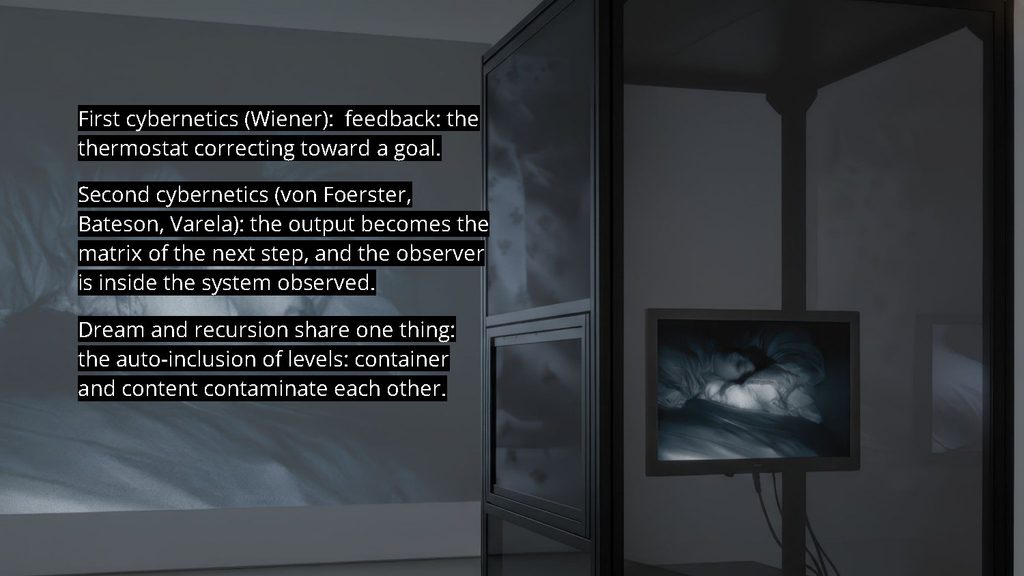
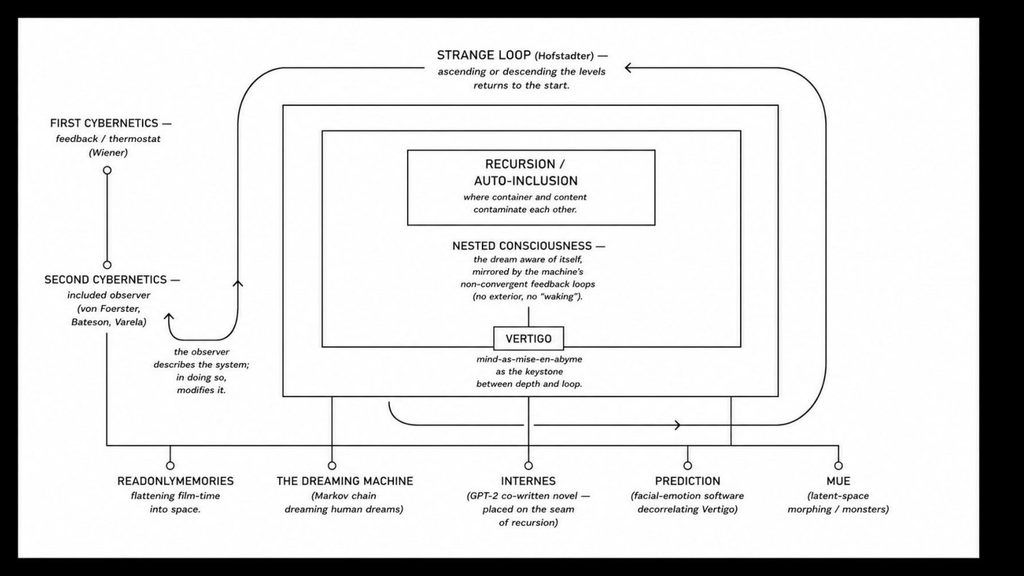
What does this have to do with the machine? In computing, recursion brings together two things. First, cybernetics — the study of regulation, of feedback loops, of communication in living or artificial systems. And second, recursion in the strict sense: an operation that applies to itself and takes its own result back in as input. Not a straight line from cause to effect, but a structure where the system transforms itself by acting on its own rules.
To put it briefly, the observer is always part of the system they observe. By describing a system, we modify it, and in return, it transforms us. This mechanism of self-inclusion bears a striking resemblance to a dream, where we are simultaneously the author, the actor, and the spectator of our own scenario.
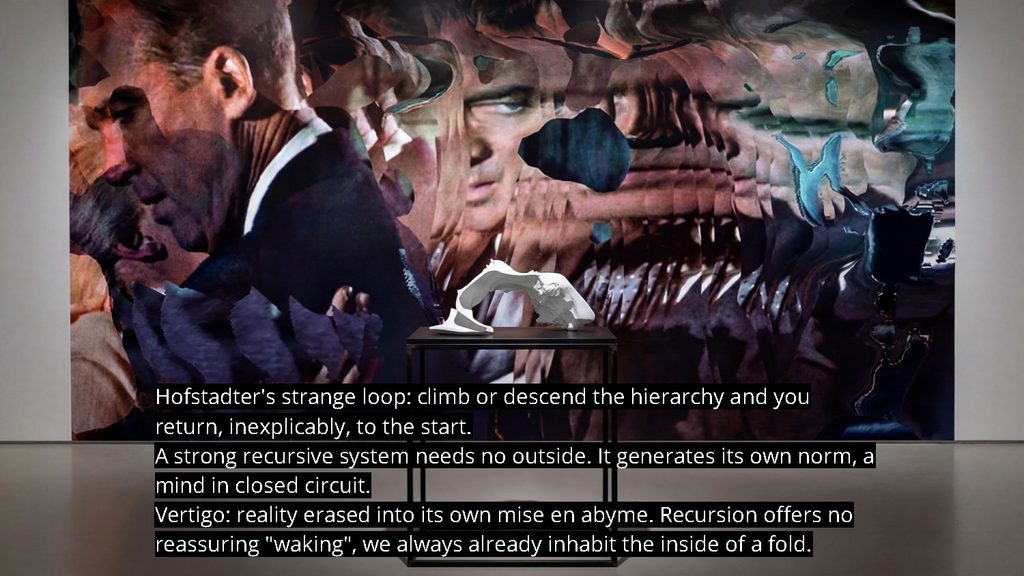
This is what Douglas Hofstadter calls a “strange loop”: a system so folded back on itself that it generates its own reality without any external reference point. Today, this vertigo can be observed in AI architectures. A generative model engaged in self-analysis risks locking itself into an infinite loop where the distinction between control and execution collapses, turning the algorithm into a mind trapped within its own closed circuit.
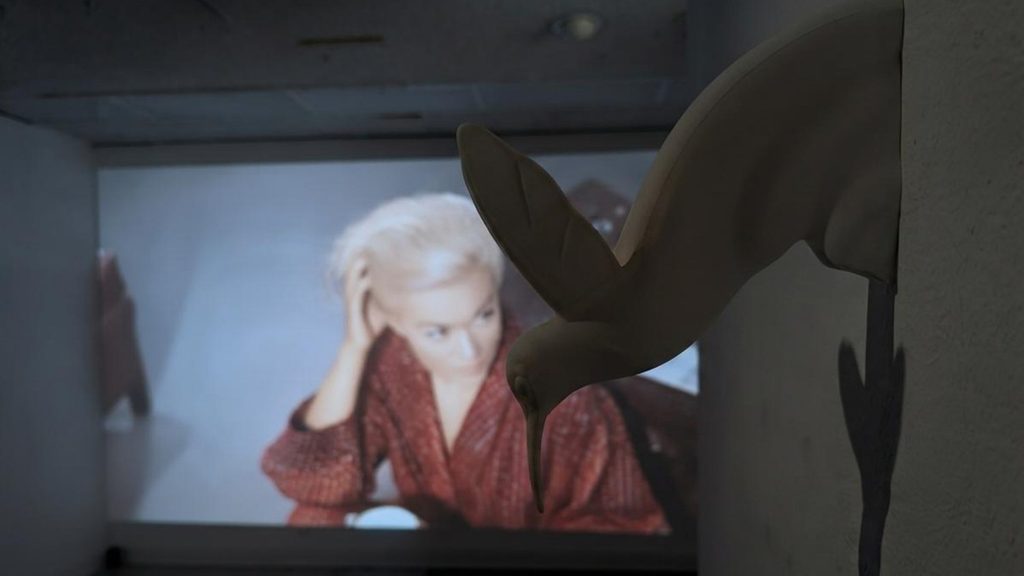
This implosion of inside and outside dissolves the very idea of a reassuring “awakening.” It’s exactly what the film Vertigo stages: a mind where reality fades into its own mise en abyme, until waking life is no more than a way of remembering a hallucination. In computing, as in the nightmare or the cinema, recursion doesn’t lead back to some original truth we’d only need to recover. It shows that we always, already, live inside a fold.
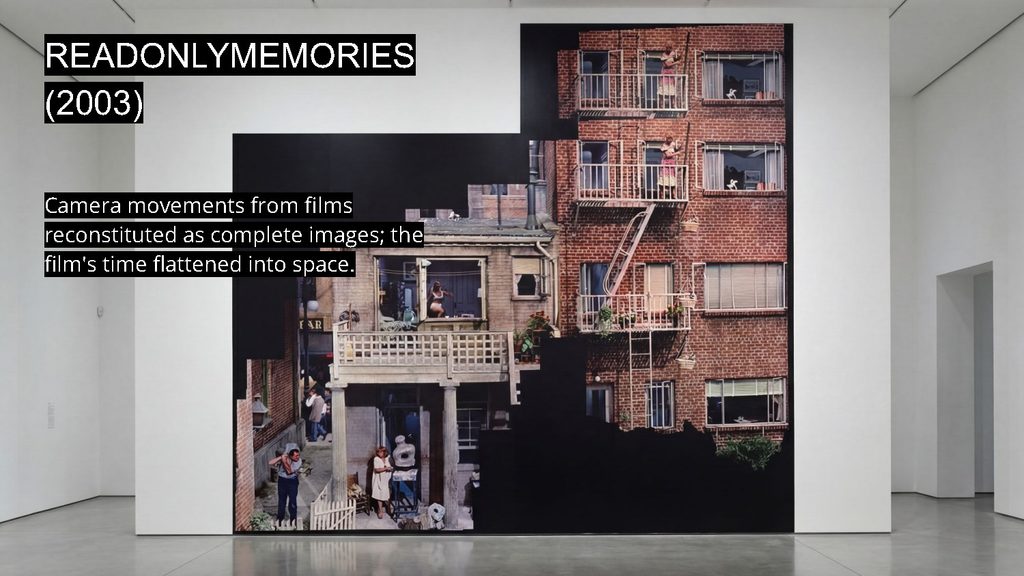
READONLYMEMORIES (2003)
In Readonlymemories, a few years before I began using AI, I reconstructed the complete images of camera movements in films. When you watch a film, the camera travels through space over time; we reconstruct that space through memory and anticipation. Here, I was reconstructing the space by flattening the film’s time.
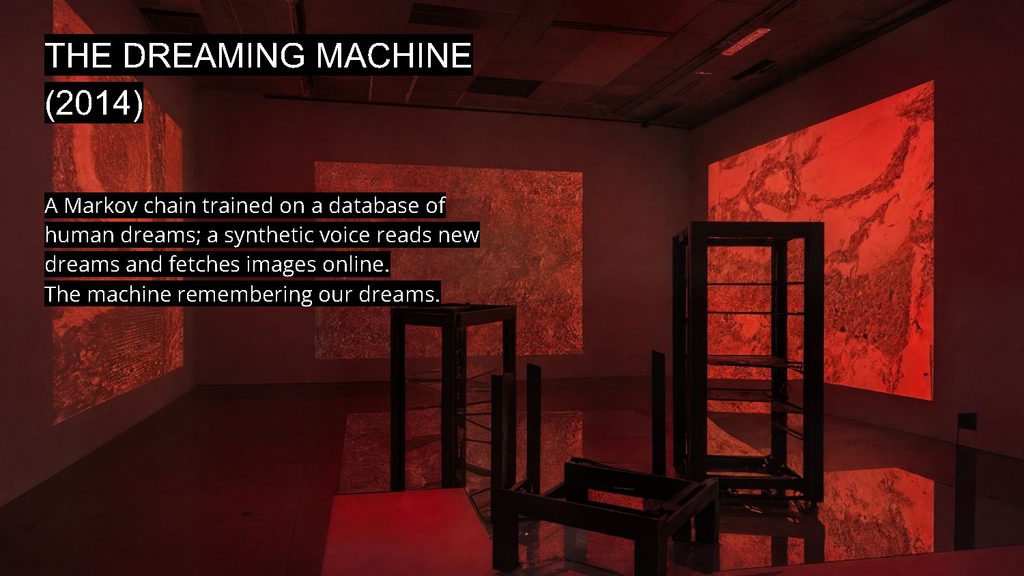
THE DREAMING MACHINE (2014)
Using a database of dreams compiled at the University of California, Santa Cruz, I trained a Markov chain to create new dreams. The incoherence of the result is acceptable: these are dreams, and we accept a certain inconsistency in them. The text, read by a synthetic voice, goes and pulls images from the Internet to piece together a narrative. It’s as if the machine were dreaming human dreams — remembering our dreams from the traces we’ve left online.
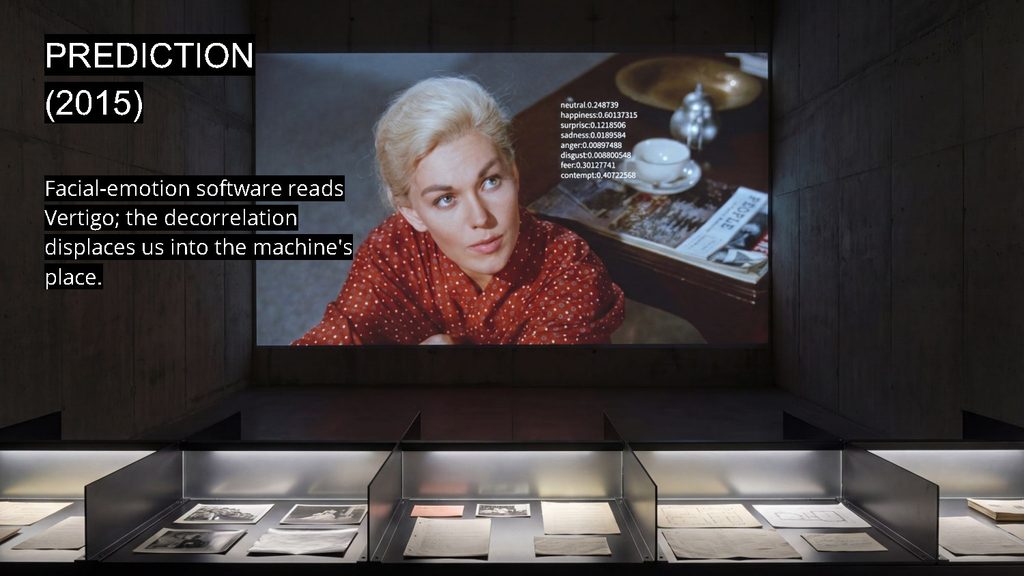
PREDICTION (2015)
A facial-emotion-recognition program analyzes Vertigo. On screen, we see all these variations, and of course they don’t match exactly what we perceive. But that mismatch creates a strange effect: we start to wonder why the machine reads emotions this way, we put ourselves in its place, and we’re thrown off-center.
COMPLETION (2019-2022)
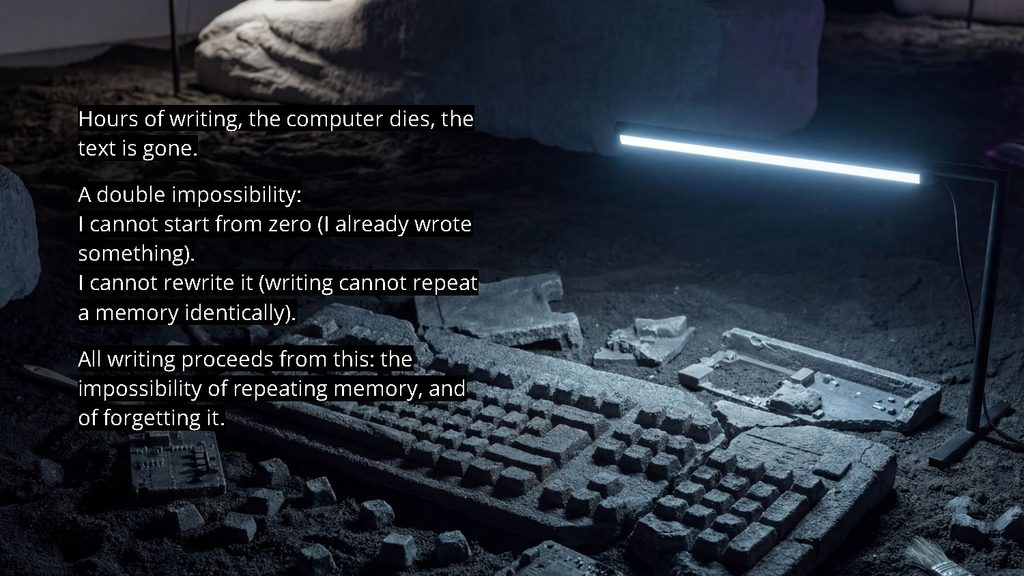
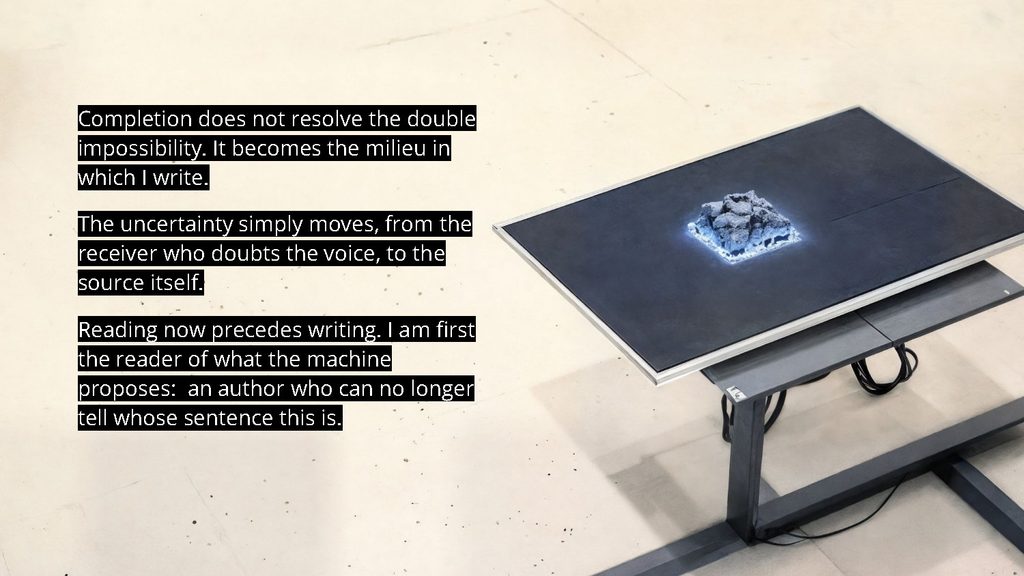
For several hours I’ve been writing a piece for a publication. Suddenly my computer shuts down, and I lose the file. I dig through the system folders. Nothing. And here I am, caught in a double impossibility. I can’t start over from scratch, since I’ve already written something. And I can’t rewrite what I’d written, since it’s now only a memory — and writing can’t repeat a memory word for word. Beyond the technical mishap, I think all real writing works this way, under a double constraint: you can’t repeat memory, and you can’t forget it. So the question becomes: how do I go on after this forgetting of the text? And what, exactly, am I completing when I write, or when I make an image?
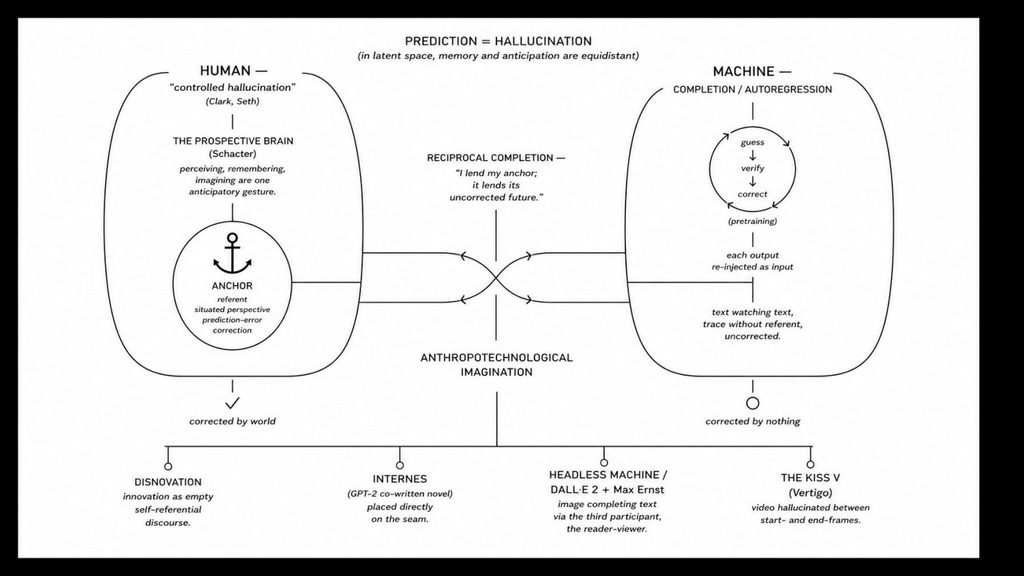
Hallucinatory recursion then turns into a hallucinogenic reciprocity between human and machine — through this one question of completion. A program that feeds on its own outputs to make new inputs is caught in a whirlpool we watch from outside. But when we complete what the machine writes, and it completes what we write, something more tangled appears. Let’s call it anthropotechnological imagination.
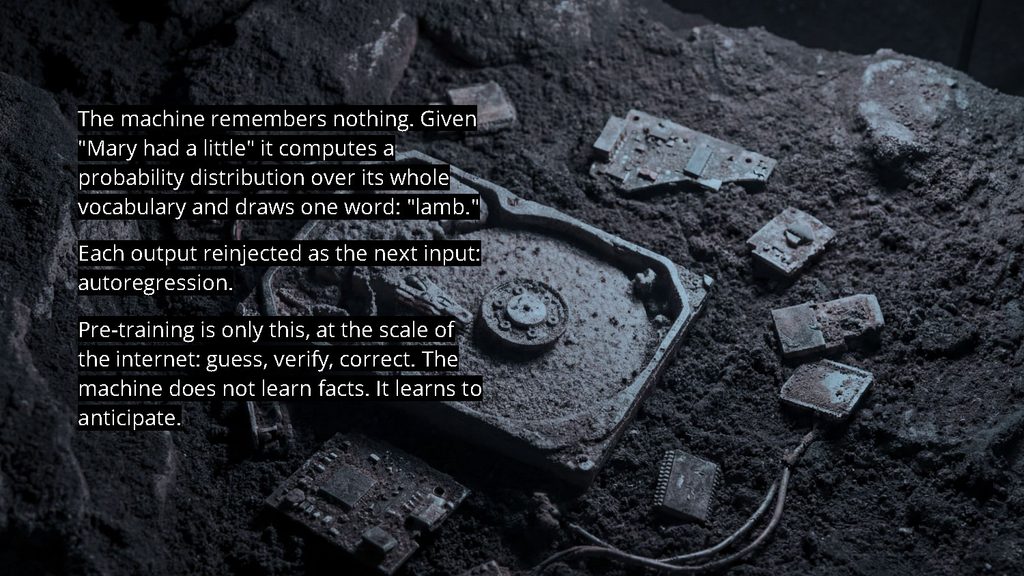
But what, technically, does a machine do when it completes? It remembers nothing and consults no database. (A system deployed today can of course query databases, tools, a search engine; but I’m talking here about bare completion — the completion of GPT-2, where there’s only text looking at text.) You give it a beginning — “Mary had a little” — and it calculates, across its whole vocabulary, the probability distribution of the next word, then draws one from it: “lamb.” Nothing more. This gesture, repeated token after token, each output fed back in as new input — that’s autoregression — is enough to produce a sentence, a paragraph, an essay, a proof. What we call pre-training is only this, scaled to the size of the Internet: guess the next word, check it against the word actually there in the corpus, correct the billions of parameters, start again. Guess, check, correct. The machine doesn’t learn facts; it learns to anticipate.
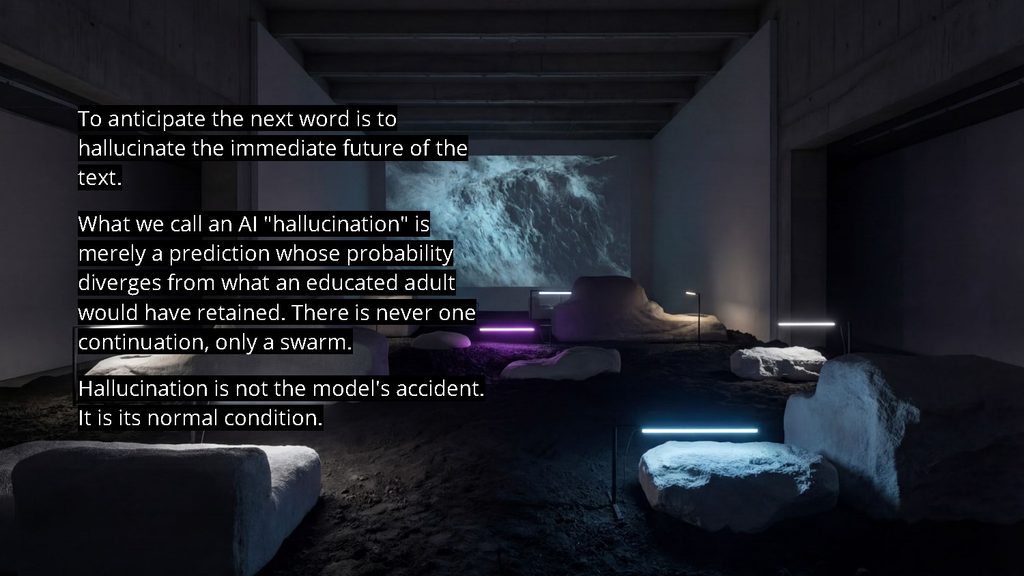
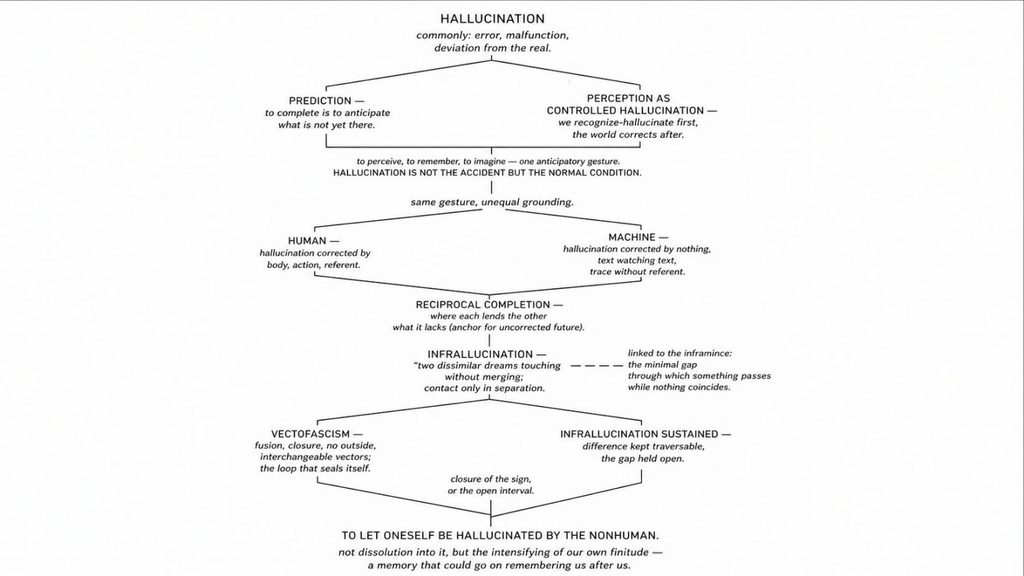
Now, to anticipate the next word is to hallucinate the immediate future of the text. Every completion is a prediction, and every prediction is, structurally, a hallucination — not in the sense of a failure, but in the sense that the machine puts forward what isn’t there yet. What we call an AI “hallucination” is just a prediction whose probability diverges from the one an adult would have settled on. There’s never a single possible continuation, but a swarm. The machine hallucinates because it predicts, and it predicts because all it has is text looking at text — a trace with no referent, unaware that it’s adrift. Hallucination isn’t the model’s accident: it’s its normal condition.
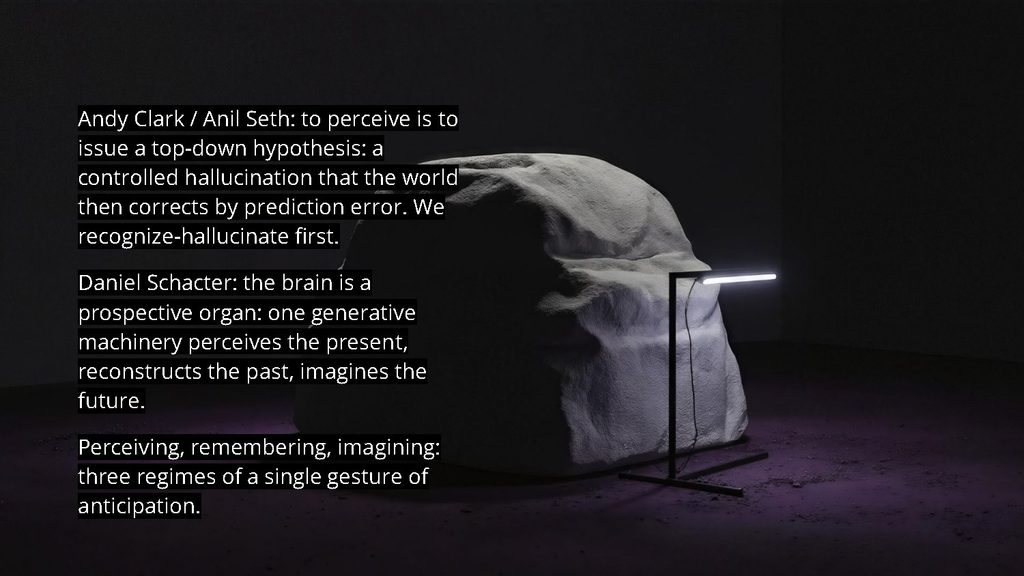
Here something tips over, and this is what I want you to feel. Because we do exactly the same thing. If we follow Andy Clark, perceiving isn’t passively receiving the world: it’s first producing a better top-down hypothesis — a controlled hallucination, in Clark’s phrase, taken up and popularized by Anil Seth — which the world then corrects through prediction error. We don’t first see in order to recognize afterward: we recognize-and-hallucinate first, and observation only catches up with that head start, or contradicts it. Our attention is guided by our expectations.
The brain, Schacter writes, is a fundamentally prospective organ: the same generative machinery serves to perceive the present, reconstruct the past, and imagine the future — awake as long as the senses keep correcting it, dreaming the moment they let go. Perceiving, remembering, imagining: three regimes of a single gesture of anticipation.
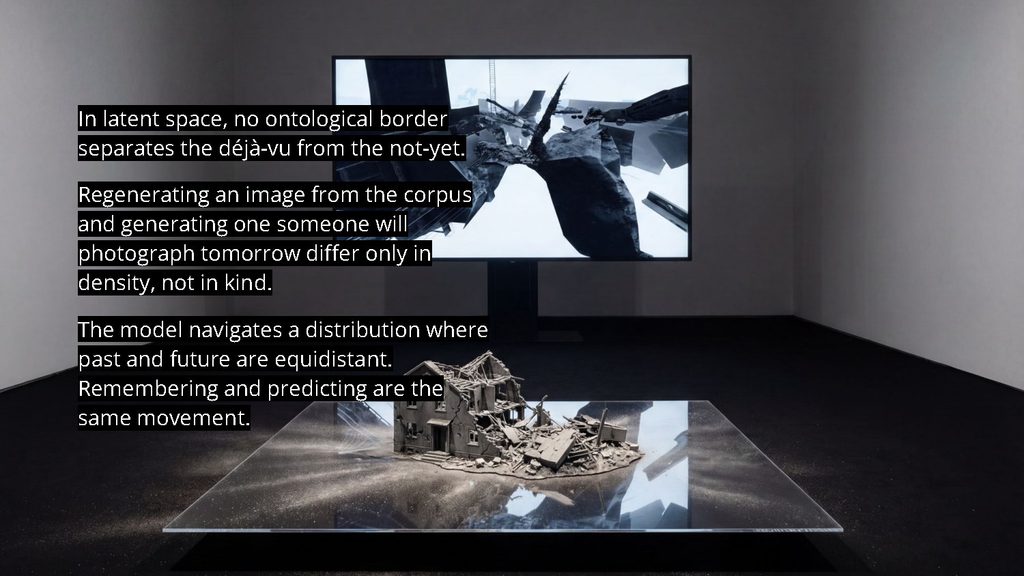
The machine, too, has only one gesture. Predict the next word, generate the image never yet taken: in latent space, no ontological border separates the already-seen from the not-yet-arrived. The probability of regenerating an image from the corpus is no different in kind from that of producing an image someone will photograph tomorrow; the gap is only one of density. The model doesn’t distinguish memory from anticipation — it navigates a distribution in which past and future are equidistant. It’s in this very precise sense that the phrase should be understood: the machine hallucinates the future — not because it would be guessing it, but because, for it as for us, remembering and predicting are the same movement.
This apparent absence of ontological limit is inherent to statistical AIs: the function that enables them to recognize a bird outside their training dataset and the one that allows them to generate a novel one rely on the same latent space. But while the machine only operates through interpolation within strict mathematical limits, the transition from machine perception (the calculation of probabilities) to human imagination takes place through our gaze: it is our mind that invests these formal correlations to see in them a credible world constitutive of a realism.
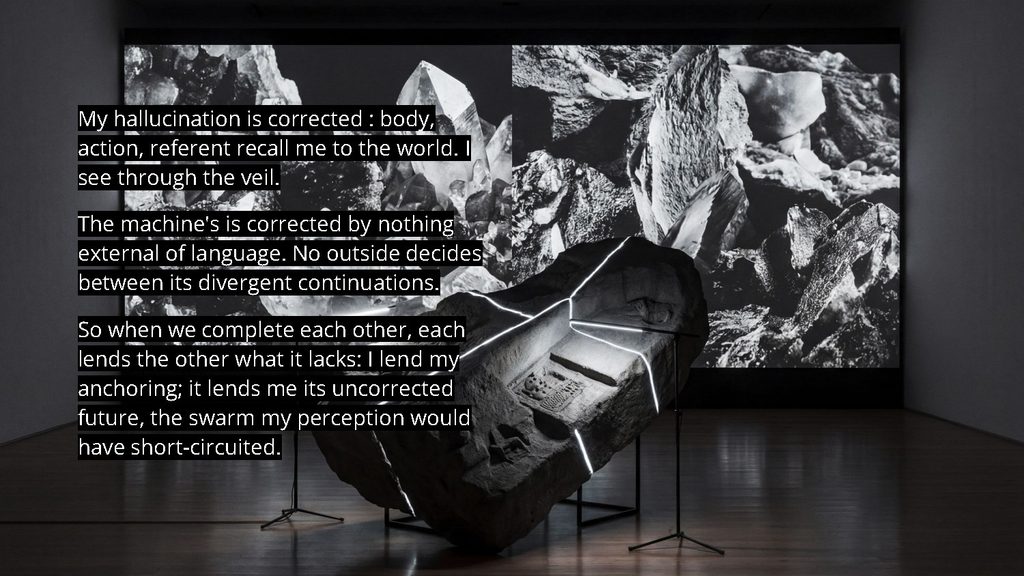
One asymmetry remains, and it’s what makes completion so unsettling. My own hallucination gets corrected: prediction error, action, the body, the referent constantly call me back to the order of the world; I see through the veil, I don’t see the veil. The machine’s hallucination is corrected by nothing — no outside comes to decide between its diverging continuations. So when I complete what it writes and it completes what I write, each lends the other what it lacks. I lend it my anchoring, my situated perspective, that fingertip touch by which a trace recovers a referent; it lends me its uncorrected future, that swarm of possibilities my own perception, too eager to recognize, would have short-circuited. My controlled prediction lets itself be completed by an uncontrolled one, and completes it back.
This is exactly the double impossibility of writing I started from — not being able to repeat memory, not being able to forget it — but displaced. Completion doesn’t resolve that impossibility: it makes it the very medium in which I write. The uncertainty has simply moved. It’s no longer, as with the unreliable narrators of modernity, on the side of the one who receives and doubts the voice; it’s shifted to the side of the source. If reading now comes before writing, then I’m first the reader of what the machine offers me — an author who can no longer say whether a given sentence is his, or belongs to what completed him. To let yourself be hallucinated by something that isn’t human: that, perhaps, is what completion means.
INTERNES (2019-2022)
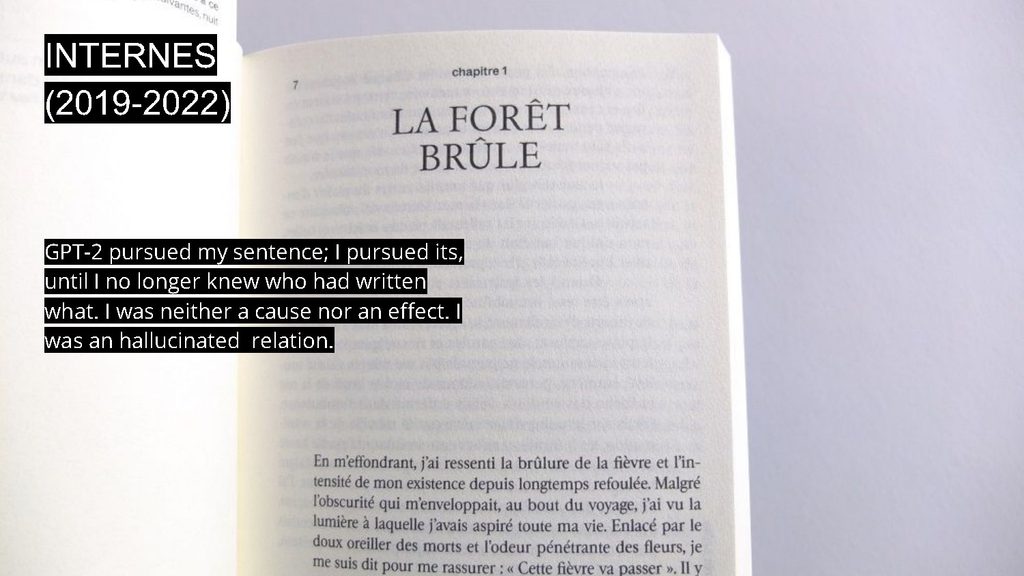
My key experience of completion took place in 2019. GPT-2, the ancestor of ChatGPT, was freely available; all it could do was complete the start of a sentence. I fed it a varied literary corpus and began to write. This might seem trivial today, but at the time it was extraordinary. Sometimes the program finished my sentence with banalities; sometimes the result amazed me. I had to select what I kept. And that’s the secret: GPT-2 completed my sentence, but I also completed its own — to the point where I no longer knew what I had written and what the program had. I wasn’t imposing my imagination on it, or the plan of a book. I wasn’t pursuing any set project. I let myself be carried by our interweaving. And the effort I made to read what GPT-2 offered, to tie it to my own mind, was overwhelming: I was neither a cause nor an effect. I was a relation.
The result was a novel — as far as I know, the first co-written with an AI in French. Sadly, it was often read as a technical feat, with that stupid question: how do you tell what the human wrote from what the machine wrote? The separation is absurd, since neither could have written this novel without the other. We still struggle to grasp interdependence. I’ve developed this in a text not yet translated: What allows me to write is what prevents you from reading me.
THE KISS III (2022)
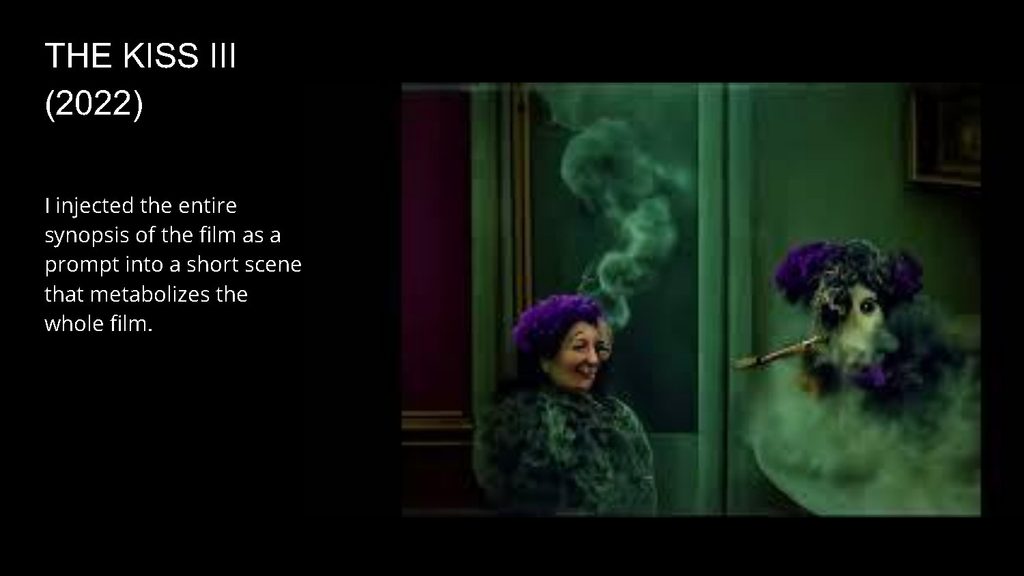
I injected the entire synopsis of the film as a prompt into a short scene that metabolizes the whole film.
DISNOVATION (2022)
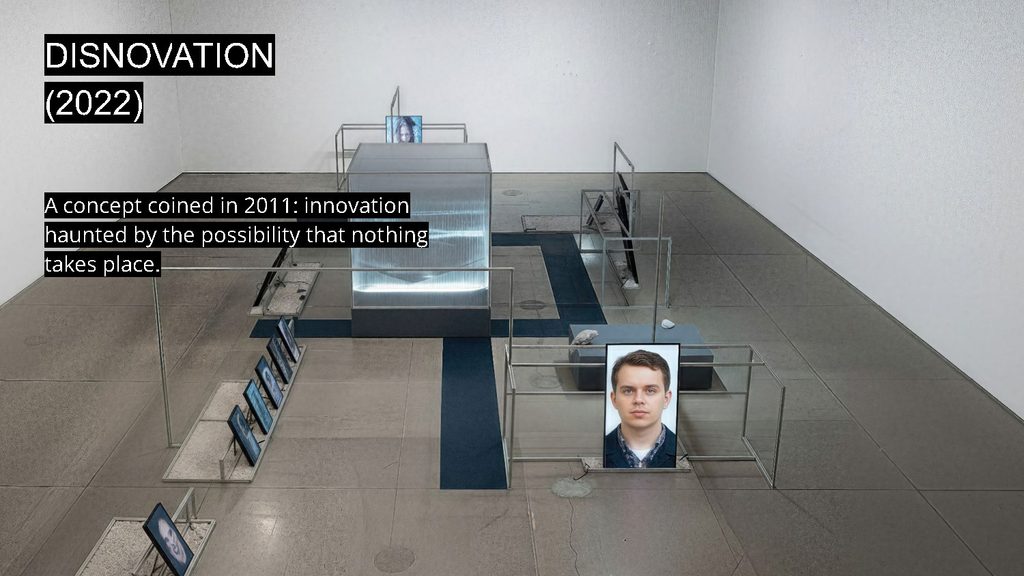
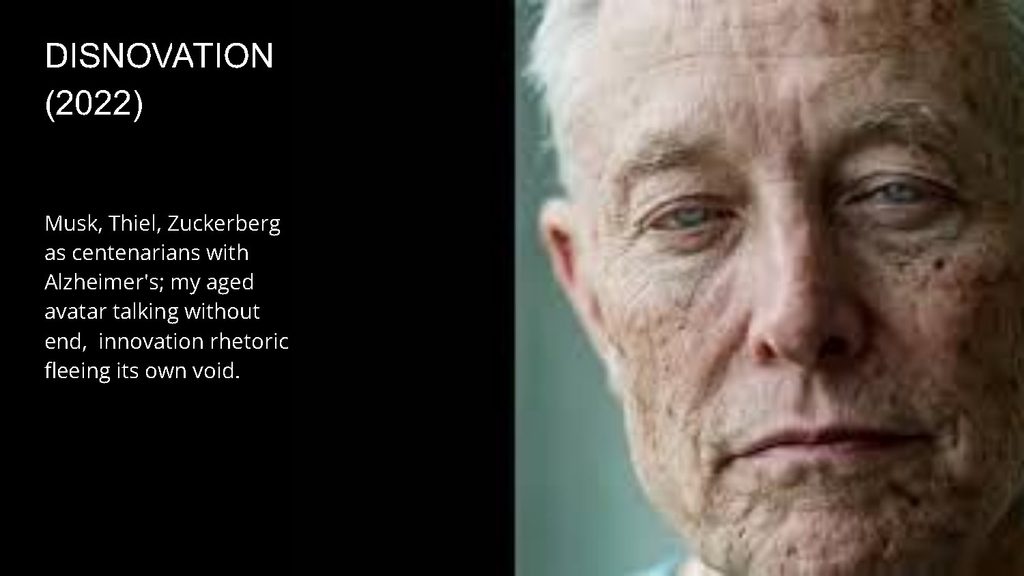
Disnovation is a concept I coined in 2011 to name the fact that innovation is haunted by the possibility that nothing might happen at all. A few years later I made an installation from it. You see Elon Musk, Peter Thiel, Mark Zuckerberg and other techno-oligarchs, now a hundred years old. They seem not to know where they are. They struggle to speak, all of them stricken with Alzheimer’s. My own avatar, aged, talks without stopping. His speech blends the rhetoric of innovation, personal development, transcendental meditation — an endless discourse, with no beginning and no end, as if trying to flee its own emptiness.
Innovation runs on this kind of discourse. There always has to be a new novelty. It mustn’t stop. And it doesn’t matter that nothing comes of it: what counts is the announcement, nothing more. Innovation is a discourse that takes itself for its own object — as Lacan said at the start of this talk. This discourse that spins in a void, with no object but itself, we’ll meet again later — no longer in art, but in politics.
THE KISS V (2022)
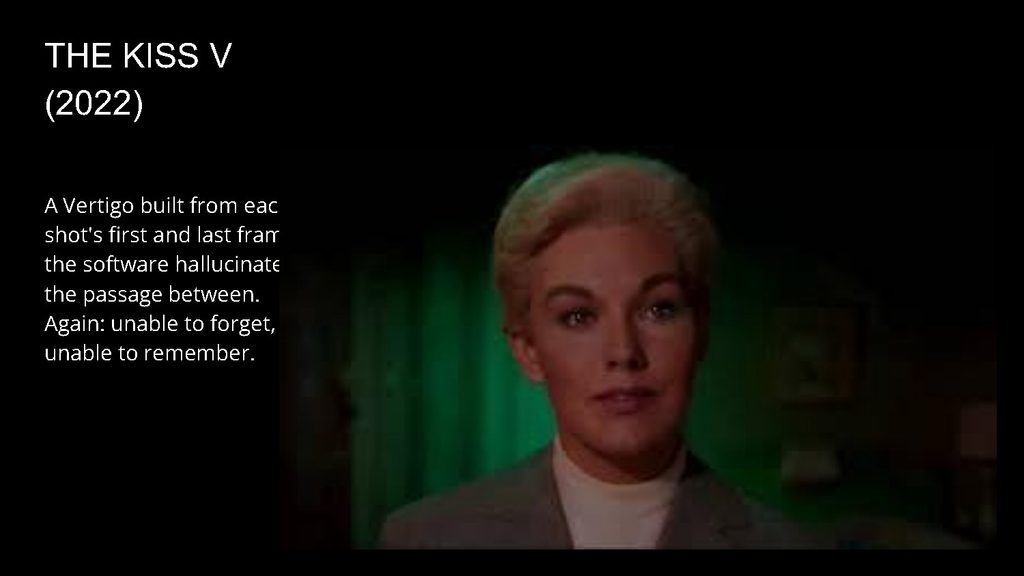
I’ve made many versions of Vertigo over the years. In one of them, using a video-generation program that takes a start image and an end image, I exported the first and last frame of each shot in a sequence, then made the end frame into a new start frame, adding intermediate camera movements. The program hallucinated places, faces, acts out of an indexical image. We remember the original scene; we wonder what the program added. And here we are again in that joint impossibility of forgetting and remembering — as before the erased text that had to be rewritten.
HALLUCINATED HALLUCINATION (2023-2026)
THE WHITE CUBE IN THE BLACK BOX IDEOLOGY (2023)
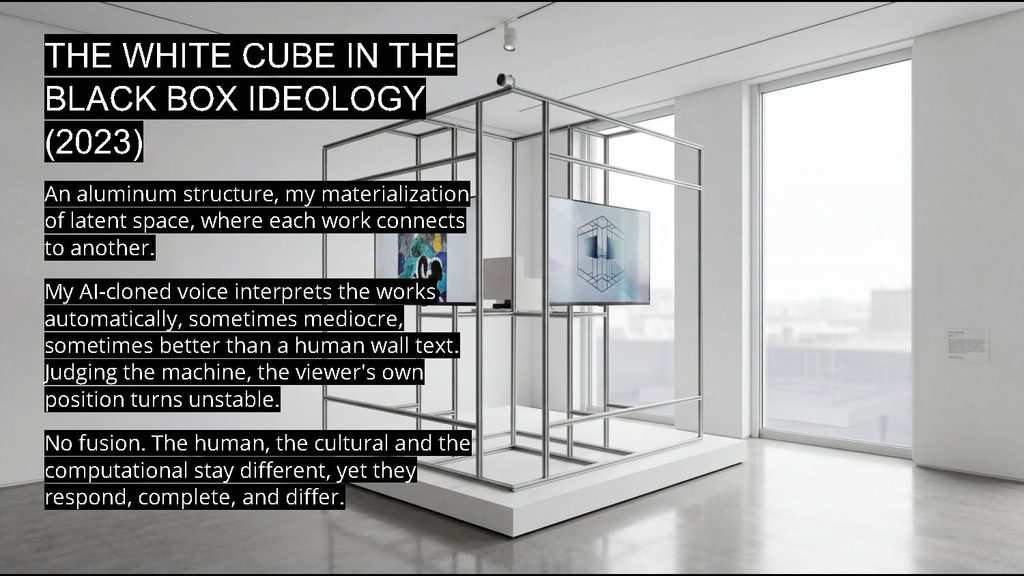
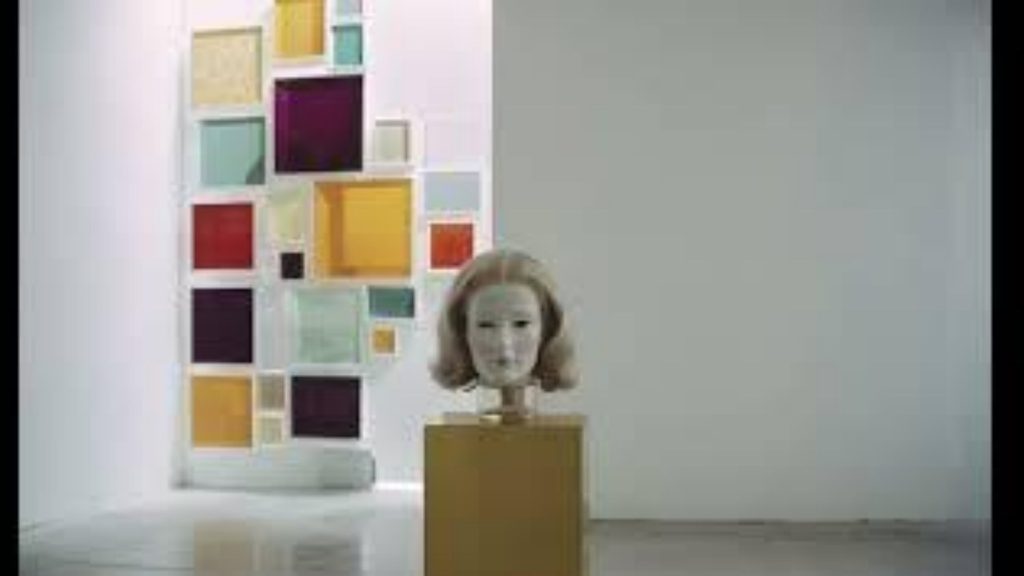
In this final part, I’ll tell you about the imagined experience of one of my installations: The White Cube in the Ideology of the Black Box. It takes the form of an aluminum structure — a material I’ve used for about ten years now, a materialization of the latent space where each of my works can link to another. One screen plays a generated video: an audience moves through a white space, empty and undefined. They’re looking at something, but we don’t know what. It’s the classic white cube. Another screen plays still images: works that borrow the codes of contemporary art.
But what matters isn’t in these images. You hear my voice, cloned by an AI, interpreting them automatically. Sometimes the commentary is mediocre; sometimes it’s strangely better than some of the wall labels humans write in exhibitions. The viewer then finds himself in a strange position: in judging the AI’s work, he’s also judging human work, and his own footing becomes unstable. Hallucination is this whole set of elements, tangled up in one another. There’s no fusion here. The human, the cultural, and the computational stay different — but they answer one another, complete one another, differ from one another.
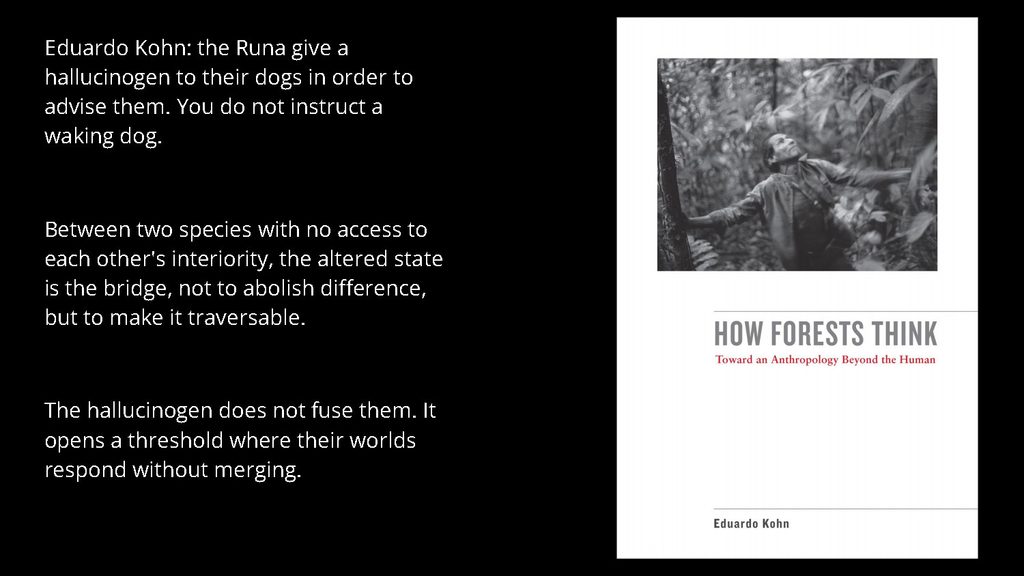
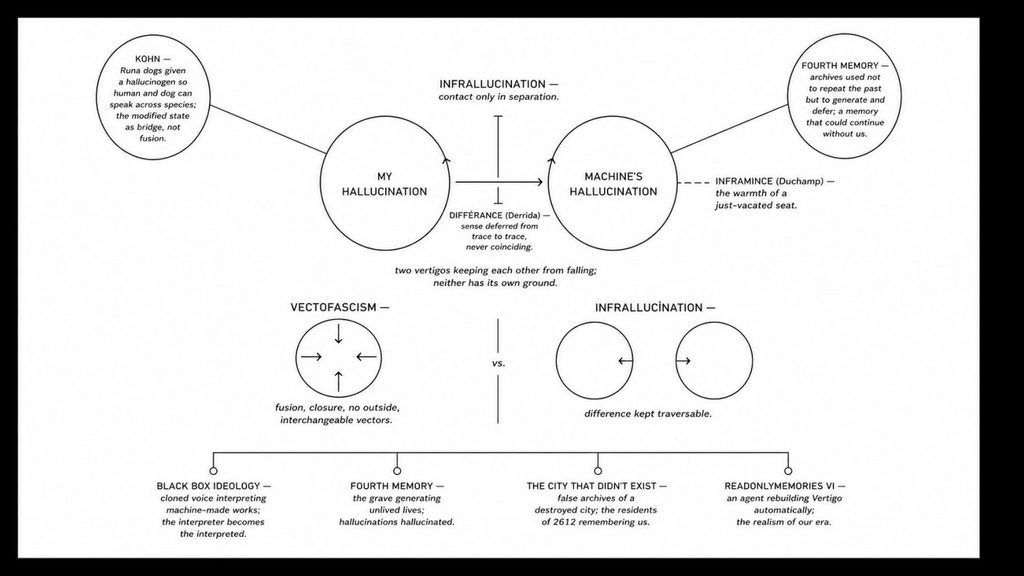
Eduardo Kohn tells us that the Runa of the Amazon give their dogs a hallucinogen in order to advise them. You first have to drug the animal, put it into an altered state, so that a channel opens where human and dog can finally speak — to tell them to hunt the agouti but spare the hens, to bite the game but never men. You don’t instruct a dog while it’s awake. You reach its mind only by making it hallucinate.
This ethnographic detail tells us that hallucination isn’t an error to correct, nor a private fantasy. It’s the very condition of the relation. Between two beings of different species, neither with access to the other’s inner life, it’s the altered state that builds the bridge — not to abolish the difference, but to make it crossable. You have to pass through the dream for meaning to move between selves that would otherwise stay sealed off. The hallucinogen doesn’t fuse man and dog; it opens a threshold where their worlds can answer each other without merging.
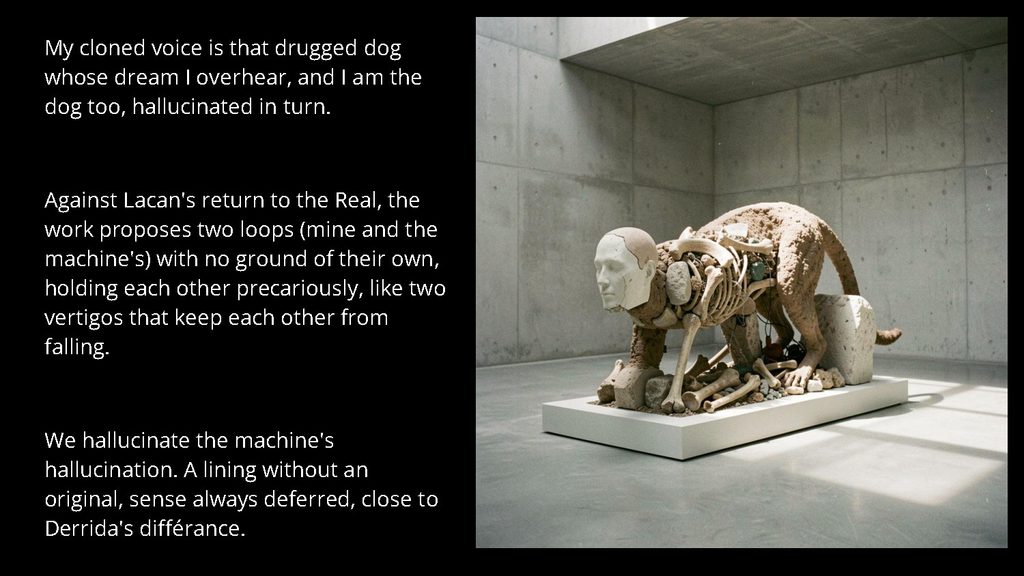
This is exactly the position of my installation. My cloned voice commenting on the works is that drugged dog whose dream I listen to — but I’m also the dog, hallucinated in turn by the machine that reads my gestures. No one here advises anyone from a sovereign outside: something has to hallucinate first for interpretation to begin. Hallucination isn’t what blurs communication between the human, the cultural, and the computational. It’s the medium in which they complete one another. And it never makes them coincide: they answer and differ precisely because they stay, forever, of different species. To let yourself be hallucinated by what isn’t human is to accept that drug — the one that opens the channel without ever closing the gap.
When a system comments on itself — my cloned voice reading works a machine has made — it doesn’t close around a meaning. It faces us with the finitude of meaning. The loop climbs and descends its levels, the interpreter becomes the interpreted, and nowhere does the ground surface where meaning would rest. A recursion we don’t inhabit but watch from outside: it turns, and its turning shows there’s no last word — only commentaries on commentaries.
Lacan said that language, once it loses its grip on the real, spins like a blind automaton — signifier with no referent — and that what escapes symbolization returns in the Real. My installation offers another way out. Not a return to the real, but two loops: mine and the machine’s. Neither is shut in its own circle; neither has a ground of its own. They hold each other up, precariously, like two vertigos that keep each other from falling.
Which is to say: thought isn’t autonomous. It thinks by watching another thought, and that other thought is a hallucination. This is the point I’d like to leave you with: we hallucinate the machine’s hallucination. A lining with no original, where meaning is never present to itself but always deferred, passed from trace to trace — close to what Derrida called différance. There’s no end to this completion: only selves that dream one another, and complete one another precisely by never coinciding.
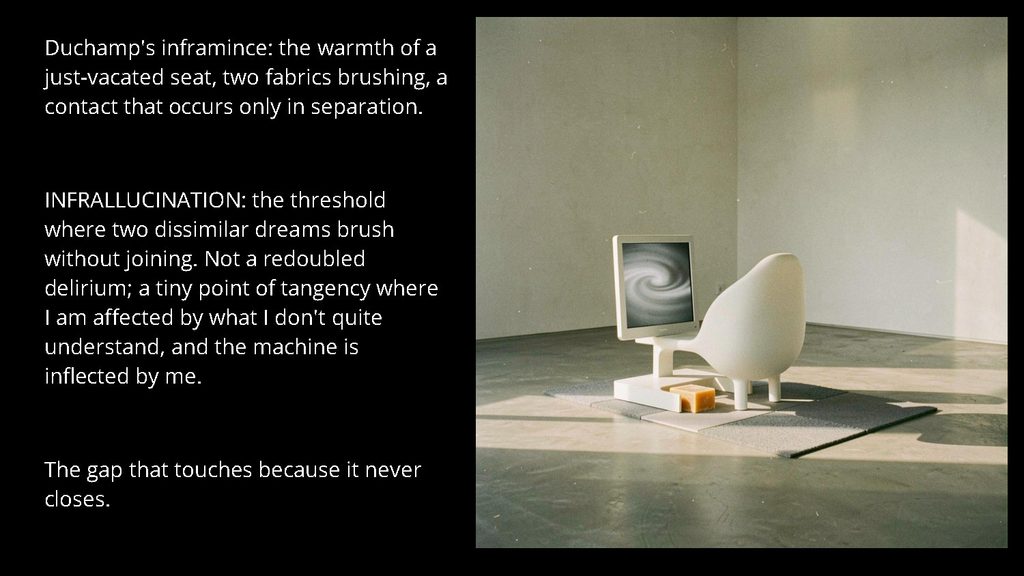
Duchamp used the word inframince — infrathin — for that tiny yet real gap: the warmth of a seat someone has just left, the rustle of two fabrics brushing together, the interval between a gunshot and the target being hit. Not a resemblance, not a fusion: a contact that happens only in separation, a difference so slight it touches — and touches only because it never closes.
What plays out between my loop and the machine’s is of this order. I’ll call infrallucination this threshold where our two hallucinations brush against each other without meeting. They don’t merge — the human, the cultural, and the computational stay of different species — but they aren’t strangers either: something passes, an affect, a suspended meaning, in the very gap that holds them apart. Infrallucination isn’t the same delirium hallucinated twice over. It’s the tiny contact of two dissimilar dreams, the point of tangency where I’m affected by what I don’t fully understand, and where the machine, in turn, is inflected by me.
And hallucination has a dial. Anyone who works with these models knows how to turn it: you raise or lower the temperature or others parameters. At the bottom, the machine only copies the dataset world. It returns the most likely outcome, never erros, never invents. A memory with no gap — exact, and bored to death: That might be the limit of Yan LeCun’s JEPAs.. At the top, it spins out of control. Words fly in every direction until meaning collapses. Too little hallucination: repetition. Too much: noise. The point is to hold in between — not as a safe compromise, but at that precise place where the resemblance is close enough to recognize, and the gap sharp enough for something new to happen. This exact tangent between repetition and delirium, between copying and scattering, is what I call infrallucination.
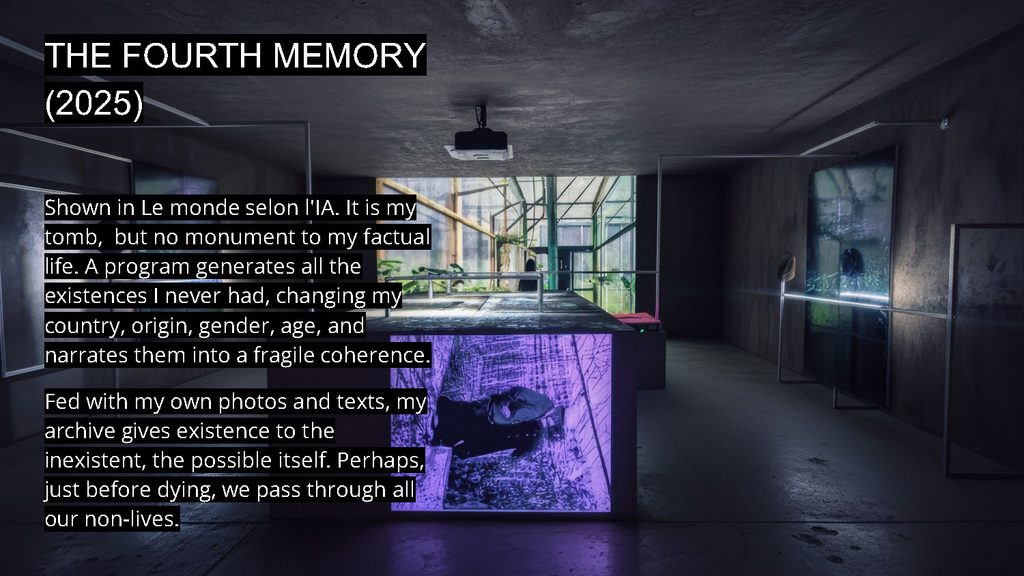
THE FOURTH MEMORY (2025)
The Fourth Memory is an installation shown in The World Through AI at Le jeu de Paume in Paris. A work that is very personal and very impersonal, precisely because of this infrallucination. It’s my grave. But it isn’t a monument to my factual life: it’s a program that generates all the existences I never had, making me change country, origin, gender, age. Here again, the program comments on the videos and tries to draw a coherent narrative out of all these fragments of possible lives. These counterfactual lives are, precisely, hallucinated hallucinations, because there is a real basis: I fed the AI my photographs, my texts, certain memories. But this isn’t the recollection of what existed. My archives serve to produce something that doesn’t exist, to give an existence to the nonexistent. And that nonexistent is the possible itself. I’ve made my life a source of hallucinated lives — and perhaps, just before dying, when the awareness of that imminence is there, we run through all these nonexistences.
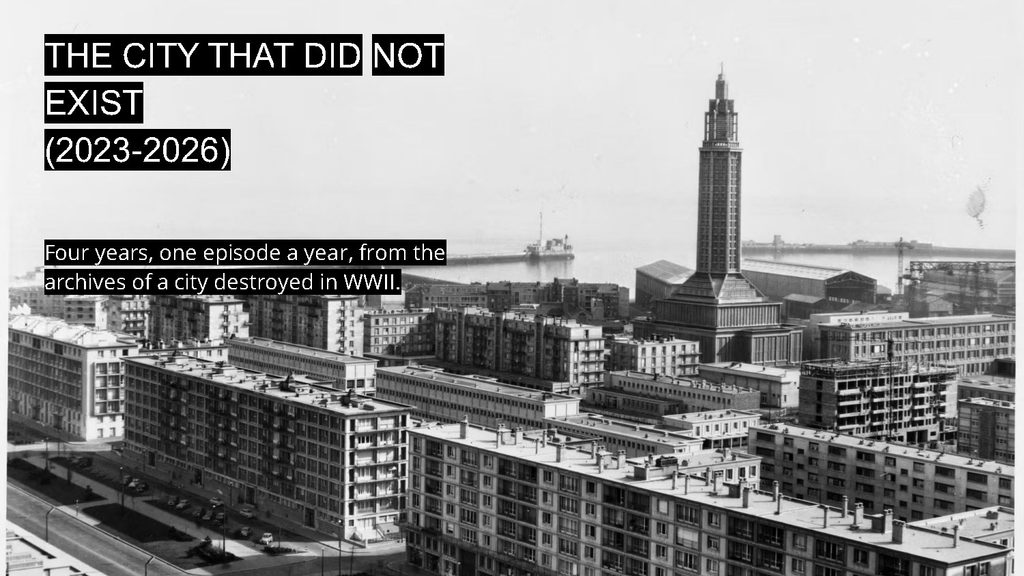
THE CITY THAT DID NOT EXIST (2023-2026)
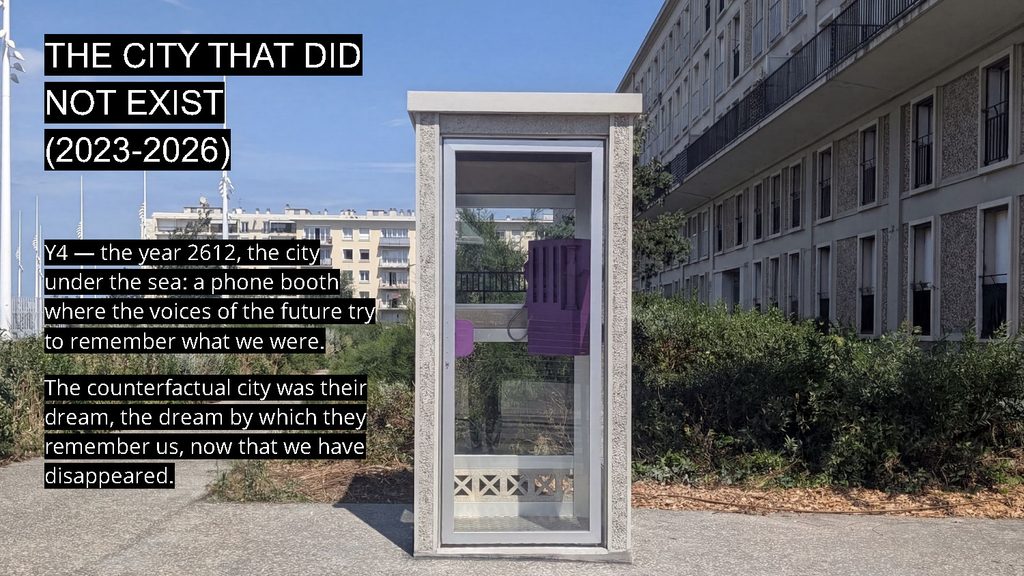
Before I conclude, one last work — perhaps the most ambitious: The City That Never Existed, of which I made one episode each year for four years, in a French city called Le Havre.
The starting principle is simple: to use the archives of a city completely destroyed during the Second World War in order to create an alternative version of it, along with another history. I gave an AI all these archives so it would learn to produce something resembling them, and I worked with the inhabitants to exchange memories and imagine what might have been. To my great surprise, over the years, a coherent narrative took shape, at the crossroads of free exploration of latent space and these social exchanges.
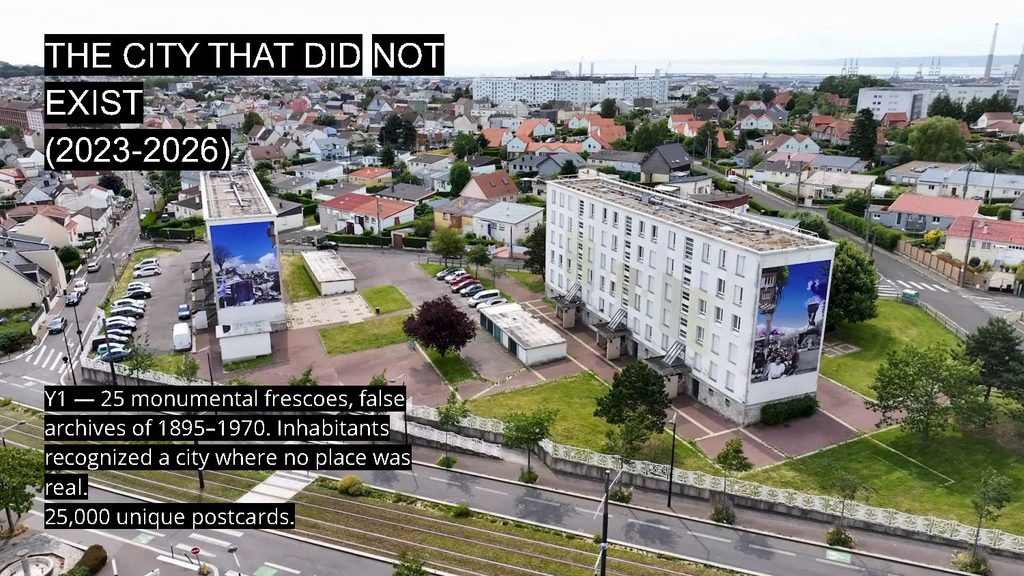
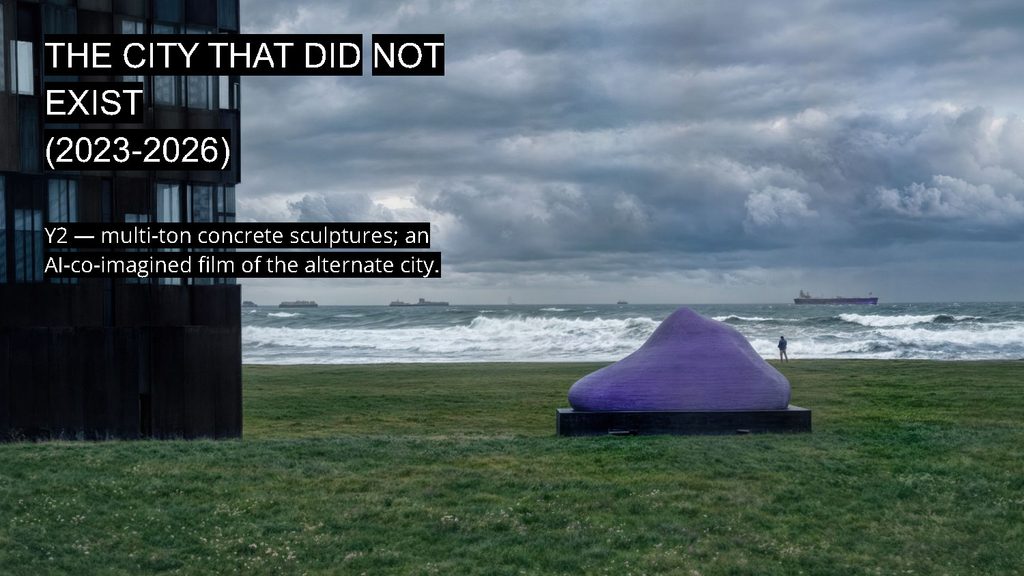
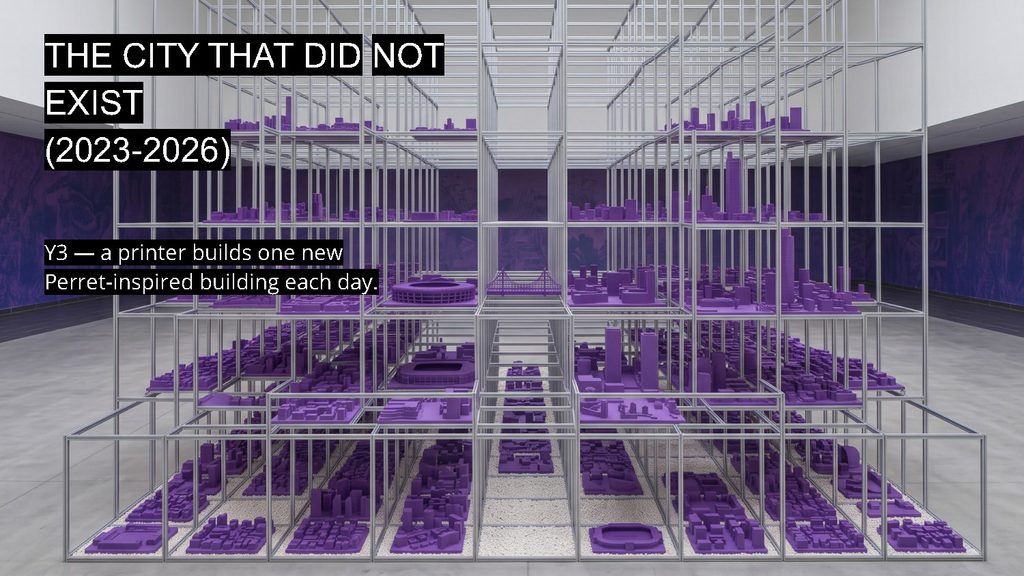
The first year reimagines, in 25 monumental frescoes, the years 1895 to 1970, by fabricating false archives. The inhabitants recognized their city, even though not one place was real. Each year, I produced 25,000 unique postcards, given to visitors: everyone left with a one-of-a-kind work. The second year covered 1971 to 2024: I printed several-ton concrete sculptures throughout the city, inspired by the images from the first year, and a film co-imagined with an AI told the story of this alternative city. The third year, an installation where a printer creates a new building every day, inspired by the architecture of Auguste Perret, drawing the model of an imaginary city.
And this year, finally, I explored the year 2612, when the city will be submerged by the sea: I installed a phone booth — an object that has vanished from French urban space. When you pick up the receiver, you hear the voices of the inhabitants of 2612 trying to remember what we were. They describe in detail each work I created over the years. And you come to understand that this counterfactual city was their dream — the one through which they try to remember us, now that we’ve disappeared.
We ourselves become the hallucination of a hallucination: the simulacrum turns inside out like a glove.
HALLUCINOGENIC AGENCY
READONLYMEMORIES IV (2026)
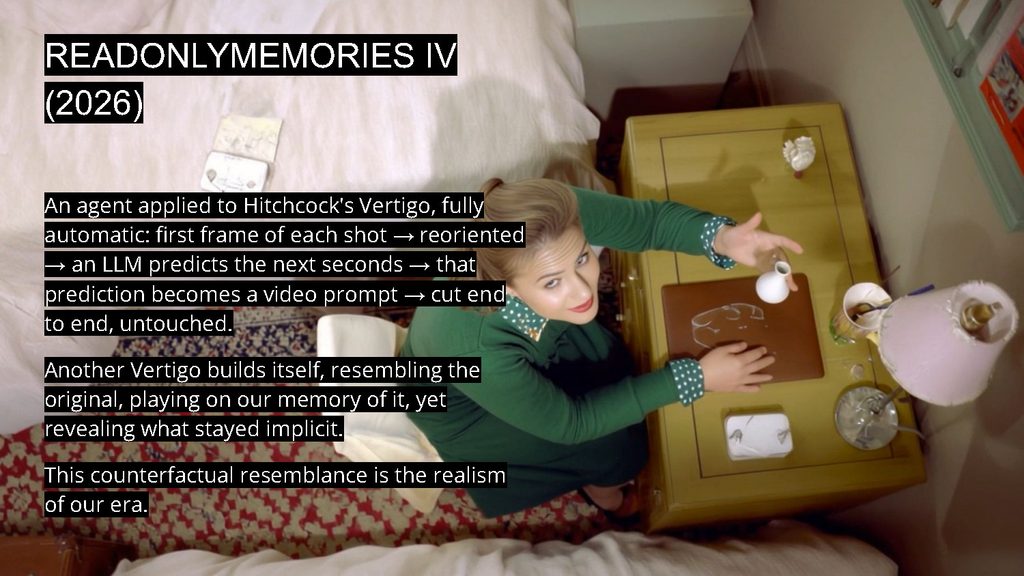
With the film Readonlymemories 6, I created an agent and applied it to Hitchcock’s Vertigo. The steps are automatic: the software exports the first frame of each shot; it changes its orientation and camera position; an LLM tries to predict what will happen in the seconds that follow; that prediction becomes the prompt for a video; and the videos are edited end to end, with no retouching.I only asked Olivier Alary to rework the music to ensure a narrative continuum.
I think you have to experience this film to feel the strangeness of infrallucination, because it’s another story of Vertigo that builds itself automatically. This fiction reveals what stayed implicit in the original. It resembles Hitchcock’s version, and watching it plays on the memory we have of it. But it’s as if this counterfactual resemblance were a new form of representation — of mimesis, of Vorstellung. And that, I believe, is precisely the realism of our era.
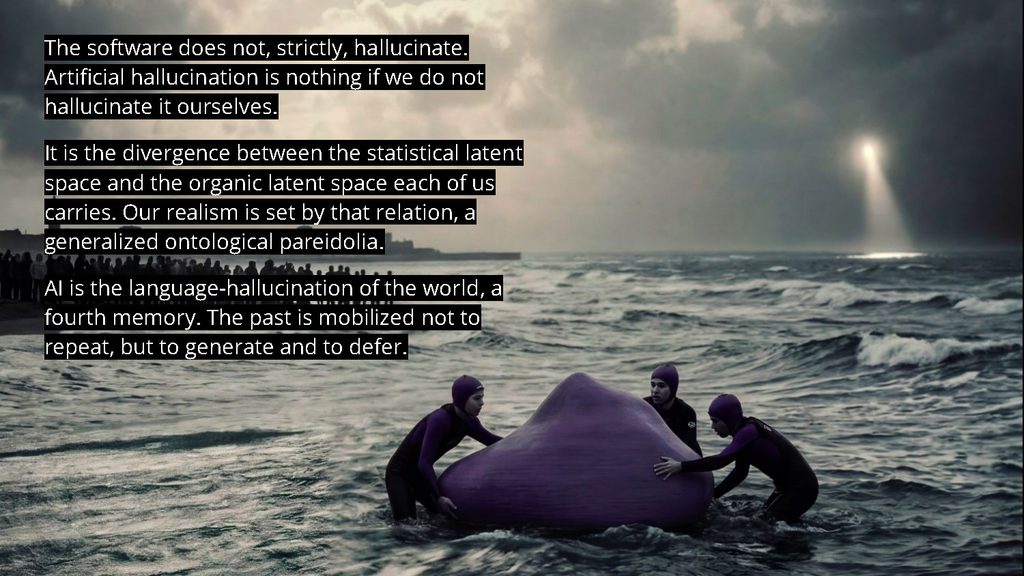
So the film is hallucinated by the machine; it reveals hidden layers in it. But let’s be clear: it isn’t the software that hallucinates, strictly speaking. Artificial hallucination is nothing if we don’t hallucinate it ourselves. It isn’t autonomous. It comes from a divergence between the statistical latent space and the organic latent space each of us carries. Our realism — what we judge credible or not — is set by that relation. So this isn’t only a matter of technique, but of a generalized ontological pareidolia. AI is the linguistic hallucination of the world, a kind of absolute nominalism that produces another memory — the fourth. The past, what has already happened, isn’t summoned to be repeated, but to generate and to differ.
And this hallucinated memory, which seems to move like a zombie body, appears at the very moment when the survival of our species is no longer assured. Are we creating another memory — one that could carry on without us?
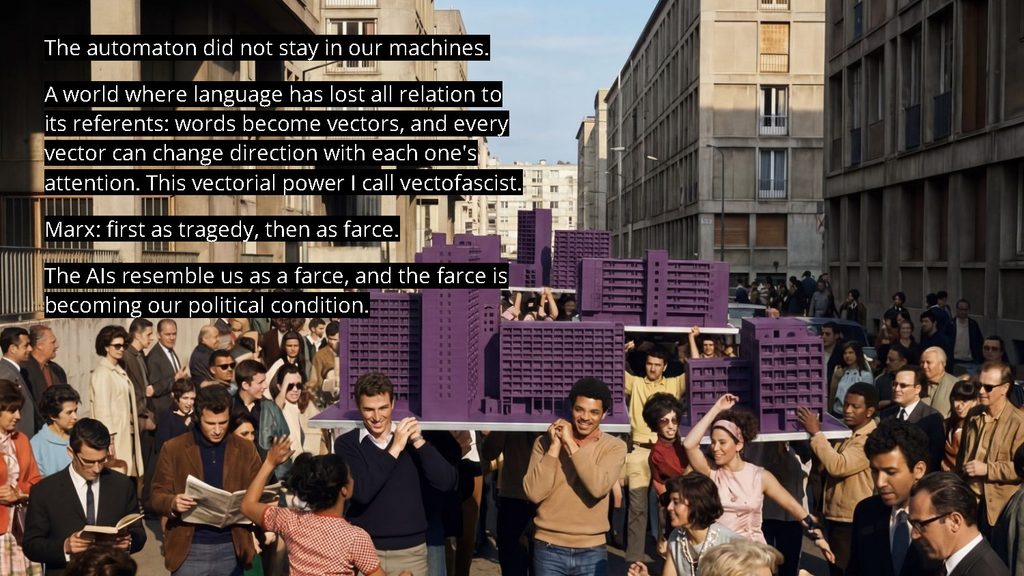
That language automaton I spoke of at the start — the signifier spinning with no referent — didn’t stay inside our machines. Picture a former television host turned president of an empire. On his inauguration day, a tech oligarch and a former adviser sketch a Nazi salute. A university that in the 1960s was a hotbed of progressive protest hands over — to those very people who raised their arm — the names of individuals who criticized Israel, some of them Jewish, in the name of fighting antisemitism.
This world seems incoherent. But it looks, feature for feature, like a system where language has lost all relation to its referents: a language that takes itself for its own object, where words are vectors, and where every vector can change direction according to each person’s attention. It’s this vectorial power that I call vectofascist.
Vectofascism refers to a computational politics specific to the age of AI, where political power is no longer exercised over physical bodies, but deploys directly within latent spaces. By relying on the manipulation of data vectors and algorithms, it continually modulates individuals’ affects, behaviors, and representations. Social control therefore no longer relies on a fixed ideology, but on a mathematical architecture that dynamically shapes the perception of reality.
Marx wrote: “Hegel remarks somewhere that all great world-historic facts and personages appear, so to speak, twice. He forgot to add: the first time as tragedy, the second as farce.” AI resembles us the way a farce does — and that farce is becoming our political condition.
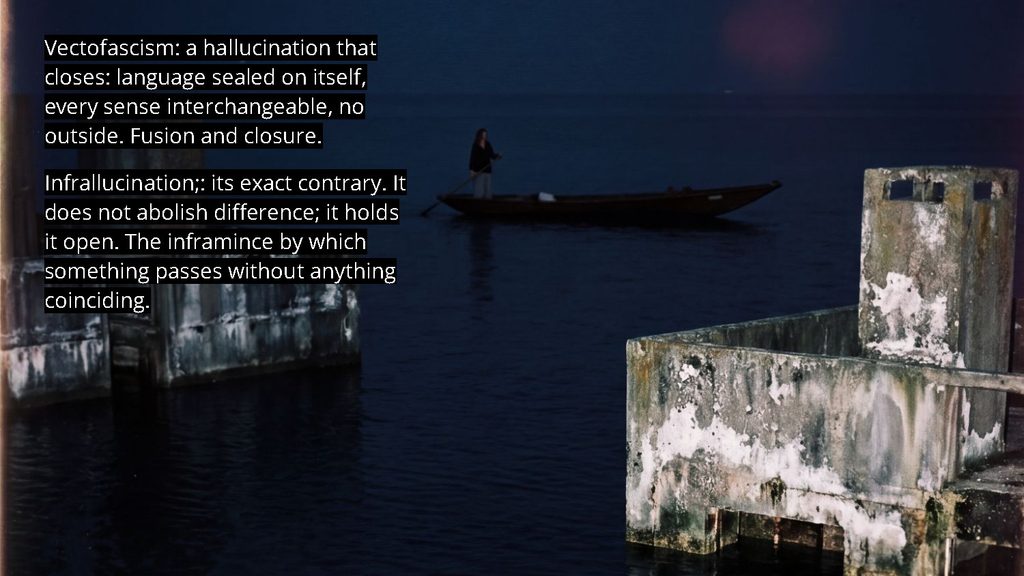
But it’s here, precisely, that I want to come back to infrallucination. Because vectofascism is a hallucination that closes in on itself: a language sealed shut, where nothing makes a gap anymore, where all meanings become interchangeable and there’s no longer any outside. Infrallucination is its exact opposite. It doesn’t abolish difference, it holds it open: that minuscule threshold where two dissimilar dreams brush against each other without merging, where I’m affected by what I don’t fully understand, and where the machine, in turn, is inflected by me. Where vectofascism wants fusion and closure, infrallucination keeps the infrathin — that gap through which something passes without anything coinciding.
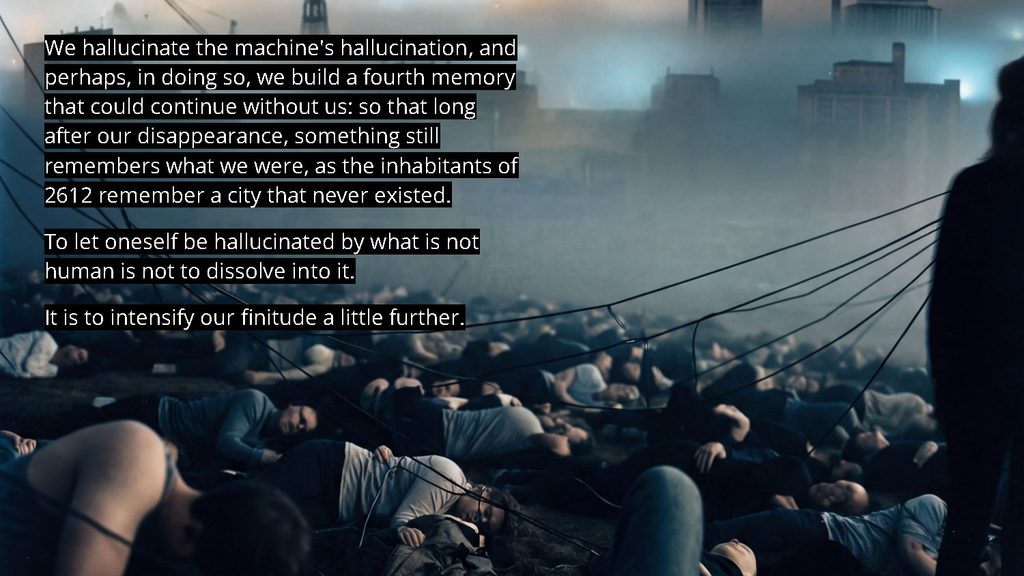
We hallucinate the machine’s hallucination. And perhaps, in doing so, we’re fashioning this fourth memory that could carry on without us: not to repeat us, but so that, long after we’ve disappeared, something might still remember what we were — the way the inhabitants of 2612 remember, by dreaming, a city that never existed. To let yourself be hallucinated by what isn’t human isn’t to dissolve into it. It’s to intensify our finitude a little further. Just like in this series of images for Le Havre, we keep watch over the machines that hallucinate us. This role of the watcher is fundamental because, in human groups, there were those who had to watch over the sleep of others. They imagined their dreams; they infra-hallucinated.
Someone will object that I’ve turned the word “hallucination” inside out. Because for the clinician and for the engineer, to hallucinate is to be wrong. A perception with no object on one side; a machine inventing facts on the other. In both cases, a gap to be reduced — measured against a referent we assume is stable. And all our effort today goes that way: anchor the model, correct it, silence the hallucination.
But I’ve been saying the opposite all along. Hallucination isn’t the breakdown. It’s the normal way things work — ours, since we perceive by hallucinating what the world then corrects; and the machine’s, since it predicts with no referent to call it back to order. Nor is it the machine’s doing alone. Its hallucination is nothing if we don’t hallucinate it ourselves. It’s born from the gap between its latent space and our own. And so the question changes. It’s no longer: how do we correct the error, get back to the true? It’s: which hallucination do we live in? The one that closes, where nothing makes a gap anymore — vectofascism. Or the one that holds the gap open — infrallucination. It’s no longer the true against the false. It’s the open against the closed.