Paranoïa-critique et rudiments artificiels / Paranoiac-Critical Method and Artificial Rudiments
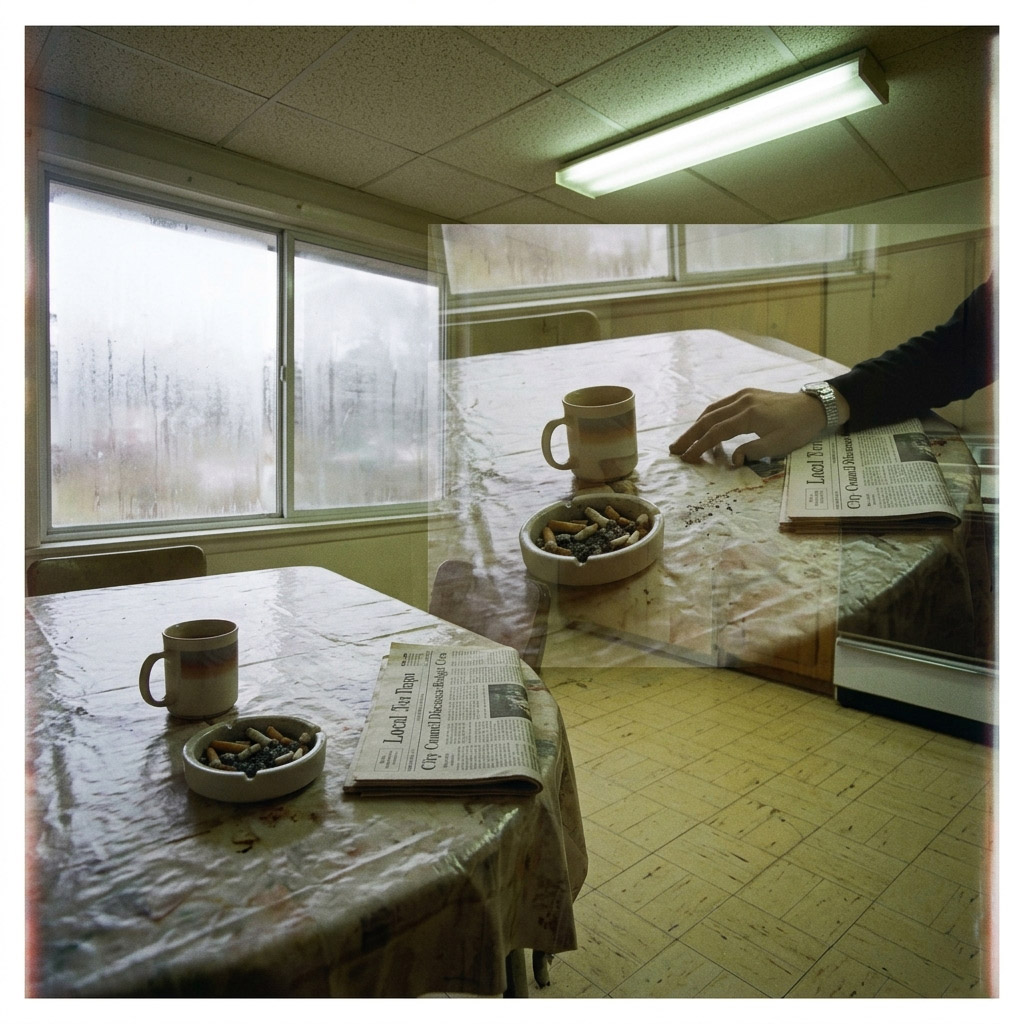
Il existe une tendance cognitive, que les neuropsychologues, depuis Peter Brugger, nomment apophénie, qui consiste à percevoir des connexions significatives entre des éléments que rien ne relie causalement. Salvador Dali, au début des années 1930, en a fait la pierre angulaire d’une méthode qu’il nomme « méthode paranoïaque-critique » : « méthode spontanée de connaissance irrationnelle, basée sur l’association interprétative-critique des phénomènes délirants ». Le dispositif fonctionne en deux temps qui ne se succèdent pas mais se contaminent : une phase projective où l’esprit charge le monde extérieur de ses propres structures internes, le rocher de Cadaqués devient buste, la foule devient visage, et une phase de matérialisation technique qui fixe cette surcharge dans la peinture, contraignant le spectateur à voir ce que la paranoïa de l’artiste a fait apparaître. Ce qui importe est que Dali ne croit pas à ses propres hallucinations. Le délire est instrumentalisé, mis au service d’une production de formes qui maintient deux lectures du réel sans que l’une annule l’autre.
Le complotisme contemporain emprunte le même dispositif apophénique pour en inverser la finalité. Lui aussi accumule des indices disparates, assemble des chronologies, connecte des entités distantes. Lui aussi objective son délire pour le rendre partageable, les captures d’écran annotées, les fils de « preuves » circulaires, les cartographies annotées. Mais là où Dali maintenait la double lecture, le rocher est un rocher et un buste, les deux images coexistent sans se résoudre, le complotisme exige la clôture : tous les fils convergent vers un centre unique, secret, omnipotent. Ce centre peut s’appeler l’Etat profond, les élites mondiales, peu importe le nom, la structure est invariablement la même. Centripète. Policière. Elle constitue un tribunal permanent où chaque événement ne sert qu’à confirmer ce qui était déjà su. Le sens ne prolifère pas : il s’immobilise.
C’est contre cette immobilisation, pas contre le complotisme en particulier, mais contre tous les dispositifs de totalisation discursive, que Jean-François Lyotard développait, dans les textes de la fin des années 1970, ce qu’il nommait le paganisme. Précisons d’emblée ce que les usages ultérieurs de ce terme ont souvent brouillé : dans Rudiments païens (1977), le paganisme reste une posture plus fragmentée que systématique, une série d’interventions critiques plutôt qu’une doctrine. C’est dans Au juste (1979), dialogue avec Jean-Loup Thébaud, et dans La condition postmoderne (1979) que la distinction entre « grands récits » et « petits récits » trouve sa formulation la plus explicite. Le « grand récit », qu’il prenne la forme du projet émancipateur de la Révolution ou de la promesse spéculative de la Science, prétend donner à l’ensemble des pratiques humaines une direction unifiée, une légitimité surplombante, un métalangage capable de juger tous les autres. Le paganisme de Lyotard est le refus de cette prétention : non pas le retour nostalgique aux religions antiques, mais une pragmatique discursive qui tient la multiplicité des jeux de langage pour irréductible. Chaque jeu a ses règles propres, ses critères d’efficacité locaux. Aucun métalangage ne peut les hiérarchiser depuis un point extérieur à tous. La valeur d’un discours ne se mesure plus à sa capacité de capter une vérité universelle mais à sa puissance d’invention locale, ce que Lyotard, héritant ici de Wittgenstein, nomme la pragmatique des jeux de langage.
Ce déplacement, de la vérité unique vers la multiplicité des petits récits, de la convergence vers un centre à la prolifération de fils qui ne se rejoignent pas, constitue l’antidote structurel à la logique complotiste. Là où le complot fait converger tous les signes vers une cause cachée, la pragmatique lyotardienne fait de chaque signe une bifurcation vers d’autres récits locaux, irréductibles entre eux. Ce qui se perd, c’est la certitude. Ce qui se gagne, c’est une mobilité que le manuscrit cité en exergue des Rudiments, « En réponse aux Rudiments païens de Lyotard (1977), imaginons des Rudiments artificiels comme un traité pédagogique destiné aux relations entre humain et technique », désigne comme la ruse : ni transparence, ni maîtrise, mais navigation dans l’hétérogène.
Croiser ces deux dispositifs, la méthode paranoïaque-critique de Dali et le paganisme pragmatique de Lyotard, permet de dégager ce qu’on pourrait nommer une paranoïa désorientée et multiple, dont les propriétés formelles s’opposent point par point à celles du complotisme.
Première différence : la structure du réseau. Le complotisme est arborescent, une racine unique, des ramifications hiérarchiques, un coupable central qui aimante et organise le sens. La paranoïa multiple est rhizomatique : chaque connexion établie ouvre trois nouvelles pistes divergentes et contradictoires, le réseau ne se referme jamais. Ce n’est pas une enquête policière mais un labyrinthe, et ce n’est pas la même chose. Le labyrinthe ne cherche pas de sortie. Il explore sa propre structure à mesure qu’il se construit.
Deuxième différence : le rapport à la saturation. Le complotisme sélectionne méticuleusement ses indices, il écarte ce qui contredit la thèse, retient ce qui la confirme. La paranoïa multiple pratique l’inverse : elle accepte tous les signaux, toutes les analogies, toutes les coïncidences, sans hiérarchie ni censure. Poussée à l’excès quantitatif, cette méthode atteint un point de surchauffe où les connexions deviennent si denses et si contradictoires qu’elles s’annulent mutuellement. La narration policière se dissout dans un bruit qui n’est pas l’absence de sens mais la présence simultanée de trop de sens pour qu’aucun s’impose. C’est ce que les toiles daliniennes aux images doubles tentaient de produire : non la révélation d’une vérité cachée derrière l’apparence, mais le maintien indéfini d’au moins deux lectures également valides, également déstabilisantes. On ne choisit pas entre le buste de Voltaire et le groupe de personnages : on les voit ensemble ou on ne voit rien.
Troisième différence, ontologique celle-là. Le complotiste croit que le monde est un masque qu’il faudrait arracher pour accéder au visage réel, structure gnostique : il y a un réel caché et un réel apparent, la mission du sujet est de percer le second pour atteindre le premier. La paranoïa désorientée refuse cette séparation. Ce qu’on voit n’est pas un masque. C’est une surface à plusieurs niveaux simultanés, dont la multiplicité n’est pas un obstacle à la connaissance mais sa condition même. Derrière les images daliniennes, il n’y a pas d’image originale dont elles seraient la déformation : elles sont déjà toutes les images possibles.
Ces distinctions ne sont pas seulement formelles, elles engagent deux rapports radicalement différents à l’agentivité. Le sujet complotiste est, malgré ses prétentions à la lucidité, un sujet passif : il se représente comme victime d’un plan qu’il ne fait que décoder, soumis à des forces qui le dépassent et contrôlent tout. L’horizon de son activité est la révélation, rendre public ce qui est caché, jamais la transformation, puisque la transformation supposerait qu’on peut agir sur un réel entièrement préorganisé par d’autres. Le sujet de la paranoïa multiple, au contraire, est producteur de fictions locales, fabricant de petits récits qui déstabilisent le Grand Récit sans prétendre le remplacer par un autre Grand Récit. Il ruse, terme que Lyotard emploie explicitement dans Au juste, et qui désigne moins une stratégie qu’un mode d’existence dans la pluralité des jeux de langage : ni adhésion dogmatique, ni distance ironique, mais engagement dans les règles du jeu tout en maintenant ouverte la possibilité de changer de jeu.
Quelques semaines avant d’écrire cette section, je regardais défiler sur mon écran des images générées par un modèle de diffusion à partir d’un prompt délibérément ambigu, pas de sujet assigné, pas de style imposé, juste la description d’une sensation de dislocation. Ce que le modèle produisait n’était ni ce que j’avais demandé ni son contraire. C’était autre chose, latéralement décalé, qui mobilisait l’espace latent statistique dans des régions que la formulation du prompt n’avait pas anticipées. Quelque chose résistait à ma lecture, imposait une friction. Je me demandais si ce n’était pas précisément là que la paranoïa múltiple pouvait trouver un terrain d’expérimentation que le complotisme ne pourra jamais occuper : dans les zones d’indétermination de l’espace latent, là où les concepts s’hybrident, où les formes hésitent, où les images se superposent sans se résoudre.
L’espace latent des grands modèles génératifs n’est pas un réservoir d’images rangées dans des catégories préétablies. C’est un espace vectoriel continu de très haute dimension où les concepts coexistent dans des relations de proximité et de distance sans que ces relations correspondent à des catégories identifiables, les dimensions de cet espace ne sont pas nommables, elles ne correspondent à aucun attribut sémantique que les humains pourraient reconnaître comme tel. Ce que cela signifie pratiquement, c’est qu’entre deux points quelconques de cet espace, il n’y a pas de chemin obligatoire, pas de sens unique, pas de direction naturelle. L’interpolation entre une image politique et une texture architecturale, entre un texte du XVIe siècle et une photographie de presse contemporaine, produit des entités intermédiaires qui n’appartiennent à aucune catégorie préexistante, des chimères sémiotiques qui résistent à toute clôture. Aucun prompt ne peut en épuiser les possibles. Aucun coupable ne peut en être extrait.
Utilisé de façon alignée, c’est-à-dire soumis à des prompts qui cherchent à confirmer une image déjà présente dans l’espace latent de l’utilisateur, le modèle génératif devient un accélérateur de complotisme. Il densifie les clusters sémantiques existants, referme progressivement le champ des possibles sur un ensemble de plus en plus étroit et prévisible. C’est l’effet des algorithmes de recommandation : ils optimisent pour l’engagement, c’est-à-dire pour le maintien du sujet dans le circuit le plus court entre son désir et sa confirmation. Ce n’est pas une anomalie technique, c’est l’effet voulu.
Mais l’espace latent n’est pas déterminé à fonctionner ainsi. Naviguer délibérément dans ses zones d’indétermination, là où les concepts hésitent entre plusieurs attracteurs statistiques sans se fixer sur l’un d’eux, c’est appliquer à la machine ce que Lyotard demandait aux discours : refuser la clôture, maintenir ouverte la multiplicité des jeux de sens possibles. Non pas pour produire de la nouveauté comme valeur marchande, la « nouveauté » que célèbre la hype des IAs n’est souvent que la réitération accélérée des lieux communs du dataset, un kitsch statistique, mais pour maintenir active cette indécidabilité qui est la condition même de la pensée. De toute pensée, y compris celle qui s’écrit à plusieurs mains, avec des machines, sans savoir toujours qui tient la plume ni si la question a encore un sens.
Le complotisme cherche à savoir qui tire les fils. La paranoïa multiple constate que les fils se tirent d’eux-mêmes.
There exists a cognitive tendency — which neuropsychologists, following Peter Brugger, call apophenia — consisting in the perception of meaningful connections between elements that share no causal relation. Salvador Dalí, in the early 1930s, made it the cornerstone of a method he named the “paranoiac-critical method”: a “spontaneous method of irrational knowledge based on the interpretive-critical association of delirious phenomena.” The device operates in two phases that do not succeed one another but mutually contaminate: a projective phase in which the mind loads the external world with its own internal structures — the rock at Cadaqués becomes a bust, the crowd becomes a face — and a phase of technical materialization that fixes this overcharge in painting, compelling the viewer to see what the artist’s paranoia has brought into appearance. What matters is that Dalí does not believe his own hallucinations. The delirium is instrumentalized, placed in the service of a production of forms that sustains two readings of the real without either annulling the other.
Contemporary conspiracism borrows the same apophenic device in order to invert its finality. It too accumulates disparate indices, assembles timelines, connects distant entities. It too objectifies its delirium to render it shareable — annotated screenshots, circular “proof” threads, annotated maps. But where Dalí maintained the double reading — the rock is simultaneously a rock and a bust, both images coexist without resolution — conspiracism demands closure: all threads converge toward a single, secret, omnipotent center. That center may be called the Deep State, global elites, an occult plutocracy — the name matters little, the structure is invariably the same. Centripetal. Policing. It constitutes a permanent tribunal in which every event serves only to confirm what was already known. Sense does not proliferate: it stills.
It is against precisely this stillness — not against conspiracism in particular, but against all devices of discursive totalization — that Jean-François Lyotard was developing, in his texts of the late 1970s, what he called paganism. A clarification is necessary here, since subsequent uses of the term have repeatedly obscured it: in Rudiments Pagan (1977), paganism remains a more fragmented posture than a systematic one, a series of critical interventions rather than a doctrine. It is in Just Gaming (1979), a dialogue with Jean-Loup Thébaud, and in The Postmodern Condition (1979), that the distinction between “grand narratives” and “little narratives” finds its most explicit formulation. The “grand narrative” — whether it takes the form of the emancipatory project of the Revolution or the speculative promise of Science — claims to give the totality of human practices a unified direction, a sovereign legitimacy, a metalanguage capable of judging all others. Lyotard’s paganism is the refusal of that claim: not a nostalgic return to ancient religions, but a discursive pragmatics that holds the multiplicity of language games to be irreducible. Each game has its own rules, its own local criteria of efficacy. No metalanguage can hierarchize them from a point exterior to all. The value of a discourse is measured no longer by its capacity to capture a universal truth but by its power of local invention — what Lyotard, inheriting this from Wittgenstein, calls the pragmatics of language games.
This displacement — from singular truth toward the multiplicity of little narratives, from convergence toward a center to the proliferation of threads that do not meet — constitutes the structural antidote to conspiracist logic. Where the conspiracy makes all signs converge toward a hidden cause, Lyotardian pragmatics makes of each sign a bifurcation toward other local narratives, irreducible to one another. What is lost is certainty. What is gained is a mobility that the manuscript’s own “Artificial Rudiments” — imagined explicitly “in response to Lyotard’s Rudiments Pagan (1977) as a pedagogical treatise dedicated to relations between the human and the technical, where their separation becomes reversible and troubled” — designates as ruse: neither transparency nor mastery, but navigation within the heterogeneous.
Crossing these two devices — Dalí’s paranoiac-critical method and Lyotard’s pragmatic paganism — makes it possible to delineate what might be called a disoriented and multiple paranoia, whose formal properties stand in point-for-point opposition to those of conspiracism.
First difference: the structure of the network. Conspiracism is arborescent — a single root, hierarchical ramifications, a central culprit that attracts and organizes sense. Multiple paranoia is rhizomatic: each established connection opens three new divergent and contradictory paths, the network never closes. This is not a police investigation but a labyrinth, and these are not the same thing. The labyrinth does not seek an exit. It explores its own structure as it constructs itself.
Second difference: the relation to saturation. Conspiracism meticulously selects its indices — it discards what contradicts the thesis, retains what confirms it. Multiple paranoia practices the inverse: it accepts all signals, all analogies, all coincidences, without hierarchy or censure. Pushed to quantitative excess, this method reaches a point of overheating at which connections become so dense and so contradictory that they cancel one another out. The detective narrative dissolves into a noise that is not the absence of sense but the simultaneous presence of too many senses for any one to impose itself. This is what Dalí’s double-image canvases attempted to produce: not the revelation of a truth hidden behind appearance, but the indefinite maintenance of at least two equally valid, equally destabilizing readings. One does not choose between Voltaire’s bust and the group of figures: one sees them together, or one sees nothing.
Third difference, ontological in nature. The conspiracist believes the world is a mask to be torn away in order to access the real face — a gnostic structure: there is a hidden real and an apparent real, and the subject’s mission is to pierce the second to reach the first. Multiple paranoia refuses this separation. What one sees is not a mask. It is a surface operating at several simultaneous levels, whose multiplicity is not an obstacle to knowledge but its very condition. Behind Dalí’s images, there is no original image of which they would be the deformation: they already are all possible images.
These distinctions are not merely formal — they engage two radically different relations to agentivity. The conspiracist subject is, despite its claims to lucidity, a passive subject: it represents itself as the victim of a plan that it can only decode, submitted to forces that exceed it and control everything. The horizon of its activity is revelation — making public what is hidden — never transformation, since transformation would require acting on a real that, within its schema, is entirely preorganized by others. The subject of multiple paranoia, by contrast, is a producer of local fictions, a fabricator of little narratives that destabilize the Grand Narrative without claiming to replace it with another Grand Narrative. It ruses — a term Lyotard uses explicitly in Just Gaming, designating less a strategy than a mode of existence within the plurality of language games: neither dogmatic adherence, nor ironic distance, but engagement within the rules of the game while keeping open the possibility of changing games.
A few weeks before writing this section, I was watching images scroll across my screen — generated by a diffusion model from a deliberately ambiguous prompt, no assigned subject, no imposed style, only the description of a sensation of dislocation. What the model produced was neither what I had asked for nor its contrary. It was something else, laterally displaced, mobilizing the statistical latent space in regions that the prompt’s formulation had not anticipated. Something resisted my reading, imposed a friction. I found myself wondering whether this was not precisely the terrain on which multiple paranoia might find a field of experimentation that conspiracism can never occupy: in the zones of indetermination of the latent space, where concepts hybridize, where forms hesitate, where images superimpose without resolving.
The latent space of large generative models is not a reservoir of images stored in pre-established categories. It is a continuous, very high-dimensional vector space in which concepts coexist in relations of proximity and distance that correspond to no identifiable semantic attributes — the dimensions of this space are unnameable, they correspond to no attribute that humans could recognize as such. What this means practically is that between any two points in this space, there is no obligatory path, no one-way direction, no natural gradient. Interpolating between a political image and an architectural texture, between a sixteenth-century text and a contemporary press photograph, produces intermediate entities that belong to no pre-existing category — semiotic chimeras that resist all closure. No prompt can exhaust their possibles. No culprit can be extracted from them.
Used in an aligned fashion — that is, submitted to prompts that seek to confirm an image already present in the user’s latent space — the generative model becomes an accelerator of conspiracism. It densifies existing semantic clusters, progressively closes the field of possibles around an increasingly narrow and predictable range. This is the effect of recommendation algorithms: they optimize for engagement, meaning for the maintenance of the subject in the shortest circuit between desire and its confirmation. This is not a technical anomaly — it is the intended effect.
But the latent space is not determined to function this way. To navigate deliberately in its zones of indetermination — where concepts hesitate between several statistical attractors without fixing onto any one of them — is to apply to the machine what Lyotard demanded of discourses: refuse closure, keep multiple possible sense-games open. Not in order to produce novelty as market value — the “novelty” celebrated in AI hype is often only the accelerated reiteration of the dataset’s commonplaces, a statistical kitsch — but to keep active that undecidability which is the very condition of thought. Of all thought, including thought written by several hands, with machines, without always knowing who holds the pen, or whether that question still makes sense.
Conspiracism seeks to know who is pulling the strings. Multiple paranoia observes that the strings pull themselves.