
Démonter le cinéma / Take apart the cinema
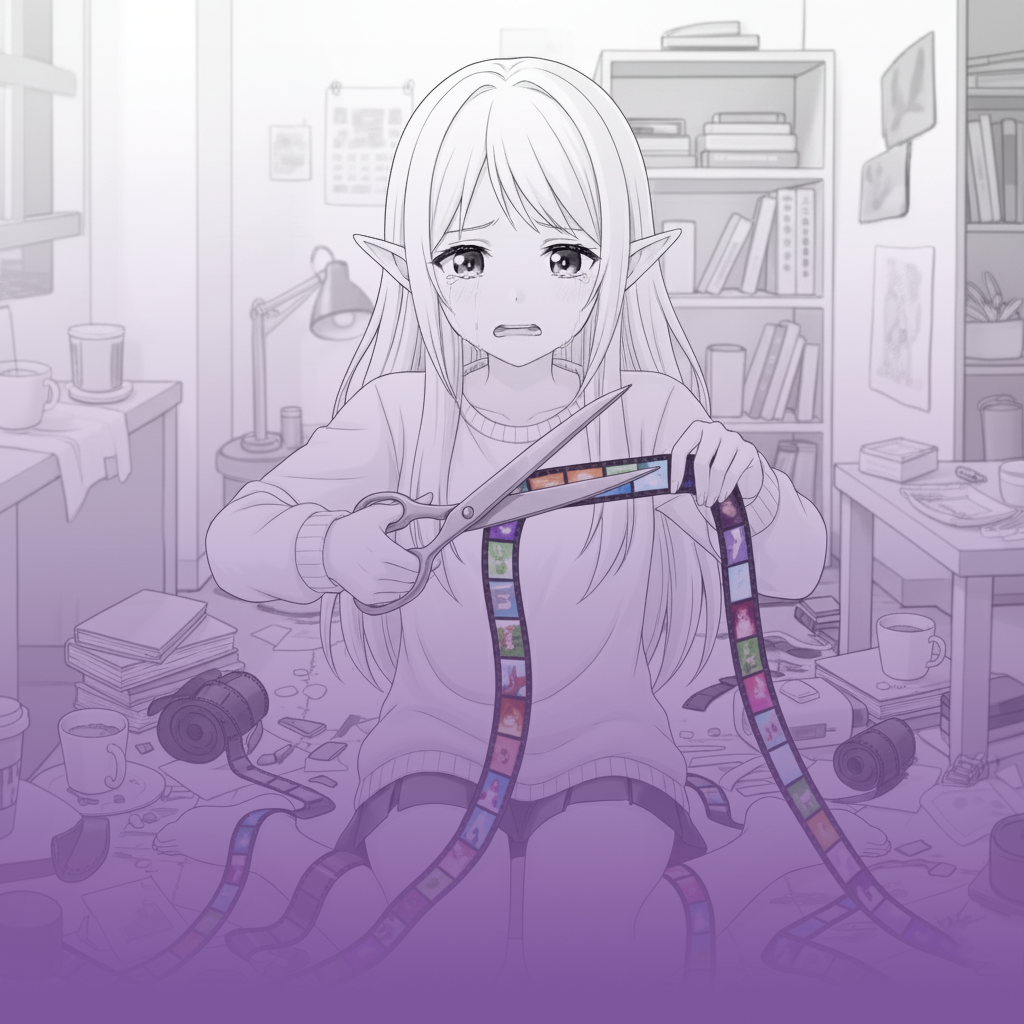
L’un des domaines d’application récents des IA génératives est la production audiovisuelle. Ces technologies modifient non seulement la chaîne de production mais aussi les métiers eux-mêmes, provoquant à la fois résistance et enthousiasme. Certains de ces métiers sont en cours de fragilisation, le doublage remplacé par le clonage de voix multilingue, par exemple. Et pourtant ce clonage reste défendable d’un point de vue artistique puisqu’on garde la voix de l’acteur original, on préserve quelque chose de son grain, de sa matière. Dans la chaîne de production, c’est d’abord la réalisation des effets spéciaux qui se trouve affectée. L’IA permet maintenant de réaliser des plans pour un prix infime, répondant à la plupart des besoins. On peut bien sûr lui adresser des critiques en termes de qualité broadcast ou de précision du résultat, mais le gain économique est tel, l’évolution technique si rapide, qu’elles ne tiendront pas longtemps. Cette transformation n’est pas seulement économique. Elle touche au cœur même de ce que signifie produire des images, à la façon dont elles se constituent, dont elles nous regardent. Quand la machine peut générer en quelques secondes ce qui nécessitait des semaines de travail humain, ce n’est pas juste le temps qui change, c’est le rapport même entre désir d’image et matérialisation de ce désir. L’écart se réduit jusqu’à devenir presque imperceptible, et dans cette quasi-synchronisation se joue quelque chose de vertigineux.
Dans le champ de l’art, les films réalisés partiellement ou en totalité avec l’IA se multiplient. Là encore, la question des coûts est présente, mais aussi la curiosité envers ces nouvelles images dont les imperfections deviennent autant de ressources artistiques. Les artistes explorent ces défauts, ces mouvements contre-nature, ces visages étranges. Une véritable esthétique de l’IA générative semble voir le jour, qui évolue selon les transformations technologiques elles-mêmes. Chaque nouvelle version des logiciels entraîne ses nouveaux effets et ses nouvelles nostalgies. On regrette déjà les GAN et GPT-2, parce que l’alignement des logiciels les plus récents entraîne une normalisation croissante. Cette nostalgie est paradoxale, elle s’attache à des technologies qui n’ont que quelques années d’existence, comme si le temps technique s’était à ce point accéléré qu’il générait déjà ses propres couches archéologiques. Les artistes fouillent dans ces couches, cherchant dans les anciennes versions des logiciels des qualités perdues, des accidents générateurs qui auraient disparu avec l’optimisation. Cette pratique évoque moins une archéologie qu’une paléontologie de l’artificiel, la recherche d’une étrangeté qui existait avant que les algorithmes n’apprennent à trop bien nous ressembler.
On peut nommer cette esthétique des IA génératives la contrefactualité, parce qu’elles sont capables de générer des documents ressemblants qui n’ont jamais eu lieu. Les logiciels d’induction statistique automatisent la ressemblance elle-même et font du réalisme un pattern comme un autre. Ils modifient en profondeur notre foi, déjà largement ébranlée, en l’indicialité du photoréalisme. La photographie et le cinéma avaient construit pendant plus d’un siècle leur autorité sur l’idée d’une trace lumineuse du réel, une empreinte physique comparable à celle d’un doigt dans la cire. L’IA générative pulvérise cette ontologie de l’image. Elle produit des visages qui n’ont jamais existé, des lieux qui n’ont jamais été filmés, des événements qui ne se sont jamais produits. Le réel devient un effet de style parmi d’autres, une texture que l’algorithme peut reproduire, varier, dégrader selon les besoins.
Ceci entraîne la multiplication de films d’artistes post-pop, faisant de multiples références aux œuvres du passé, entre citation et kitsch, créant des histoires alternatives, des imaginaires contrefactuels. L’Artefact AI Film Festival, qui en 2024 a reçu deux cent soixante-sept films venus de trente-cinq pays, témoigne de cette prolifération. Les expositions se remplissent de petites salles obscures où le public assiste, sur des bancs en MDF, à des histoires amusantes faisant des clins d’œil à la culture partagée. Ces films poursuivent le sillon du post-cinéma et du pop art, on remet en circulation ce qui circule déjà, en espérant que ce doublement entraîne une légère différence esthétique. Mais là où Warhol introduisait une critique de la reproductibilité industrielle en l’exhibant, ses épigones numériques semblent naturaliser l’existant, le reconduire sans distance. Ce qui était chez lui une intuition critique devient chez eux une machine à normaliser le déjà-vu, à répéter la répétition.
Ces films sont kitsch en ce qu’ils miment le cinéma classique, reproduisant le passé en n’introduisant qu’une différence narrative. L’expérimentation de l’art vidéo semble loin. Les images reproduisent une forme de classicisme dont La Jetée semble le modèle, bien contre le gré posthume de son auteur, qui fut l’un de ceux qui expérimenta le plus dans sa génération. Marker n’aurait probablement pas apprécié de voir son film-montage, construit à partir de photographies fixes précisément pour rompre avec la continuité cinématographique traditionnelle, devenir le patron d’une nouvelle orthodoxie. Ces films utilisent les IA génératives comme un moyen peu coûteux de produire des images référencielles, de générer des effets spéciaux. Le film Critterz, annoncé pour 2026 par OpenAI et Vertigo Films, illustre bien cette logique industrielle. Budget de vingt-cinq millions d’euros contre cent soixante-dix millions pour Vice-Versa 2, neuf mois de production au lieu de trois ans. L’argument est économique avant d’être esthétique. Ces films ne changent pas fondamentalement les méthodes et les supports narratologiques du cinéma. Des images s’enchaînant dans un ordre prédéterminé, se répétant encore et encore à chaque projection. C’est qu’ici la contrefactualité clôture le possible. Elle semble enfermée dans le passé. Le montage reste fixe, la causalité narrative se répète à l’identique, et le film devient cette chose étrange qui prétend explorer l’infini des possibles génératifs tout en s’enfermant dans la structure close du récit traditionnel.
Cette esthétique par défaut émerge presque spontanément de l’utilisation non réflexive d’outils comme Midjourney ou Runway. Elle nous enferme dans une circularité référentielle qui procède par dégénération contrôlée. Chaque génération successive dégrade la diversité visuelle selon les lois de la thermodynamique informationnelle, comme une photocopie de photocopie où les détails fins disparaissent, remplacés par des artefacts caractéristiques, où les textures se simplifient, où les couleurs se standardisent selon les moyennes statistiques du modèle. Cette normalisation procède par saturation plutôt que par interdiction. Elle ne censure pas les images alternatives mais les noie dans un flux ininterrompu d’images conformes. On retrouve partout les mêmes références geek, la même culture crypto, les mêmes mèmes. Une fascination pour le banal quotidien transfiguré par l’outil technique. Le générateur produit ce qu’il a appris à produire, et il a appris sur les images qui circulent massivement, c’est-à-dire celles qui correspondent déjà aux attentes du plus grand nombre. La contrefactualité reste ici empirique, factuelle au sens où elle ne fait que varier des faits existants. Elle ne touche pas encore à la factualité, c’est-à-dire l’être même de la contingence.
Pour que la contrefactualité s’allie vraiment aux possibles, il faut modifier la relation entre fiction et narration. Il faut produire en temps réel des images. Ce qui pourrait sembler un simple point technique est de la plus grande importance esthétique. L’artiste ne produit plus les images mais des champs de possibles grâce à des prompts variables, et ainsi, comme le public, il découvre le résultat. Le film Here de Robert Zemeckis, avec Tom Hanks, utilise cette technologie Metaphysic Live qui permet de rajeunir ou vieillir les acteurs en temps réel pendant le tournage. Tom Hanks raconte qu’il pouvait voir le résultat quelques instants après chaque scène, sans attendre huit mois de post-production. Deux moniteurs sur le plateau, l’un affichant le flux réel capté par l’objectif, l’autre juste une nanoseconde plus lent, affichant la version transformée. Cette synchronisation quasi parfaite entre l’acte de création et sa métamorphose algorithmique ouvre une brèche dans le déterminisme cinématographique.
Le public devient alors le seul témoin de ces images qui ne se répéteront pas. C’est là un changement majeur par rapport au montage classique qui, du fait de sa structure matérielle répétant une causalité identique, finit par raconter des histoires analogues à cette matérialité. Des êtres soumis à un destin auquel leur désir se confronte, allant jusqu’à faire de ces histoires une certaine vision de l’Histoire historique. Le cinéma classique a toujours raconté le déterminisme parce qu’il était lui-même déterminé, fixé sur pellicule, gravé dans une séquence immuable. Ce que Deleuze nommait l’image-mouvement reste pris dans cette logique : les images s’enchaînent selon un schème sensori-moteur où chaque plan appelle le suivant, où la perception mène à l’action dans un circuit fermé. Vingt-quatre images par seconde dans le même ordre, construisant ainsi une métaphysique de la nécessité. Les personnages ne pouvaient échapper à leur destin puisque leur destin était inscrit dans la bande physique du film. Ce que les théoriciens soviétiques avaient pensé comme collision dialectique ou cine-œil documentaire finissait toujours par se figer dans cette même structure de répétition déterministe. Un présent qui n’avait plus d’autre choix que de répéter des références passées, poursuivant le postmodernisme d’une étrange façon en mettant en œuvre un grand récit : il n’y a pas d’alternative, que des variations autour du même thème. Cette structure matérielle produisait une idéologie du fatum que le film répétait à chaque projection.
Avec la génération en temps réel, on ne voit jamais qu’une fois les images. On en est l’unique témoin, l’unique mémoire. Le partage du sensible y opère non par la répétition dans la salle d’une causalité, mais par la mémoire individuelle. Chaque spectateur devient le gardien d’un événement visuel qui ne se reproduira jamais, à la manière d’un témoin oculaire plutôt que d’un consommateur de copies. La fiction n’est plus soutenue d’une narration, qui n’a jamais été que ce partage de la répétition. Elle apparaît déstructurée, flottante, la causalité semble s’effondrer, à la limite de l’inconsistance. On pourrait dire qu’on passe ici de l’image-mouvement à quelque chose qui ne serait même plus tout à fait l’image-temps telle que Deleuze la pensait. Car même dans l’image-temps, ces cristaux où passé et présent coexistent, où le temps sort de ses gonds, subsistait encore une forme, aussi ouverte soit-elle. Ici, avec la génération en temps réel, c’est la forme elle-même qui devient flux, matière-écoulement où aucun point d’ancrage ni centre de référence ne sont assignables. On retrouve ici quelque chose des fictions sans narration que j’explorais dans les années quatre-vingt-dix avec le Web 1.0 et 2.0, cette suspension de l’autorité du narrateur dans l’énonciation d’une histoire. Ce suspens énonciatif s’effectuait alors par l’usage d’une arborescence labyrinthique, ou par celui de services et API disséminant l’information. Dans un cas comme dans l’autre, il s’agissait d’excéder la faculté du regardeur-lecteur à faire le tour de la fiction, à boucler la narration sur elle-même.
Mais par là, la contrefactualité se transforme en possible, et l’inconsistance est conquise comme le bien le plus précieux et le plus rare. Ce n’est plus l’IA qui imite nos automatismes narratifs, c’est nous qui apprenons à cohabiter avec une machine qui génère du sens sans intention, qui produit de la cohérence sans projet. Cette cohabitation n’est ni maîtrise, où la machine serait simple outil au service de l’intention humaine, ni abandon, où l’humain se soumettrait passivement aux productions machiniques. C’est plutôt une logique de co-exploration, où chacun constitue pour l’autre une occasion d’être interrompu, dévié, aliéné et par là même renouvelé. L’aliènement devient alors non pas perte de soi, mais invention de nouvelles formes de subjectivation à travers la rencontre avec l’altérité technique.
Le montage classique racontait des histoires de destin parce qu’il était lui-même destiné, fixé. Le montage génératif en temps réel raconte des histoires de possibles parce qu’il est lui-même ouvert, indéterminé jusqu’au moment de sa réalisation. Cette indétermination n’est pas un défaut mais une ressource. Elle transforme la contrefactualité, de simple variation sur l’existant, en ressource monstrueuse du possible qui attaque le déterminisme. Monstrueuse parce qu’elle excède ce que nous pouvions prévoir, parce qu’elle échappe aux catégories établies, parce qu’elle fait vaciller la distinction entre l’original et la copie, entre ce qui a eu lieu et ce qui aurait pu avoir lieu. Le monstre n’est pas ici une anomalie à corriger mais la figure même de ce qui émerge quand on relâche l’emprise du programmé sur le généré. C’est l’hyperchaos dont parle Meillassoux, non pas un désordre qui serait l’opposé de l’ordre, mais l’absolue nécessité de la contingence, ce moment où plus rien n’a de raison d’être ainsi plutôt qu’autrement. Pas plus les lois du monde que les choses du monde. Tout peut très réellement s’effondrer, non en vertu d’une loi supérieure qui destinerait toute chose à sa perte, mais en vertu de l’absence d’une loi supérieure capable de préserver de sa perte quoi que ce soit.
Ce que nous découvrons avec ces nouvelles formes, c’est que le cinéma n’a jamais été qu’une modalité particulière et historiquement située de l’image en mouvement. Il nous semblait naturel parce qu’il était là depuis plus d’un siècle, parce que nous avions appris à penser avec lui, à travers lui. Mais l’IA générative révèle sa contingence en produisant d’autres régimes d’images, d’autres temporalités narratives, d’autres modes d’existence pour les fictions. Ces nouvelles formes ne remplacent pas le cinéma, elles en démontrent la structure, au double sens du terme. Elles la décomposent pour la comprendre, et elles en montrent le caractère construit, artificiel, non nécessaire. Le démontage du cinéma n’est pas sa destruction mais sa mise à nu, l’exhibition de ses mécanismes cachés, la possibilité enfin offerte de penser autrement l’articulation entre images, temps et récit. De comprendre que rien de tout cela n’avait de raison d’être ainsi. Que tout aurait pu être autrement. Que tout peut encore devenir autre.
One of the recent fields of application for generative AI is audiovisual production. These technologies are modifying not only the production chain but also the professions themselves, provoking both resistance and enthusiasm. Some of these professions are being undermined, with dubbing replaced by multilingual voice cloning, for example. And yet this cloning remains defensible from an artistic point of view since we keep the original actor’s voice, preserving something of its grain, its texture. In the production chain, it is first and foremost the creation of special effects that is being affected. AI now makes it possible to produce shots for a minimal price, meeting most needs. We can of course criticize it in terms of broadcast quality or precision of results, but the economic gain is such, the technical evolution so rapid, that these criticisms won’t hold up for long. This transformation is not merely economic. It touches the very heart of what it means to produce images, the way they are constituted, the way they regard us. When the machine can generate in a few seconds what required weeks of human work, it’s not just time that changes, it’s the very relationship between the desire for images and the materialization of that desire. The gap narrows until it becomes almost imperceptible, and in this quasi-synchronization something dizzying is at play.
In the field of art, films made partially or entirely with AI are multiplying. Here again, the question of costs is present, but also curiosity toward these new images whose imperfections become artistic resources. Artists explore these flaws, these unnatural movements, these strange faces. A genuine aesthetic of generative AI seems to be emerging, which evolves according to the technological transformations themselves. Each new version of the software brings its new effects and its new nostalgias. We already miss GANs and GPT-2, because the alignment of the most recent software leads to increasing normalization. This nostalgia is paradoxical; it attaches itself to technologies that are only a few years old, as if technical time had accelerated to such a point that it was already generating its own archaeological layers. Artists dig through these layers, searching in old versions of software for lost qualities, generative accidents that would have disappeared with optimization. This practice evokes less an archaeology than a paleontology of the artificial, the search for a strangeness that existed before algorithms learned to resemble us too well.
We can name this aesthetic of generative AI counterfactuality, because they are capable of generating plausible documents that never took place. Statistical induction software automates resemblance itself and makes realism a pattern like any other. They profoundly modify our faith, already largely shaken, in the indexicality of photorealism. Photography and cinema had built their authority over more than a century on the idea of a luminous trace of the real, a physical imprint comparable to that of a finger in wax. Generative AI pulverizes this ontology of the image. It produces faces that never existed, places that were never filmed, events that never occurred. The real becomes an effect of style among others, a texture that the algorithm can reproduce, vary, degrade according to needs.
This leads to the multiplication of post-pop artist films, making multiple references to works of the past, between citation and kitsch, creating alternative histories, counterfactual imaginaries. The Artefact AI Film Festival, which in 2024 received two hundred and sixty-seven films from thirty-five countries, testifies to this proliferation. Exhibitions fill with small dark rooms where the public watches, on MDF benches, amusing stories that wink at shared culture. These films continue the trajectory of post-cinema and pop art; we recirculate what already circulates, hoping that this doubling will produce a slight aesthetic difference. But where Warhol introduced a critique of industrial reproducibility by exhibiting it, his digital epigones seem to naturalize the existing, to reproduce it without distance. What was in his work a critical intuition becomes in theirs a machine for normalizing the already-seen, for repeating repetition.
These films are kitsch in that they mimic classical cinema, reproducing the past while introducing only a narrative difference. The experimentation of video art seems far away. The images reproduce a form of classicism of which La Jetée seems to be the model, quite against the posthumous wishes of its author, who was one of those who experimented most in his generation. Marker probably would not have appreciated seeing his montage-film, constructed from still photographs precisely to break with traditional cinematic continuity, become the template for a new orthodoxy. These films use generative AI as an inexpensive means of producing referential images, of generating special effects. The film Critterz, announced for 2026 by OpenAI and Vertigo Films, illustrates this industrial logic well. Budget of twenty-five million euros versus one hundred and seventy million for Inside Out 2, nine months of production instead of three years. The argument is economic before being aesthetic. These films do not fundamentally change the methods and narratological supports of cinema. Images following one another in a predetermined order, repeating again and again with each screening. This is because here counterfactuality forecloses the possible. It seems locked in the past. The editing remains fixed, the narrative causality repeats identically, and the film becomes this strange thing that claims to explore the infinity of generative possibilities while locking itself into the closed structure of traditional narrative.
This default aesthetic emerges almost spontaneously from the unreflective use of tools like Midjourney or Runway. It locks us into a referential circularity that proceeds by controlled degeneration. Each successive generation degrades visual diversity according to the laws of informational thermodynamics, like a photocopy of a photocopy where fine details disappear, replaced by characteristic artifacts, where textures simplify, where colors standardize according to the statistical averages of the model. This normalization proceeds by saturation rather than prohibition. It doesn’t censure alternative images but drowns them in an uninterrupted flow of conforming images. We find everywhere the same geek references, the same crypto culture, the same memes. A fascination with the banal everyday transfigured by the technical tool. The generator produces what it learned to produce, and it learned from images that circulate massively, that is to say those that already correspond to the expectations of the greatest number. Counterfactuality remains here empirical, factual in the sense that it only varies existing facts. It doesn’t yet touch factuality, that is to say the very being of contingency.
For counterfactuality to truly ally itself with the possible, we must modify the relationship between fiction and narration. We must produce images in real time. What might seem a simple technical point is of the greatest aesthetic importance. The artist no longer produces images but fields of possibilities through variable prompts, and thus, like the public, discovers the result. Robert Zemeckis’s film Here, with Tom Hanks, uses this Metaphysic Live technology that allows actors to be aged or de-aged in real time during filming. Tom Hanks recounts that he could see the result a few moments after each scene, without waiting eight months of post-production. Two monitors on set, one displaying the real feed captured by the lens, the other just a nanosecond slower, displaying the transformed version. This quasi-perfect synchronization between the act of creation and its algorithmic metamorphosis opens a breach in cinematic determinism.
The public then becomes the sole witness to these images that will not repeat. This is a major change from classical editing which, due to its material structure repeating an identical causality, ends up telling stories analogous to this materiality. Beings subjected to a destiny that their desire confronts, going so far as to make these stories a certain vision of historical History. Classical cinema has always told determinism because it was itself determined, fixed on celluloid, engraved in an immutable sequence. What Deleuze called the movement-image remains caught in this logic: images follow one another according to a sensory-motor scheme where each shot calls for the next, where perception leads to action in a closed circuit. Twenty-four images per second in the same order, thus constructing a metaphysics of necessity. Characters could not escape their destiny since their destiny was inscribed in the physical strip of film. What Soviet theorists had conceived as dialectical collision or documentary cine-eye always ended up frozen in this same structure of deterministic repetition. A present that had no other choice but to repeat past references, pursuing postmodernism in a strange way by implementing a grand narrative: there is no alternative, only variations around the same theme. This material structure produced an ideology of fatum that the film repeated with each screening.
With real-time generation, we only ever see the images once. We are their sole witness, their sole memory. The distribution of the sensible operates here not through the repetition of a causality in the theater, but through individual memory. Each spectator becomes the guardian of a visual event that will never reproduce itself, in the manner of an eyewitness rather than a consumer of copies. Fiction is no longer sustained by a narration, which has never been anything but this sharing of repetition. It appears destructured, floating, causality seems to collapse, to the limit of inconsistency. We could say that we move here from the movement-image to something that would no longer even be quite the time-image as Deleuze conceived it. For even in the time-image, these crystals where past and present coexist, where time is out of joint, a form still subsisted, however open it might be. Here, with real-time generation, it is form itself that becomes flux, flowing-matter where no anchor point or center of reference can be assigned. We find here something of the fictions without narration that I explored in the nineties with Web 1.0 and 2.0, this suspension of the narrator’s authority in the enunciation of a story. This enunciative suspense was achieved through the use of labyrinthine arborescence, or through services and APIs disseminating information. In both cases, it was about exceeding the viewer-reader’s ability to encompass the fiction, to close the narration upon itself.
But through this, counterfactuality is transformed into the possible, and inconsistency is conquered as the most precious and rarest good. It is no longer the AI that imitates our narrative automatisms, it is we who learn to cohabit with a machine that generates meaning without intention, that produces coherence without project. This cohabitation is neither mastery, where the machine would be a simple tool in the service of human intention, nor abandonment, where the human would passively submit to machinic productions. It is rather a logic of co-exploration, where each constitutes for the other an occasion to be interrupted, diverted, alienated and thereby renewed. Alienation then becomes not a loss of self, but the invention of new forms of subjectivation through the encounter with technical otherness.
Classical editing told stories of destiny because it was itself destined, fixed. Generative editing in real time tells stories of possibilities because it is itself open, indeterminate until the moment of its realization. This indeterminacy is not a defect but a resource. It transforms counterfactuality, from a simple variation on the existing, into a monstrous resource of the possible that attacks determinism. Monstrous because it exceeds what we could foresee, because it escapes established categories, because it makes the distinction between original and copy waver, between what took place and what could have taken place. The monster here is not an anomaly to be corrected but the very figure of what emerges when we release the grip of the programmed on the generated. It is the hyperchaos of which Meillassoux speaks, not a disorder that would be the opposite of order, but the absolute necessity of contingency, that moment when nothing has any reason to be thus rather than otherwise. Neither the laws of the world nor the things of the world. Everything can very really collapse, not by virtue of a superior law that would destine everything to its loss, but by virtue of the absence of a superior law capable of preserving anything whatsoever from its loss.
What we discover with these new forms is that cinema has only ever been a particular and historically situated modality of the moving image. It seemed natural to us because it had been there for more than a century, because we had learned to think with it, through it. But generative AI reveals its contingency by producing other regimes of images, other narrative temporalities, other modes of existence for fictions. These new forms don’t replace cinema, they demonstrate its structure, in both senses of the term. They decompose it to understand it, and they show its constructed, artificial, non-necessary character. The dismantling of cinema is not its destruction but its laying bare, the exhibition of its hidden mechanisms, the possibility finally offered to think differently about the articulation between images, time and narrative. To understand that none of this had any reason to be thus. That everything could have been otherwise. That everything can still become other.