Completion II
5 sculptures hybrides
Sable et impressions 3D sur bloc de terre crue
Dimensions variables
Édition de 1 + 2 épreuves d’artiste
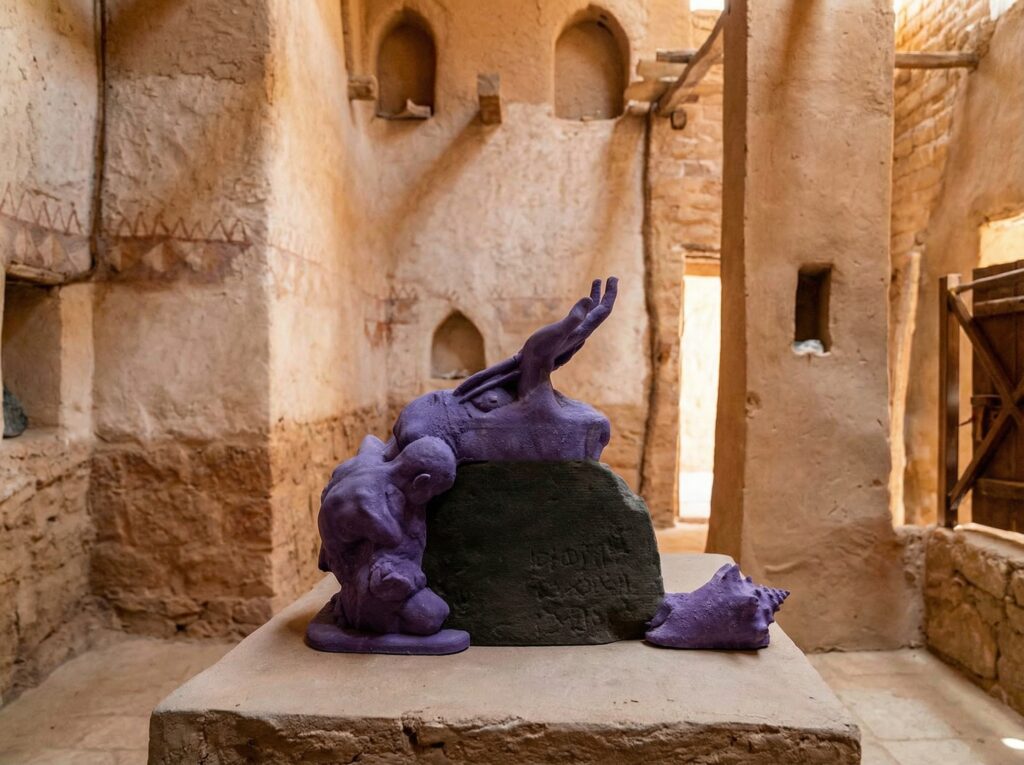
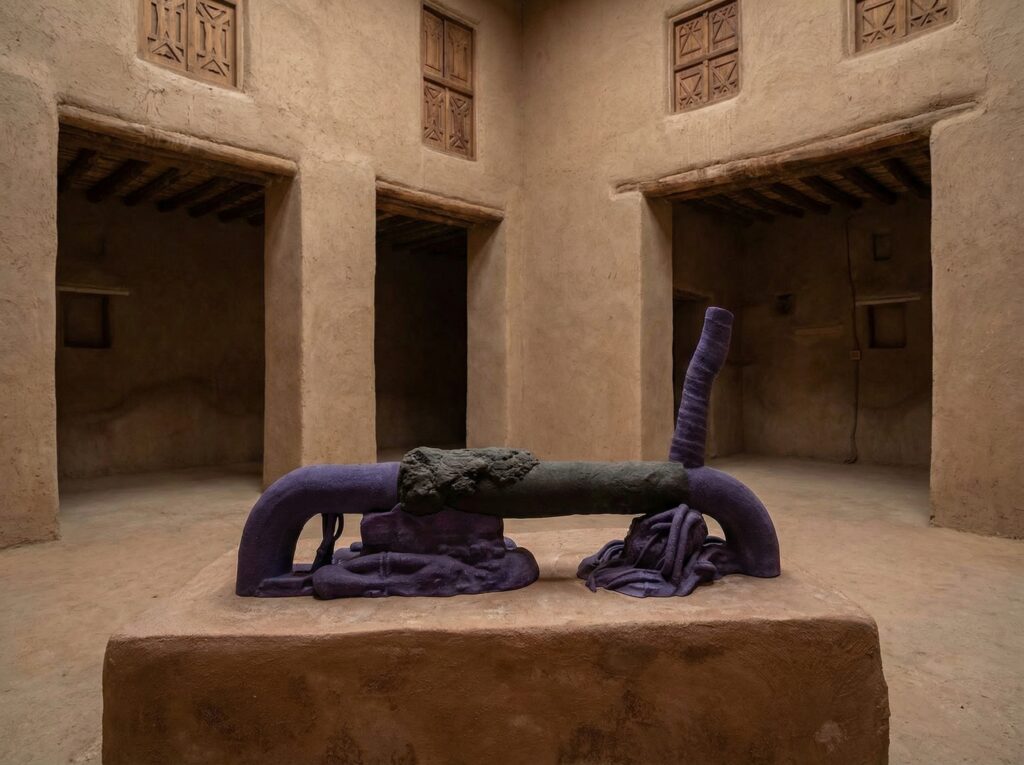
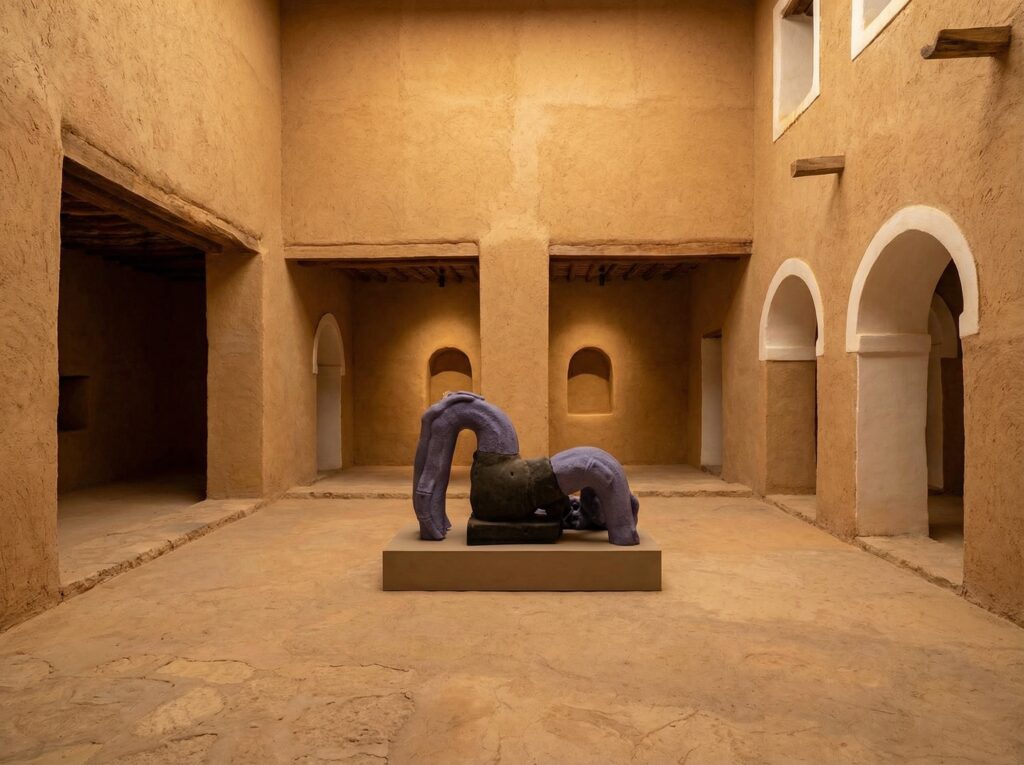
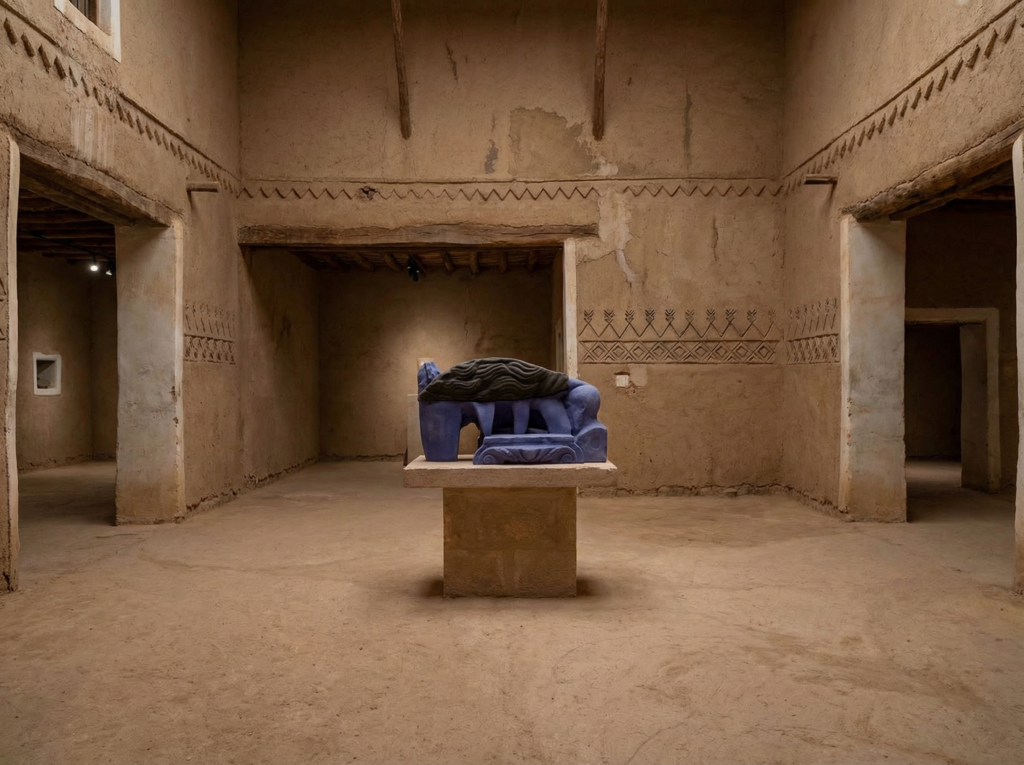
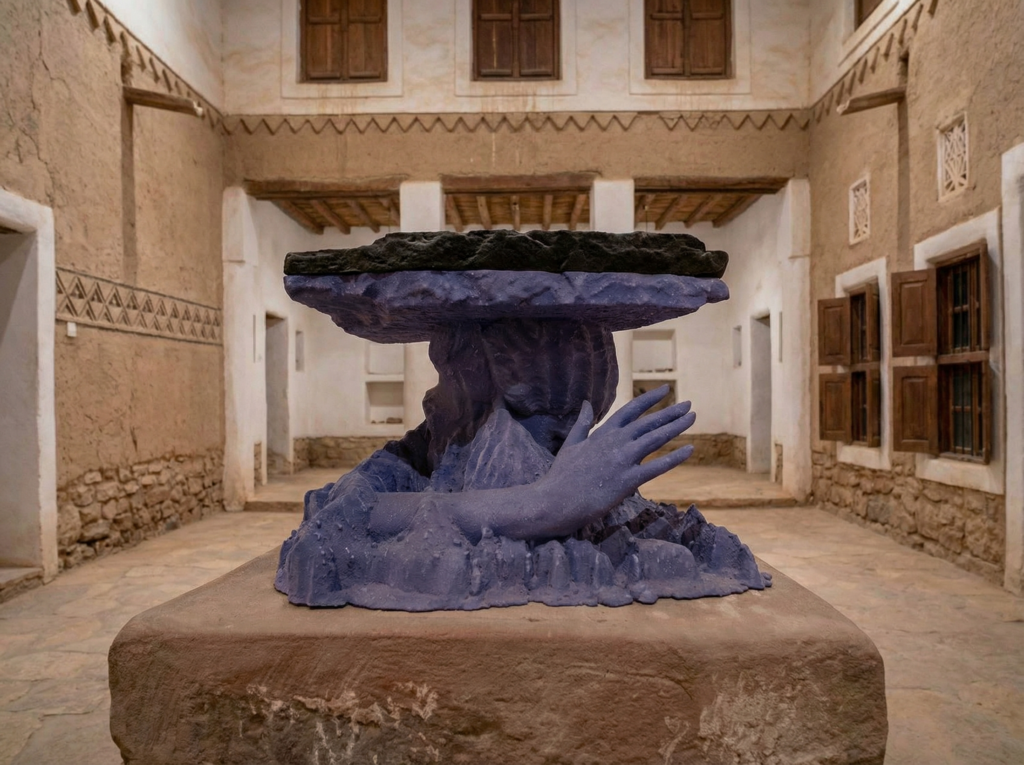
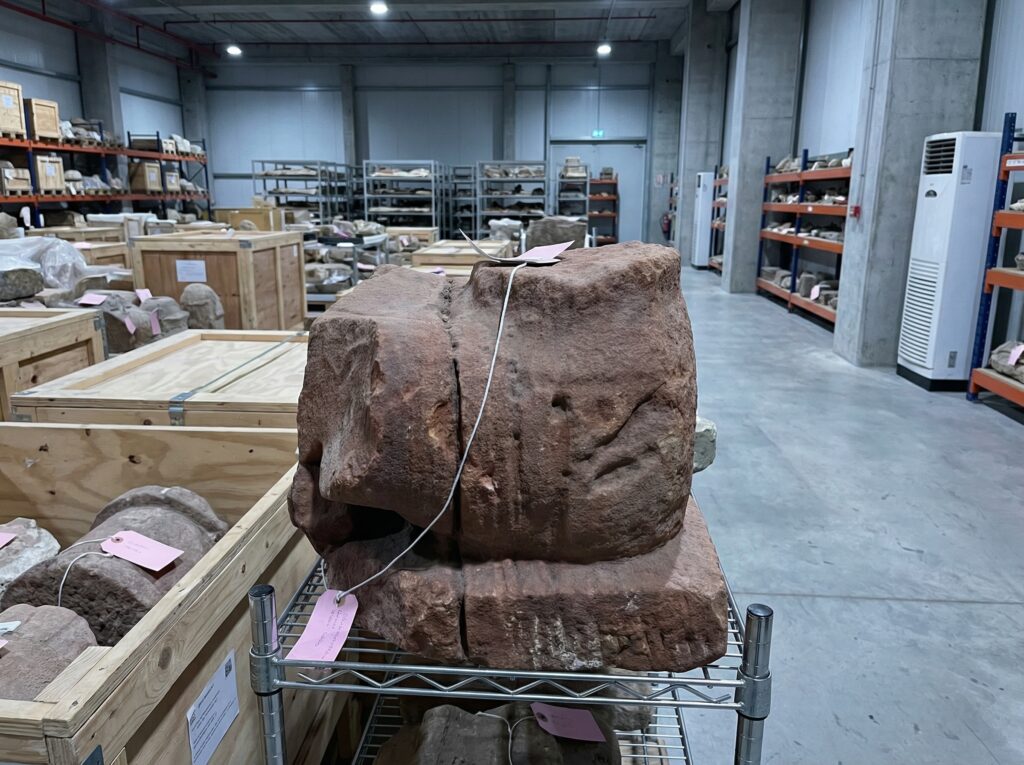
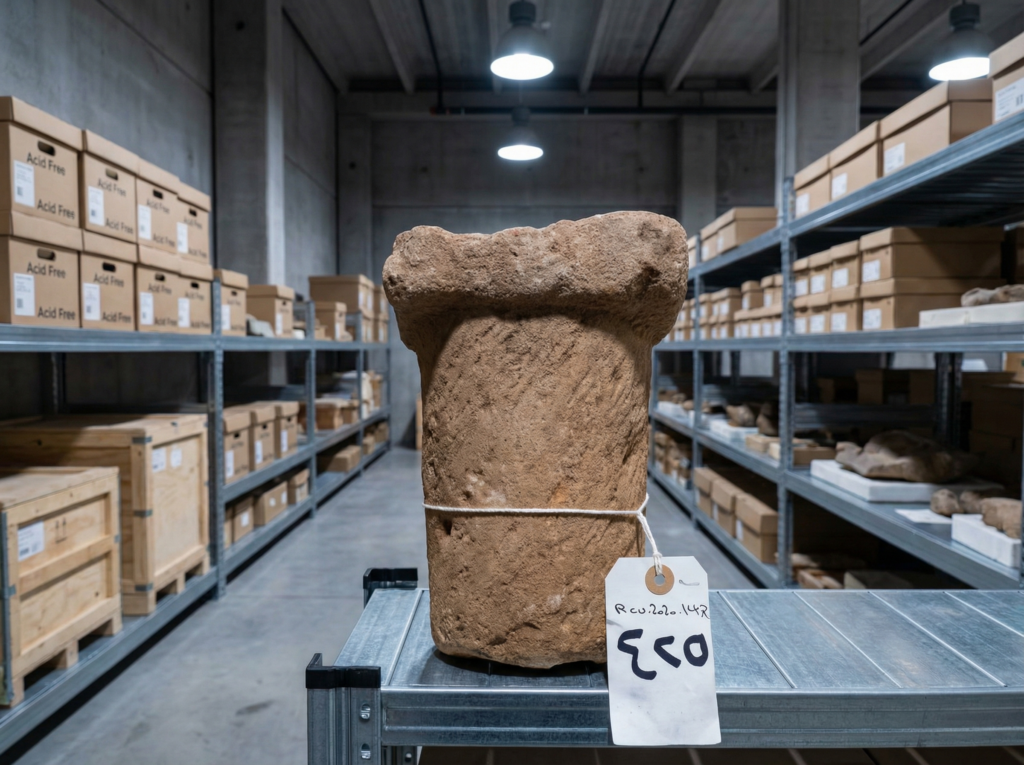
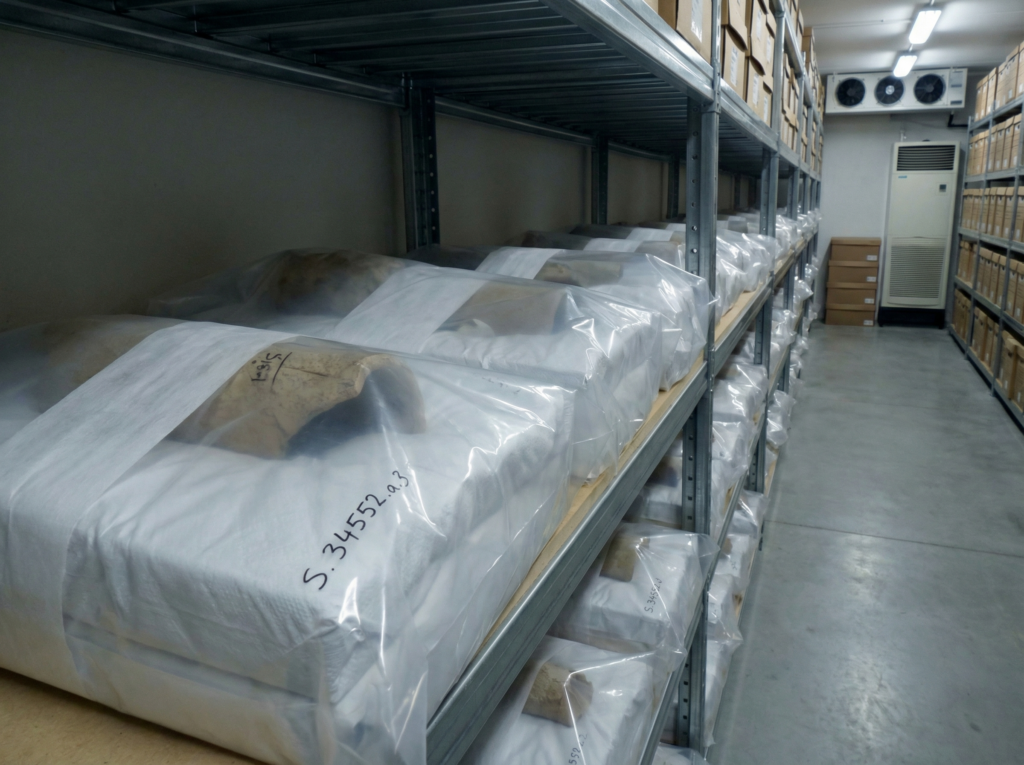
Cette série trouve son origine dans l’observation d’artefacts fragmentaires du musée d’histoire archéologique d’AlUla. Les lacunes présentes dans ces objets, qu’elles soient dues à l’érosion temporelle ou à des pratiques iconoclastes, ont servi de point de départ à une réflexion sur les potentialités imaginatives de ces absences.
L’artiste a utilisé les fonctions d’inpainting d’un système d’intelligence artificielle pour générer des compléments aux fragments originaux. L’espace latent de l’IA, vaste réservoir statistique de formes culturelles, a produit des continuations où se mêlent différentes époques, styles et influences géographiques, créant des hybridations entre règnes minéraux, végétaux, animaux et techniques.
Ces propositions numériques ont ensuite été matérialisées par impression 3D et intégrées à des reproductions en sable des artefacts originaux. Cette démarche déplace l’archéologie traditionnelle vers une temporalité alternative, où le passé authentique dialogue avec des compléments fictifs issus de la mémoire artificielle, questionnant ainsi la frontière entre reconstitution historique et création spéculative.
Thanks to Abdullah Alenezi (RCU Collection, Museum of Archeology, art handler), Abdullah Alenezi (RCU Collection, Museum of Archeology), Tahani Almahmood (Site manager, RCU Collection, Museum of Archeology), Muath Almashwaki (Archeologist and digitization), Tamadhor Alsuhaibani (Sigg Fundation), Louise Briskmann (Sigg Foundation), Adam Ford (Archeologist, cultural heritage focus), Dr. Hanadi (Historian), Michael Jones (heritage and preservation manager), Arnaud Morand (Afalula), Maurine Sigg (Sigg Fundation), Pierre Sigg (Sigg Fundation)
This series originated from the observation of fragmentary artifacts in the AlUla Museum of Archaeological History. The gaps in these objects, whether due to erosion over time or iconoclastic practices, served as a starting point for reflection on the imaginative potential of these absences.
The artist used the inpainting functions of an artificial intelligence system to generate additions to the original fragments. The latent space of AI, a vast statistical reservoir of cultural forms, produced continuations that blend different eras, styles, and geographical influences, creating hybridizations between the mineral, plant, animal, and technical realms.
These digital proposals were then materialized through 3D printing and integrated into sand reproductions of the original artifacts. This approach shifts traditional archaeology toward an alternative temporality, where the authentic past dialogues with fictional additions from artificial memory, thus questioning the boundary between historical reconstruction and speculative creation.